

Maddy summaryHR 71, the Veterans Health Care Freedom Act, allows eligible veterans enrolled in VA healthcare to choose from a broader network of providers, including non-VA facilities, without geographic restrictions. The bill creates a 3-year pilot program in four diverse locations (rural and urban) where veterans can select primary care and specialty providers within a defined "covered care system" (VA facilities and approved community providers), with VA coordinating care through a primary provider. After the pilot, the law permanently requires the VA to offer this same choice of providers to all enrolled veterans, removing current barriers that limited access to non-VA care outside a veteran’s local VA network. The program uses existing VA funding and mandates regular reports to Congress on implementation and results.
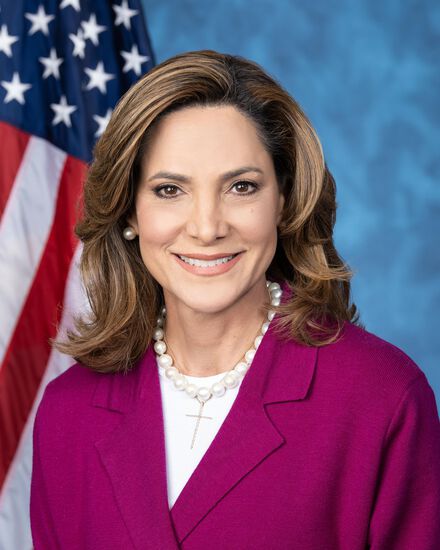
Rep. Maria Elvira Salazar
Sponsored bills
Maddy summaryHR 942, the "Banning SPR Oil Exports to Foreign Adversaries Act," prohibits the export of petroleum products drawn from the U.S. Strategic Petroleum Reserve to China, North Korea, Russia, Iran, and any entity owned or controlled by these countries or the Chinese Communist Party. The Secretary of Energy may grant a waiver for such exports if certified as serving U.S. national security interests, but must issue implementing rules within 60 days of enactment. This policy directly affects U.S. energy exports and entities seeking to purchase SPR oil from the listed adversaries.
Defending Domestic Orange Juice Production Act of 2025 This bill requires finished pasteurized orange juice to contain at least 10% by weight of orange juice soluble solids, exclusive of the solids of any added optional sweetening ingredients. (Current regulations require at least 10.5% by weight of orange juice soluble solids.)
Maddy summaryThis bill reauthorizes the Dr. Lorna Breen Health Care Provider Protection Act, extending mental health support programs for healthcare professionals through 2030 (previously ending in 2024). It requires funded programs to specifically address reducing administrative burdens on healthcare workers while continuing to promote access to mental health and substance use disorder services. The legislation directly affects healthcare providers across the U.S. who may access these federally supported resources. Key provisions include extending funding periods and mandating that grant recipients focus on easing workplace administrative tasks, alongside maintaining existing awareness initiatives. The bill does not create new programs but continues and refines existing mental health support for the healthcare workforce.
Maddy summaryThe SAFE Act creates a new category of "fentanyl-related substances" that would automatically be controlled under Schedule I of the Controlled Substances Act based on specific chemical modifications to fentanyl. This affects anyone involved in the production, distribution, or use of substances meeting this broad definition. The bill establishes a process for removing or rescheduling these substances if they're determined to have less potential for abuse than Schedule I substances, and allows courts to review past convictions involving substances that have since been removed from this category. It also creates new research procedures for Schedule I substances and requires a GAO report analyzing the law's implementation and impact within four years.
Maddy summaryThis bill expands the Anti-Boycott Act of 2018 to cover boycotts promoted or enforced by international governmental organizations (IGOs), not just foreign countries. It adds "international governmental organization" to key definitions in the law and requires the President to annually report to Congress on foreign countries and IGOs that foster or impose such boycotts. The law directly affects U.S. businesses and entities subject to boycotts by IGOs, like the United Nations or World Trade Organization. The changes are technical amendments to existing definitions and reporting requirements.
Medicare Patient Access and Practice Stabilization Act of 2025 This bill increases certain payment adjustments under the Medicare physician fee schedule for services furnished between April 1, 2025, and January 1, 2026.
Maddy summaryHR 833 creates a federal tax credit for individuals and corporations that contribute to scholarship granting organizations (SGOs) providing scholarships for elementary and secondary education. The credit allows taxpayers to deduct up to 10% of their adjusted gross income or $5,000 (whichever is less) for contributions to SGOs serving students from households with income up to 300% of the area median income. The bill establishes a $10 billion annual cap on the tax credit program, requires SGOs to verify student eligibility and maintain separate accounts, and prohibits government control over SGOs or private schools. It ensures scholarships can be used at public, private, or religious schools without discrimination based on religious character. The tax credit would be available for contributions made after December 31, 2025, with annual volume cap increases based on usage.
Maddy summaryHCONRES 4 is a symbolic resolution expressing Congress's support for tax-exempt fraternal benefit societies (like mutual aid organizations). It recognizes these groups, which have over 7 million members nationwide, as historically and currently providing critical community benefits - including life/health insurance, charitable work, and volunteer services - valued at over $3.8 billion annually. The resolution affirms that their tax-exempt status under Section 501(c)(8) of the Internal Revenue Code remains beneficial and should continue to be promoted. This is a non-binding expression of congressional sentiment, not a policy change.
Maddy summaryThis resolution expresses the House of Representatives' position that Congress should take steps to prevent the privatization of the United States Postal Service (USPS), ensuring it remains a federal independent agency. It highlights USPS’s constitutional role, self-sustaining nature (relying on service revenue, not taxpayer funds), and critical functions - serving 168 million addresses daily, supporting rural communities, and underpinning e-commerce. The resolution opposes privatization, noting it would raise prices, reduce services, and harm the $1.9 trillion mailing industry. As a non-binding resolution, it reflects the House’s stance but does not create new law or policy.