

Maddy summaryHR 4999, the ALYSSA Act, requires school districts receiving federal education funds to install silent panic alarms in every elementary and secondary school. These alarms, defined as manual devices for signaling life-threatening emergencies (like active shooters or lockdowns), must be used to alert law enforcement during security crises. The bill amends the Elementary and Secondary Education Act to make this requirement a condition for receiving federal funds, directly affecting all local educational agencies that receive such funding. It mandates that schools be prepared for security emergencies through these silent alarm systems, with no mention of funding specifics or implementation details beyond the basic requirement.
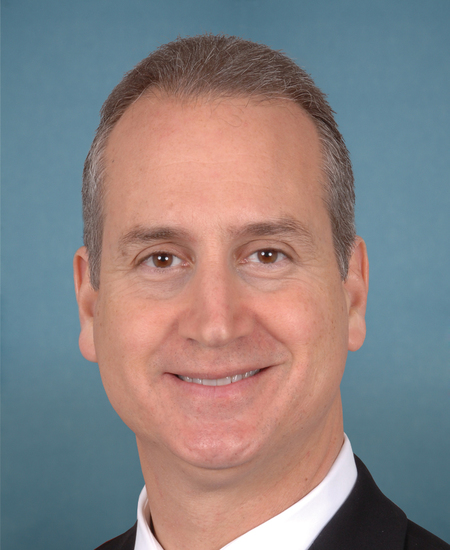
Rep. Mario Diaz-Balart
Sponsored bills
Maddy summaryHR 1684 requires the U.S. State Department to submit annual reports to Congress detailing connections between Haitian criminal gangs (such as G9 Family and 400 Mawozo) and Haitian political or economic elites. The reports must identify specific gangs, list elites with gang ties, and explain how these relationships threaten Haiti’s security and U.S. interests. Within 30 days of each report, the President must impose U.S. sanctions on identified individuals under existing laws, with lists of sanctioned persons made publicly available. The requirement lasts for five years, ending on the date the bill is enacted plus five years.
Maddy summaryHR 1176, the Taiwan International Solidarity Act, amends the TAIPEI Act of 2019 to clarify that UN Resolution 2758 does not address Taiwan's representation or sovereignty in international organizations. The bill directs U.S. representatives in international bodies to resist China's efforts to distort policies regarding Taiwan and encourages U.S. allies to oppose China's attempts to undermine Taiwan's diplomatic relationships. It also requires the U.S. government to report on China's initiatives promoting its "One China" position. These changes aim to strengthen Taiwan's international engagement through U.S. advocacy and policy coordination.
Maddy summaryThis bill directs the U.S. Treasury to mint commemorative coins marking the Marine Corps' 250th anniversary in 2025. It authorizes three coin types: $5 gold coins (max 50,000), $1 silver coins (max 400,000), and half-dollar coins (max 750,000), with surcharges of $35, $10, and $5 respectively. The surcharge proceeds will fund the Marine Corps Heritage Center's educational programs, with no net cost to taxpayers as the Treasury must recover all minting costs through the surcharges. The coins can only be issued during 2025, and the Treasury must ensure all costs are covered before distributing funds to the Heritage Foundation.
Maddy summaryHR 4865, the IDB Transparency Act, requires the U.S. Treasury Secretary to submit a detailed report within 180 days of enactment on China's influence at the Inter-American Development Bank (IDB). The report must include all projects funded by China or Chinese companies since 2009, assess risks like corruption or human rights issues, and analyze how China uses the IDB to advance its diplomatic and economic interests. It also mandates that the U.S. Executive Director at the IDB actively reduce China's influence by reviewing high-risk projects, voting against certain projects, and opposing China's increased shareholding. The U.S. must submit updated reports every two years for a decade, with summaries made public 60-90 days after submission.
Maddy summaryThe Taiwan Tax Agreement Act of 2023 authorizes the President to negotiate a tax agreement with Taiwan through the American Institute in Taiwan (AIT), aiming to reduce double taxation and prevent tax evasion for U.S. and Taiwanese businesses and investors engaged in cross-border trade and investment. The agreement must follow standard U.S. tax treaty practices (like the 2016 Model Convention), exclude entities based in China or without a U.S. tax treaty, and include anti-evasion measures. Before taking effect, Congress must approve the agreement via a specific concurrent resolution that simply states approval without debate or amendments.
This resolution condemns the 1994 attack on the Argentine Jewish Mutual Association Jewish Community Center in Buenos Aires, Argentina, and calls for the perpetrators, including Iranian and Hezbollah operatives, to be held accountable for their crimes.
Maddy summaryThis bill, HR 1282 (Major Richard Star Act), expands benefits for certain military retirees by allowing them to receive both veterans' disability compensation and military retirement pay simultaneously. It specifically affects combat-related disabled retirees under Chapter 61 of the military retirement system who have fewer than 20 years of service. The key change removes the automatic reduction of military retirement pay when these retirees also receive disability compensation, as amended in Section 1413a(b)(3) of Title 10. Technical updates to the law’s structure and effective date (starting after enactment) complete the provisions.
Maddy summaryHRES 579 is a U.S. House resolution condemning Cuba's ongoing repression of citizens following peaceful protests on July 11, 2021. It specifically calls for the immediate release of over 600 arbitrarily detained Cuban citizens, including minors, who were imprisoned for exercising rights to free expression and assembly. The resolution directs the Secretary of State to advocate for their release, support Cuban civil society, recognize a 2023 Inter-American Court ruling holding Cuba responsible for murders of activists, and work with international partners to deny Cuba a second term on the UN Human Rights Council. It expresses U.S. solidarity with Cuban protesters and commits to supporting Cuba's transition to a government respecting human rights and democratic freedoms.
Maddy summaryHR 4352, the Nicaragua Political Prisoner Support Act, provides specific benefits to Nicaraguans who arrived in the U.S. on February 9, 2023, as part of a political prisoner release, and their immediate family members. It grants these individuals access to refugee-equivalent resettlement assistance, child welfare services, and driver's licenses - matching benefits available to refugees under existing law. The bill does not confer lawful permanent residency or alter their current parole status. Eligibility requires passing background checks and maintaining valid parole, with specific protections against termination if renewal was pending.