

Maddy summaryHR 506, the HARM Act, requires the U.S. Secretary of State to designate the Wagner Group as a foreign terrorist organization under immigration law within 90 days of the bill's enactment. This designation would directly affect the Wagner Group and its affiliated entities, subjecting them to sanctions under U.S. law. The bill mandates that the designation apply to any successor or affiliated groups engaged in activities against U.S. interests, including operations in Ukraine, Africa, and the Middle East. It also requires the Secretary of State to submit an annual report on the Wagner Group's international activities to specific congressional committees. The bill focuses on the legal process for designation, not on outcomes or advocacy.
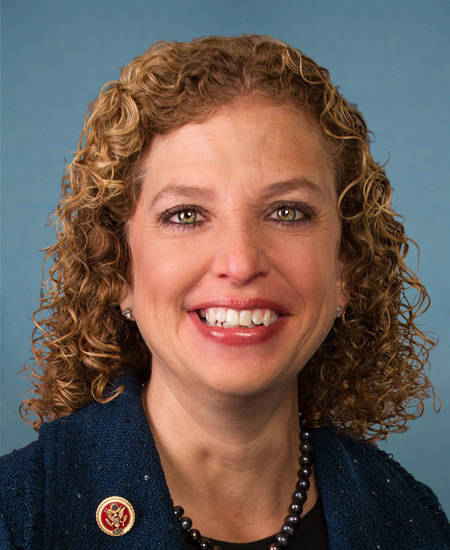
Rep. Debbie Wasserman Schultz
Sponsored bills
This resolution commends the role of the U.S. government in improving access to quality, inclusive education, and improved learning outcomes for the poorest and most marginalized children and adolescents around the world. It calls on the Department of State and the U.S. Agency for International Development to use all diplomatic, humanitarian, and developmental means to promote access to such quality education.
Maddy summaryHR 286, the Health Care Providers Safety Act of 2023, provides federal grants to healthcare providers to improve security at their facilities. The bill authorizes the Secretary to fund security services and physical/cyber security enhancements, including video surveillance, data privacy measures, and structural improvements. These grants directly help healthcare facilities, personnel, and patients by addressing safety concerns. The law specifies that funds must be used for necessary security costs to ensure safe access to healthcare services. It does not create new mandates but offers financial support for security upgrades.
Maddy summaryThis bill prohibits the export or sale of petroleum products drawn from the U.S. Strategic Petroleum Reserve to specific countries and entities, including China, Russia, North Korea, Iran, and any nation under U.S. sanctions. It also bans exports to entities owned or controlled by these countries or the Chinese Communist Party. The Secretary of Energy must enforce this ban, though they may issue a national security waiver for specific exports. The bill requires the Secretary to issue implementing rules within 60 days of enactment. It directly affects the Secretary of Energy, oil exporters seeking to use the Strategic Petroleum Reserve, and the listed countries/entities.
Maddy summaryHRES 42 is a symbolic resolution expressing the House's desire for the U.S. Postal Service's Citizens' Stamp Advisory Committee to consider issuing a commemorative stamp honoring late Congressman Elijah E. Cummings (D-MD). It does not create new law or affect any specific people or policies - it only requests the USPS committee recommend a stamp to the Postmaster General. The resolution highlights Cummings' career, including his service as Oversight Committee Chair and advocacy for issues like drug pricing and postal service stability. As a non-binding resolution, it has no legal effect but aims to formally recognize his legacy through a commemorative stamp.
Maddy summaryHR 396, the Closing the Bump Stock Loophole Act of 2023, defines "bump stock" as any device or modification that increases the firing rate of a semi-automatic weapon to mimic a machine gun. The bill amends federal tax and firearms laws to classify bump stocks as prohibited devices under the National Firearms Act, requiring existing owners to register them within one year of enactment. It directly affects individuals who currently own bump stocks by mandating registration to avoid future possession prohibitions. The law takes effect immediately for new sales but provides a one-year grace period for existing owners to comply with registration requirements.
This resolution condemns all acts of political violence, as well as attacks on health care facilities, health care personnel, and patients. The resolution also states that all people have the freedom to access reproductive health care services and medical advice without fear of violence, intimidation, or harassment. Finally, the resolution calls on the Biden Administration to use all appropriate authorities to uphold public safety, protect health care facilities, and safeguard health care personnel and patients.
Maddy summaryHR 51, the Washington, D.C. Admission Act, would admit Washington, D.C. as the 51st state, named "Washington, Douglass Commonwealth," granting its residents full representation in Congress with two Senators and one Representative. The bill establishes procedures for admission, including elections for state officials, with the state initially having one Representative until the next congressional apportionment. It would create a "Capital" area (including the White House, Capitol, and other key federal buildings) that remains under federal jurisdiction as the seat of the U.S. government, while the rest of the District becomes the new state. The bill also includes provisions to ensure continuity of federal services, property management, and legal procedures during the transition to statehood.
Cover Outstanding Vulnerable Expansion-eligible Residents Now Act or the COVER Now Act This bill establishes a demonstration program to allow local governments to provide health benefits to the Medicaid expansion population in states that have not expanded Medicaid. Under the program, local governments may provide coverage for individuals who are newly eligible for Medicaid under the Patient Protection and Affordable Care Act (i.e., the Medicaid expansion population) for a maximum of 10 years, or until their respective states expand Medicaid. The bill provides a 100% federal matching rate for the first three years of program participation. The bill prohibits states from taking certain actions against participating localities, such as withholding funding, increasing taxes, or restricting provider participation. States that violate these requirements are subject to certain funding penalties.
American Music Fairness Act of 2022 This bill establishes that the copyright holder of a sound recording shall have the exclusive right to perform the sound recording through an audio transmission and addresses other related issues. (Currently, the public performance right only covers performances through a digital audio transmission in certain instances, which means that nonsubscription terrestrial radio stations generally do not have to secure a license to publicly perform a copyright-protected sound recording.) Under the bill, a nonsubscription broadcast transmission must have a license to publicly perform such sound recordings. The Copyright Royalty Board must periodically determine the royalty rates for such a license. When determining the rates, the board must base its decision on certain information presented by the parties, including the radio stations' effect on other streams of revenue related to the sound recordings. Terrestrial broadcast stations (and the owners of such stations) that fall below certain revenue thresholds may pay certain flat fees, instead of the board-established rate, for a license to publicly perform copyright-protected sound recordings.