

Maddy summaryThis bill expands TRICARE coverage to allow military service members and their dependents to obtain up to a full year's supply of contraception in a single fill (365 days) at military pharmacies, retail pharmacies, or through TRICARE's mail-order program. It requires TRICARE to implement this coverage within 180 days of enactment and mandates outreach to inform beneficiaries and providers within 90 days of implementation. The policy directly affects active-duty military members and their eligible dependents enrolled in TRICARE, removing prior restrictions on supply limits for contraceptive prescriptions. This change simplifies access by eliminating the need for frequent refills while maintaining existing coverage requirements under TRICARE.
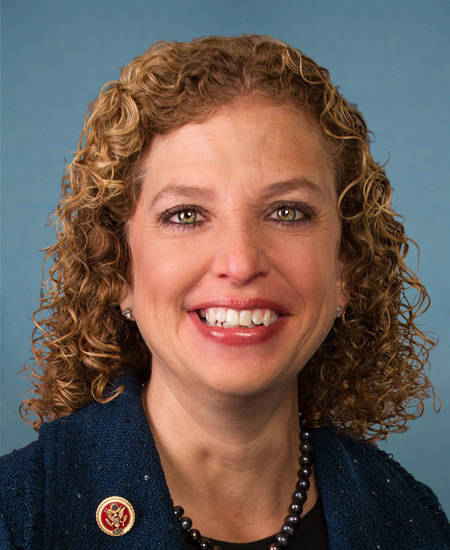
Rep. Debbie Wasserman Schultz
Sponsored bills
Maddy summaryHRES 1473 is a non-binding resolution passed by the U.S. House of Representatives that condemns racism, bigotry, and misinformation targeting Haitian people and their descendants. It celebrates the historical contributions of Haitian Americans to U.S. society, including founding cities (like Chicago via Jean Baptiste Point du Sable), advancing civil rights (W.E.B. Du Bois), and enriching healthcare, education, and culture. The resolution specifically calls on all Americans to reject racist tropes and misinformation, and urges elected officials to promote inclusivity and responsible communication. It was introduced in response to recent false claims that fueled threats against Haitian communities, such as the bomb threats in Springfield, Ohio.
Maddy summaryThis bill reauthorizes and increases funding for U.S.-Israel energy cooperation programs. It extends annual funding for the BIRD Energy Foundation from $2 million to $5 million and for the U.S.-Israel Energy Center from $4 million to $7 million, covering fiscal years 2025 through 2030. The bill adds new energy focus areas like hydrogen, fusion, carbon management, agrivoltaics, and grid cybersecurity to existing collaboration efforts. These changes directly affect U.S. and Israeli entities collaborating on clean energy research, commercialization, and infrastructure projects.
Maddy summaryHR 9692, the STOP MADURO Act, authorizes a $100 million reward for information leading to the arrest and conviction of Venezuela's President Nicolás Maduro Moros. The reward would be funded exclusively by assets already frozen from Maduro and his regime under existing U.S. sanctions, including those from the Foreign Narcotics Kingpin Designation Act. The bill specifically targets Maduro based on U.S. criminal charges related to drug trafficking and narco-terrorism conspiracy. It modifies the State Department's rewards program without creating new sanctions or funding sources.
Maddy summaryThis bill amends the Justice for United States Victims of State Sponsored Terrorism Act to establish a fifth round of payments for eligible victims of state-sponsored terrorism, requiring all authorized payments to be distributed by December 31, 2024. It directs specific funds into the Victims of State Sponsored Terrorism Fund, including $898 million from the Binance case settlement and 50% of annual unobligated balances from DOJ and Treasury forfeiture funds starting December 1, 2024. The bill mandates annual payments beginning January 1, 2025, for eligible claimants and requires the Special Master to submit annual reports on fund activity to Congress, including detailed deposit and disbursement records. It directly affects victims of state-sponsored terrorism, the Special Master administering the fund, and federal agencies managing forfeiture funds.
Maddy summaryHRES 1468 is a non-binding resolution recognizing the significant pay disparity faced by disabled women in the U.S. workforce. It cites data showing disabled women earn, on average, 50 cents for every dollar earned by nondisabled men, with even starker gaps for disabled women of color (e.g., 44 cents for disabled Latinas). The resolution highlights systemic barriers like occupational segregation, the subminimum wage, and lack of support services contributing to these inequities. It does not create new laws or affect any group directly, but formally acknowledges these disparities and reaffirms the House’s commitment to addressing wage gaps. This is a symbolic recognition, not a policy change.
Maddy summaryThis bill modifies Medicaid and CHIP rules to let eligible out-of-state healthcare providers enroll without extra state screening. It applies to providers already in Medicare or their home state program, with low fraud risk, serving children under 21 with complex medical conditions. Providers would receive 5 years of enrollment under this streamlined process, eliminating state-level barriers. The change directly affects children seeking specialized care across state lines and the providers who serve them.
Maddy summaryThe PROTECT Our Children Reauthorization Act of 2024 reauthorizes and updates the 2008 PROTECT Our Children Act, primarily focusing on strengthening federal efforts to combat child exploitation. It requires the National Strategy for Child Exploitation Prevention to be updated every four years instead of every two, with detailed provisions including trend analysis, resource estimates, and assessments of Internet Crimes Against Children (ICAC) task forces. The bill also modifies ICAC task force operations to include liability protections for prioritization decisions (unless misconduct occurs), expands coordination requirements with Tribal and military agencies, and increases funding to $70 million for 2025, $80 million for 2026, and $90 million for 2027. These changes directly affect federal agencies like the DOJ, FBI, and ICAC task forces, as well as state and local law enforcement partners working on child exploitation cases. The legislation aims to enhance data-driven coordination and resource allocation for preventing and prosecuting child exploitation crimes.
Maddy summaryHRES 1448 is a non-binding House resolution stating that the House believes every person has the right to emergency health care, including abortion care, during medical emergencies. It specifically addresses concerns that abortion restrictions force medical providers to choose between treating patients in life-threatening situations or risking criminal charges. The resolution highlights that such restrictions disproportionately harm Black, Indigenous, people of color, immigrants, low-income individuals, and LGBTQI+ patients. It does not change existing laws but expresses congressional support for ensuring access to emergency care without legal barriers. The resolution was introduced by multiple House members and referred to the Energy and Commerce Committee.
Maddy summaryHR 6242, the VOTES Act of 2023, expands voting rights for military service members overseas by updating the definition of eligible voters under the Uniformed and Overseas Citizens Absentee Voting Act (UOCAVA). The bill replaces "active duty" with "active duty, active service, or inactive duty-training" throughout UOCAVA, ensuring service members in reserve training (inactive duty) qualify for absentee voting just like those on active duty. This change directly affects U.S. military personnel serving overseas in any duty status under Title 10 of the U.S. Code. The law takes effect for elections after January 1, 2025, making absentee voting procedures more inclusive for all uniformed service members.