

Maddy summaryThe FEMA Loan Interest Payment Relief Act requires FEMA to reimburse local governments and electric cooperatives for interest paid on qualifying disaster recovery loans. A qualifying loan must be used for FEMA-covered activities with at least 90% of proceeds dedicated to those purposes. Reimbursement covers the lesser of actual interest paid or what would have been paid at the prime interest rate, as defined by the Federal Reserve. This relief applies to interest accrued in the seven years preceding the bill's enactment.
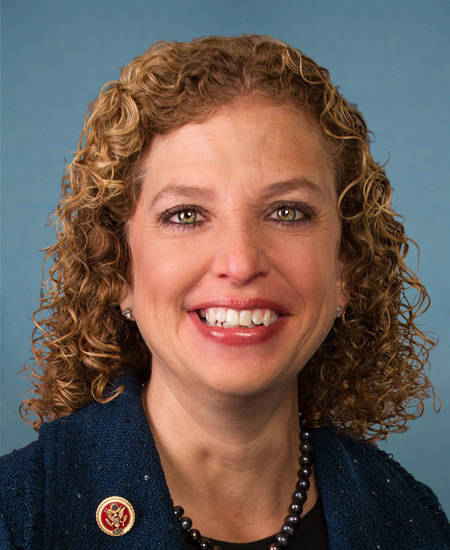
Rep. Debbie Wasserman Schultz
Sponsored bills
Maddy summaryHR 6751 authorizes the U.S. Mint to produce commemorative coins honoring Roberto Clemente, a Hall of Fame baseball player and humanitarian, including 50,000 $5 gold coins, 400,000 $1 silver coins, and 750,000 half-dollar coins. The coins must feature Clemente's image and inscriptions like "Roberto Clemente" and "2027," with all sales including a surcharge ($5-$35 per coin) paid to the Roberto Clemente Foundation. The foundation, which supports youth sports, education, and disaster relief programs, will use these funds for its mission, while the U.S. Treasury must recover all production costs. The coins will be sold exclusively in 2027, with no net cost to the government.
Maddy summaryThe Jeanette Acosta Invest in Women’s Health Act of 2024 would expand access to preventive cancer screenings (including breast, cervical, ovarian, and uterine cancer screenings) for women, with a focus on low-income women, women of color, rural communities, and underserved populations. It authorizes $20 million annually for grants to health care providers - such as family planning centers - to increase screenings and establishes a training program for health care providers on best practices and cultural competency to address racial disparities. The bill also mandates a study analyzing cancer screening rates and disparities by race, income, geography, and insurance status, with reports to Congress every five years. These provisions aim to improve early detection, reduce mortality, and address systemic barriers in women’s cancer care.
Maddy summaryHR 1505, the "No Stolen Trademarks Honored in America Act of 2023," modifies a law to prevent U.S. courts from recognizing trademark, trade name, or commercial name rights tied to business assets that were confiscated. It specifically affects individuals or entities claiming such rights who knew or should have known the mark was connected to confiscated assets, unless the original owner or successor gave consent. The bill requires courts to deny recognition of these claims unless the claimant had no knowledge of the confiscation at the time of acquisition. This change applies to all U.S. courts and executive branch entities handling such cases.
Maddy summaryThis bill designates the Department of Veterans Affairs medical center in West Palm Beach, Florida, as the "Thomas H. Corey VA Medical Center." The change updates all federal references - including laws, regulations, maps, and documents - to reflect the new name. It directly affects the facility's official identity and veteran services documentation. The bill is procedural and does not alter healthcare services or funding.
Maddy summaryThe Working Dog Commemorative Coin Act (HR 807) directs the U.S. Treasury to mint three types of commemorative coins honoring working dogs' service: $5 gold coins, $1 silver coins, and half-dollar coins with specific weight and composition requirements. Each coin will carry a surcharge ($35 for $5 coins, $10 for $1 coins, $5 for half-dollars) that will be paid directly to America's VetDogs to support their programs providing service dogs for veterans, the disabled, and others. The coins will be issued in 2027 with designs reflecting working dogs' roles in military, detection, therapy, and assistance work. The legislation specifies that all surcharge revenue must fund America's VetDogs' operations without creating new government programs. This is a commemorative measure focused on honoring working dogs' contributions through coin sales, with all surcharge funds going to a specific nonprofit organization.
Maddy summaryHRES 1596 is a symbolic resolution recognizing November 30, 2024, as "Yom Haplitim" or Jewish Refugee Day. It commemorates the forced exile of approximately 900,000 Jewish people from Arab nations following World War II and the 1948 Arab-Israeli War, acknowledging their 2,500-year presence and contributions in countries like Iraq, Egypt, and Morocco. The resolution calls for educational efforts in the U.S., Middle East, and North Africa to teach this history and condemns antisemitism. It does not create new laws or directly affect any group but aims to honor Jewish refugees' experiences and support Jewish communities globally.
Maddy summaryThis bill allows individuals to withdraw funds from retirement accounts without the usual 10% early withdrawal penalty if the money is used for qualified family caregiving expenses. It directly affects caregivers (like adult children or spouses) who pay for care for a family member certified by a doctor as needing long-term assistance with daily activities. Expenses covered include home modifications, medical supplies, respite care, counseling, lost wages for unpaid time off, and transportation for the care recipient. The total amount exempt from the penalty is capped at $10,000 per year per caregiver. The bill modifies existing tax code to make these withdrawals penalty-free while requiring documentation and certification of the care recipient's needs.
Maddy summaryThis bill prohibits Medicaid from covering conversion therapy for any enrollee. It amends federal law to block Medicaid payments for any therapy aimed at changing a person's sexual orientation or gender identity (defined as "conversion therapy" in the bill), starting in the first full quarter after the law takes effect. The prohibition applies to all Medicaid providers who offer such therapy for compensation, but explicitly excludes support for gender transition, acceptance-based care, and interventions focused on safety or unlawful conduct. It directly affects Medicaid recipients seeking therapy and providers who previously billed for conversion therapy services.
Maddy summaryHR 825, the BOLIVAR Act, prohibits U.S. federal agencies from entering into contracts for goods or services with entities knowingly conducting significant business dealings with Venezuela's government under Nicolás Maduro, which the U.S. does not recognize as legitimate. The law directly affects U.S. government contractors and businesses operating in Venezuela, banning contracts with those engaging in commerce with the Maduro regime. Key exceptions include contracts for humanitarian aid, disaster relief, national security needs, U.S. diplomatic operations in Venezuela, and contracts with international organizations. The prohibition applies to contracts entered into within three years of the bill's enactment, with the Secretary of State required to notify Congress about exceptions used.