

Lung Cancer Screening and Prevention Act of 2025 This bill authorizes Medicare coverage of additional types of lung cancer screening tests that are approved by the Food and Drug Administration, regardless of whether they are recommended by the United States Preventive Services Task Force. The Centers for Medicare & Medicaid Services must set coverage and payment limits for such tests. (Currently, Medicare covers screening tests for the early detection of lung cancer if they are recommended by the task force.)
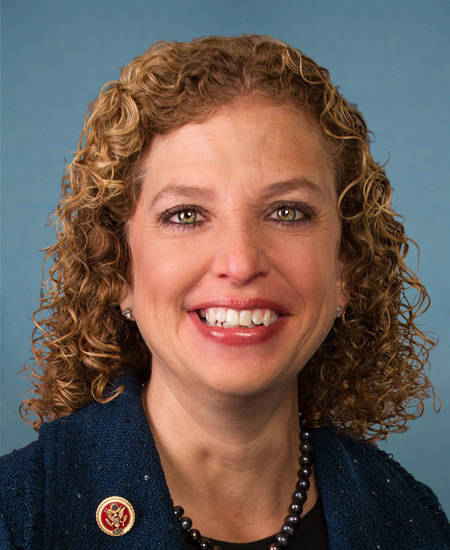
Rep. Debbie Wasserman Schultz
Sponsored bills
Maddy summaryThis bill extends a temporary tax provision for distilled spirits in Puerto Rico and the U.S. Virgin Islands. It amends the tax code to change the end date for a reduced tax coverage limit from January 2022 to January 2032. The change applies to distilled spirits imported into these territories after December 31, 2021. This directly affects businesses and consumers involved in the distilled spirits market in Puerto Rico and the Virgin Islands by maintaining the lower tax rate for a longer period.
Goldie's Act This bill expands enforcement provisions under the Animal Welfare Act (AWA). Specifically, the bill directs the Department of Agriculture (USDA) to document and record detailed descriptions of violations of the act observed during inspections and investigations. USDA must provide a copy of all records documenting violations to state, local, and municipal animal control or law enforcement officials within 24 hours of such inspections or investigations. Inspections must be held at least once a year of each research facility, the premises of each animal dealer, and each exhibitor of animals. If violations are found during inspections, then USDA must conduct any necessary follow-up inspections until all the violations are corrected. Inspectors must confiscate or destroy in a humane manner animals found to be suffering physical or psychological harm as a result of failure to comply with the AWA. Violators are subject to civil penalties as outlined in the bill.
Maddy summaryHR 1300, the PSA Screening for HIM Act, requires health insurance plans and issuers to cover prostate cancer screenings without cost-sharing (like copays or deductibles) for men aged 40+ who are at high risk of prostate cancer. This directly affects African-American men and men with a family history of prostate cancer, as defined by the bill. The law amends existing insurance coverage rules to mandate this specific screening coverage, effective for plan years starting January 1, 2026. It does not change screening guidelines but removes financial barriers to recommended screenings for these high-risk groups.
More Homes on the Market Act This bill increases the amount of gain from the sale of a principal residence that an individual may exclude from gross income (for federal tax purposes). Under the bill, an individual may exclude from gross income gain from the sale of a principal residence of up to $500,000 (currently $250,000), and taxpayers who are married and file a joint federal income tax return may exclude up to $1 million (currently $500.000). The bill also requires these amounts to be adjusted annually for inflation.
Maddy summaryHR 1321, the "Ending DOGE Conflicts Act," requires special government employees (like officials overseeing federal contracts) who own, control, or lead companies doing business with the government to file financial disclosure reports with the Office of Government Ethics. These employees must now comply with the same financial disclosure rules as other government officials under Title 5 of the U.S. Code. Until their initial report is certified as compliant by the Office of Government Ethics, these employees are prohibited from performing any official duties related to federal contracting. The bill directly affects high-level government officials with direct financial ties to federal contractors.
Maddy summaryThe Office of Gun Violence Prevention Act of 2025 would create a new office within the Department of Justice to coordinate federal efforts on reducing gun violence. The office, led by a Director appointed by the Attorney General, would integrate existing DOJ programs, evaluate data gaps, and develop evidence-based recommendations for Congress and the President. It would also establish an advisory council including survivors of gun violence, public health officials, and community representatives to guide its work. The office would produce annual reports detailing gun violence trends and policy proposals, while collaborating with agencies like Health and Human Services and the FBI.
Maddy summaryThe EAGLES Act of 2025 reauthorizes and expands the Secret Service's National Threat Assessment Center (NTAC), directing it to lead national efforts in preventing targeted violence, particularly in schools. It mandates the NTAC to provide training, research, and consultation on evidence-based threat assessment programs for schools, law enforcement, and mental health professionals, with a focus on early intervention for students showing concerning behavior. The bill allocates $10 million annually (2026-2030) for these programs, requires hiring specialists in child psychology and school threat assessment, and mandates annual reports to Congress on training reach and effectiveness. This directly affects K-12 schools, local educational agencies, and public safety officials by establishing standardized protocols to prevent violence before it occurs.
Maddy summaryHR 1277, the First Rhode Island Regiment Congressional Gold Medal Act, authorizes a single gold medal to honor the First Rhode Island Regiment for its service during the Revolutionary War. The bill commemorates the regiment as one of the first integrated military units in U.S. history, formed in 1778 when Rhode Island allowed enslaved and Indigenous men to enlist and gain freedom upon service. The medal, designed by the Treasury Secretary, will be displayed at the Rhode Island State Library, with Congress encouraging its availability for research and display at relevant historical sites. This is a commemorative measure with no direct policy impact or financial provisions for individuals, focusing solely on historical recognition.
Maddy summaryHR 1348, the Venezuelan Adjustment Act, allows certain Venezuelans already in the U.S. to apply for permanent residency. It directly affects Venezuelans who entered the U.S. before December 31, 2021, and have lived there continuously for at least one year, plus their spouses and children. Key provisions include waiving specific inadmissibility grounds (like some criminal convictions), granting work authorization after 180 days of pending applications, and halting removal proceedings during processing. The bill also ensures no reduction in available immigrant visas and establishes a record of permanent residence upon approval.