

NAPA Reauthorization Act This bill extends through 2035 and makes other changes to the National Alzheimer's Project. This project supports coordination of federal planning, programs, and other efforts to address Alzheimer's disease and related dementias. In particular, the bill incorporates a focus on promoting healthy aging and reducing risk factors associated with cognitive decline. The bill also expands the membership of the Advisory Council on Alzheimer's Research, Care, and Services to include (1) a researcher with experience recruiting and retaining diverse clinical trial participants, (2) an individual diagnosed with Alzheimer's disease, and (3) representatives from additional federal agencies (e.g., the Department of Justice and the Office of Management and Budget).
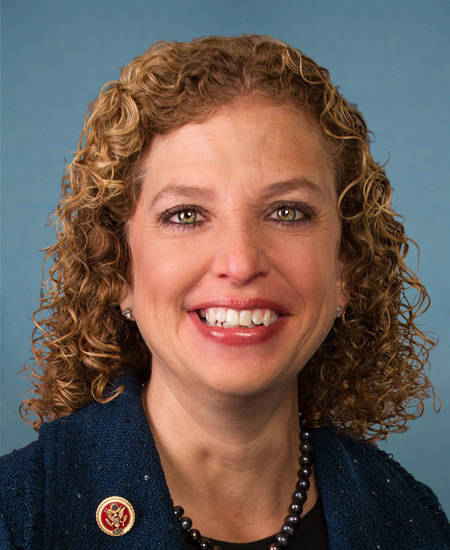
Rep. Debbie Wasserman Schultz
Sponsored bills
Federal Firefighters Fairness Act of 2022 This bill makes it easier for federally employed firefighters who contract certain illnesses to qualify for federal workers' compensation. Specifically, the bill provides that chronic obstructive pulmonary disease, mesothelioma, and specified other cancers of those employed in fire protection activities for at least five years are presumed to be proximately caused by such employment for purposes of a disability or death claim under the federal workers' compensation program. This presumption also applies to federal employees employed in fire protection activities for at least five years who experience a sudden cardiac event or stroke within 24 hours of performing a fire protection activity. The bill also requires the Department of Labor to conduct a review to determine whether breast cancer, gynecological cancer, and rhabdomyolysis should be included under the presumption and to conduct periodic reviews to determine whether other diseases should be included. In addition, a person may petition Labor to include another disease under the presumption. An employee in fire protection activities is a firefighter, paramedic, emergency medical technician, rescue worker, ambulance personnel, or hazardous material worker who (1) is trained in fire suppression; (2) has the legal authority and responsibility to engage in fire suppression; (3) is engaged in the prevention, control, and extinguishing of fires or response to emergency situations where life, property, or the environment is at risk, including the prevention, control, suppression, or management of wildland fires; and (4) performs such activities as a primary responsibility.
Ensuring Oversight Access at the Postal Service Act This bill bars the U.S. Postal Service from inhibiting a Member of Congress from accessing a Postal Service facility for official purposes.
Benjamin Berell Ferencz Congressional Gold Medal Act This bill provides for the award of a Congressional Gold Medal to Benjamin Berell Ferencz in recognition of his service to the United States and the international community during the post-World War II Nuremberg trials and his lifelong advocacy for international criminal justice and the rule of law.
School Shooting Safety and Preparedness Act This bill requires the Department of Education (ED) to publish an annual report on indicators of school crime and safety. The report must collect specified information, including the number of school shootings that have taken place nationwide and the number of those that were mass shootings; the number of people killed or injured in each school shooting; the age, gender, race, ethnicity, and nationality of each victim; the motivation of the shooter; how the shooting was stopped; the number and type of firearms and ammunition used in each shooting; and the response time of law enforcement. ED must direct the National Center for Education Statistics to collect and publish specified data on school shootings. The center must collect information on the existence or absence of specified measures at the time of the shooting, including physical and other types of security measures, a communication plan with local law enforcement, a response plan that includes coordination with local agencies, an active shooter response plan, and a trauma response plan.
Preventive Care Awareness Act of 2022 This bill requires activities to promote the use of preventive health care services with a particular focus on decreasing disparities in accessing preventive services for individuals in rural and underserved communities who delayed or forewent recommended preventive services during the COVID-19 pandemic. Specifically, the Department of Health and Human Services (HHS) must carry out a campaign to increase public awareness about and use of recommended preventive services. HHS must also convene a task force to develop recommendations regarding preventive services during and after the COVID-19 pandemic and future pandemics. The recommendations must address, among other considerations, reducing disparities in health outcomes and identifying barriers to implementing the recommendations. Additionally, the bill allows states, Indian tribes, and territories to use a portion of their Preventive Health and Health Services Block Grant funding for FY2023 and FY2024 on activities to increase patient uptake of recommended preventive services.
Childhood Cancer Survivorship, Treatment, Access, and Research Reauthorization Act of 2022 or the Childhood Cancer STAR Reauthorization Act This bill reauthorizes through FY2028 and modifies pediatric cancer research and related programs, including to expand collection of and access to relevant biospecimens and to support the transition of pediatric cancer survivors to primary care.
This resolution recognizes that Black women are experiencing high, disproportionate rates of maternal mortality and morbidity in the United States and that Black Maternal Health Week is an opportunity to deepen the national conversation about Black maternal health.
SAFER in Condos Act of 2022 or the Securing Access to Financing for Exterior Repairs in Condos Act of 2022 This bill allows an owner of a condominium (condo) unit to finance, through loans backed by the Federal Housing Administration, special assessments charged by the condo's governing body for rehabilitation, repair, replacement, or other improvement of common systems, infrastructure, facilities, features, portions, or areas.
Time Off to Vote Act This bill requires an employer, upon the request of an employee, to provide the employee with a minimum of two consecutive hours of paid leave in order to vote in a federal election. The employer may determine the two-hour period, excluding any lunch break or other break. Taking such leave shall not result in the employee losing accrued employment benefits. The bill makes it unlawful for an employer to interfere with the right to take such leave or for an employer to discriminate against an employee for taking such leave. Further, the bill makes it unlawful for any employer to retaliate against an employee for (1) opposing any practice made unlawful by this bill; (2) filing a charge, or instituting or causing to be instituted any proceeding, under or related to this bill; or (3) testifying or preparing to testify in an inquiry or proceeding relating to such leave. The bill specifies penalties for employers who violate these provisions.