

Maddy summaryHR 4999, the ALYSSA Act, requires school districts receiving federal education funds to install silent panic alarms in every elementary and secondary school. These alarms, defined as manual devices for signaling life-threatening emergencies (like active shooters or lockdowns), must be used to alert law enforcement during security crises. The bill amends the Elementary and Secondary Education Act to make this requirement a condition for receiving federal funds, directly affecting all local educational agencies that receive such funding. It mandates that schools be prepared for security emergencies through these silent alarm systems, with no mention of funding specifics or implementation details beyond the basic requirement.
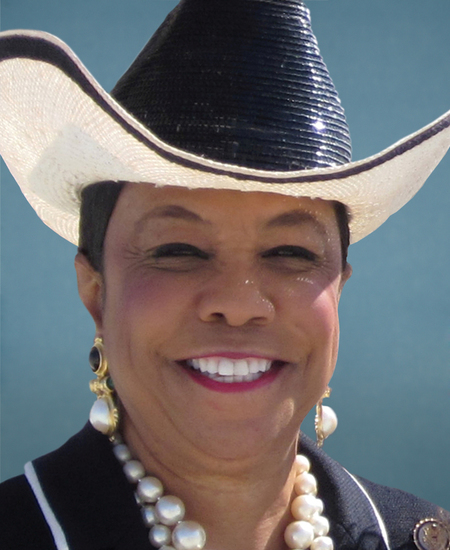
Rep. Frederica S. Wilson
Sponsored bills
Maddy summaryHR 4986, the Student Loan Interest Elimination Act, would eliminate interest accrual on most existing Federal student loans starting July 1, 2024, without requiring borrower action, while allowing borrowers to opt out if desired. The bill would also enable refinancing of non-Federal direct loans into Federal Direct Consolidation Loans with no interest, no origination fees, and preservation of previous loan forgiveness benefits. New loans made on or after July 1, 2024, would have interest rates based on borrower income relative to area median income (0-4%), and the bill terminates interest-subsidized loans after June 30, 2024. The bill establishes an Education Affordability Trust Fund, financed by loan repayments, to support these changes and fund additional Pell Grants and college affordability programs.
Maddy summaryHR 5025 establishes the National Office of New Americans within the Executive Office of the President to coordinate federal efforts supporting immigrant and refugee integration. The Office, led by a presidentially appointed Director, aims to improve access to English language programs, workforce development, citizenship pathways, and education for immigrants, refugees, and their children. Key mechanisms include creating three Deputy Director roles (Citizenship, Workforce, Children's Integration), forming a Federal Initiative with cabinet secretaries to coordinate agency responses, and requiring biannual reports to Congress on integration progress and policy impacts. The bill directly affects federal agencies, state/local governments, and the immigrant/refugee communities they serve by standardizing and enhancing integration support across government programs.
Maddy summaryHRES 615 is a symbolic congressional resolution condemning Florida's 2023 African-American history standards for public schools. It specifically targets standards the resolution claims erroneously suggest "slavery could have been beneficial" for enslaved people and downplay slavery's horrors. The resolution calls on Congress to denounce these standards as racist, demands the Florida Board of Education reverse its decision, and asserts that students deserve an unfiltered account of slavery's brutality. It does not create new laws but expresses the House's position against what it describes as "revisionist history" that omits slavery's central role in U.S. history. The resolution directly affects Florida's public school curriculum and its implementation of history standards.
Maddy summaryThis resolution (HRES 618) is a ceremonial recognition of hip-hop's 50th anniversary, marking August 11, 1973, as the date when DJ Kool Herc's Back to School Jam in the Bronx is credited with originating the culture. It acknowledges hip-hop's foundational role in American art, music, fashion, and its $1 billion+ annual economic impact, while highlighting its roots in Black creativity and evolution across regions. The resolution encourages House members to organize commemorative activities and urges local governments to partner with hip-hop entities to celebrate its cultural significance. As a symbolic gesture, it has no legal effect or direct impact on individuals or policy.
Maddy summaryThis bill directs the U.S. Treasury to mint commemorative coins marking the Marine Corps' 250th anniversary in 2025. It authorizes three coin types: $5 gold coins (max 50,000), $1 silver coins (max 400,000), and half-dollar coins (max 750,000), with surcharges of $35, $10, and $5 respectively. The surcharge proceeds will fund the Marine Corps Heritage Center's educational programs, with no net cost to taxpayers as the Treasury must recover all minting costs through the surcharges. The coins can only be issued during 2025, and the Treasury must ensure all costs are covered before distributing funds to the Heritage Foundation.
Maddy summaryHR 4889, the Raise the Wage Act of 2023, would gradually increase the federal minimum wage for most workers to $15.50 per hour by 2027, with specific annual targets: $9.50 starting in 2023, rising to $11.00 after one year, $12.50 after two years, and $15.50 after four years. It would also phase out the separate lower minimum wage for tipped employees (starting at $6.00/hour) by aligning their pay with the regular minimum wage by 2028, while requiring employers to let workers keep all tips. The bill includes similar phased increases for workers under 20 and transitions toward fairer wages for workers with disabilities under special certificates, which would sunset after 2028. Future annual increases after 2028 would tie the minimum wage to the median hourly wage of all workers.
Maddy summaryHR 4796, the Reproductive Health Patient Navigator Act of 2023, establishes a federal grant program to fund organizations that help individuals access abortion services. Eligible entities - such as abortion funds, community groups, or local governments - would receive grants to provide services like connecting people to providers, coordinating travel/financing costs, offering culturally appropriate information, and ensuring data confidentiality. The bill includes strong legal protections, prohibiting states from restricting or penalizing navigators for assisting people seeking abortion services, even in states where abortion is illegal. It also allows affected navigators to sue states that violate these protections. The program is funded for fiscal years 2023 through 2027.
Maddy summaryHRES 608 is a non-binding House resolution recognizing the value of diversity, equity, and inclusion (DEI) efforts at colleges and universities. It affirms that DEI initiatives help create supportive learning environments where all students, faculty, and staff thrive, and specifically supports programs like implicit bias training and cultural competence resources. The resolution emphasizes that DEI efforts strengthen institutions’ ability to recruit diverse talent and align with academic freedom principles. It also notes concerns about state-level efforts to restrict DEI programs and states that such restrictions threaten campus inclusivity. As a symbolic resolution, it does not create new laws or funding but expresses congressional support for DEI work in higher education.
Maddy summaryThe SHADE Act creates a federal grant program to plant trees in historically disadvantaged neighborhoods, primarily targeting redlined areas (former HOLC "hazardous" zones) and overburdened areas (where at least 35% of households are low-income, or 40% identify as minority/tribal, or 40% are limited English proficiency). Eligible entities - like cities, tribes, or nonprofits - must submit applications with 5-year plans, community input strategies, and evidence of housing policies preventing displacement. Grants cover tree planting, maintenance for 5 years, and training, with $50 million annually authorized through 2034. The bill directly affects communities facing environmental inequities by linking tree planting to neighborhood revitalization efforts.