

Maddy summaryHR 6079, the CHILD Labor Act, strengthens protections against child labor by defining "oppressive child labor" more clearly and expanding prohibitions on children under 18 working in dangerous occupations like mining, manufacturing, and meat processing. The bill requires Federal contractors and recipients of Federal financial assistance to prevent child labor throughout their supply chains, with new reporting requirements and significant penalties for violations including fines up to $750,000 per violation causing death or serious injury. It creates a new "child labor tag" system to identify goods produced with child labor and establishes a system for victims to seek compensatory and punitive damages. The bill also mandates regular reports to Congress on work-related injuries and deaths, with data collection to be conducted in consultation with the Department of Health and Human Services.
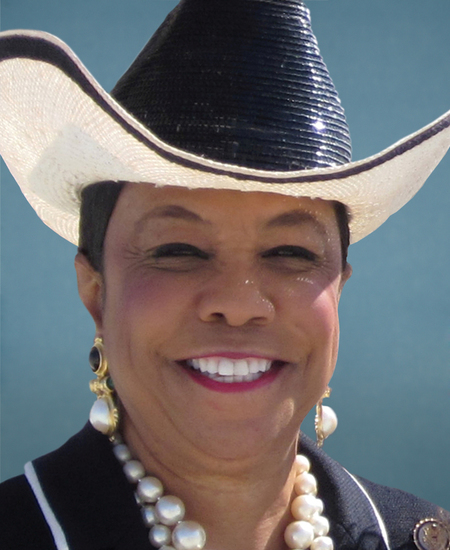
Rep. Frederica S. Wilson
Sponsored bills
Transportation Assistance for Individuals with Disabilities Act This bill directs the Department of Transportation (DOT) to establish a grant program for protection and advocacy (P&A) systems to advocate for individuals with disabilities to access transportation. (Each state has a designated P&A system that protects and advocates for the rights of individuals with disabilities.) The bill directs DOT to select 10 P&A systems to receive five-year grants. Grant recipients must submit an annual report documenting the work they have done to address the barriers to accessing transportation for individuals with disabilities. Further, DOT must award one grant annually to a national organization with extensive knowledge of P&A systems to provide training and technical assistance to the systems.
Maddy summaryHRES 771 is a non-binding resolution expressing the U.S. House of Representatives' support for Israel following Hamas' October 7, 2023, attack. It condemns Hamas' actions, affirms Israel's right to self-defense, and calls for the immediate release of hostages. The resolution also urges enforcement of existing laws restricting aid to terrorists and sanctions against Iran for supporting Hamas. It does not create new policies or allocate funds, as it is a symbolic statement of congressional support.
Maddy summaryHRES 768 is a symbolic House Resolution expressing congressional support for Israel following Hamas' October 7, 2023 attacks. It condemns Hamas' actions, reaffirms Israel's right to self-defense, and calls for the immediate release of hostages. The resolution references the U.S. commitment to Israel's security through existing military aid programs, including the 2016 U.S.-Israel Memorandum of Understanding, and emphasizes enforcement of laws like the Taylor Force Act to prevent U.S. aid from reaching terrorist groups. As a symbolic resolution, it does not create new policy but serves as a statement of congressional support for Israel.
Maddy summaryThe Safe Schools Improvement Act (HR 6031) requires public elementary and secondary schools to implement comprehensive anti-bullying policies that specifically prohibit harassment based on protected characteristics like race, gender identity, disability, religion, and sexual orientation. It mandates schools to collect and publicly report annual data on bullying incidents while establishing clear grievance procedures for students and parents. The bill also requires states to submit biennial reports on school compliance and supports evidence-based interventions, such as restorative practices, to reduce exclusionary discipline. This legislation directly affects all public K-12 schools and students in the U.S., aiming to create safer learning environments through standardized policy requirements and data transparency.
Maddy summaryThe America's College Promise Act of 2023 would make community college tuition free for eligible students by creating a Federal-State partnership where the federal government covers most of the cost. For the 2024-2025 academic year, the federal government would pay 100% of tuition costs for eligible students at community colleges, decreasing to 80% by 2028-2029. States would provide the remaining share, starting at 0% for 2024-2025 and increasing to 20% by 2028-2029. The bill requires states to implement reforms to improve student outcomes, including transfer pathways between community colleges and four-year institutions, as well as support services for underrepresented students. Tribal colleges and universities would receive different funding rules, with the federal government potentially covering 100% of costs.
Maddy summaryHR 5895 amends the Higher Education Act to allow historically Black colleges and universities (HBCUs) to use existing grant funds for specific arts-related activities. The bill adds new provisions enabling HBCUs to provide financial assistance to arts students, establish arts outreach programs, offer wraparound student services (like mentorship and career advising), maintain Black art collections, and create paid arts internships through partnerships. This directly affects HBCUs by expanding how they can allocate current funding to strengthen their arts programs and support Black artists. The key mechanism is modifying Section 323 of the Higher Education Act to include these new uses, with optional partnerships with the National Endowment for the Arts.
Maddy summaryThe Sinkhole Mapping Act of 2023 directs the U.S. Geological Survey (USGS) to study causes of sinkholes - such as extreme weather, drought, and water management changes - and create maps identifying areas at high risk of sinkhole formation. These maps will be updated every five years and made publicly available on a dedicated USGS website for use by community planners and emergency managers. The bill authorizes $40 million annually (2024-2028) to fund this mapping program and related research. It directly affects local governments and emergency response teams by providing data to inform land-use decisions and disaster preparedness.
Maddy summaryHRES 754 is a symbolic House resolution recognizing the heritage, culture, and contributions of Latinas in the United States. It highlights Latinas' roles in business (owning over 2 million businesses), military service (45,710 active duty), arts (Oscar-winning artists like Rita Moreno), and public service, while noting persistent challenges like the 57-cent pay gap. The resolution does not create new laws or policies but formally honors these contributions and acknowledges the need for further progress toward equality. It was introduced by multiple representatives and referred to the Committee on Oversight and Accountability.
Maddy summaryThis bill replaces "Columbus Day" with "Indigenous Peoples’ Day" as the official federal holiday observed on the second Monday in October. It directly affects federal government operations and all federal documents, rules, or laws that previously referenced "Columbus Day" by automatically updating those references to "Indigenous Peoples’ Day" upon enactment. The key mechanism is a simple amendment to federal law (5 U.S.C. § 6103(a)) to change the holiday name and a provision ensuring all existing federal references to Columbus Day are legally treated as referring to Indigenous Peoples’ Day instead. This is a procedural change to federal holidays and references, not a new policy or program.