

Counseling Not Criminalization in Schools Act This bill prohibits the use of federal funds for law enforcement officers in schools. It also establishes a grant program to replace law enforcement officers in schools with personnel and services that support mental health and trauma-informed services. Specifically, the bill prohibits the use of federal funds to hire, maintain, or train law enforcement officers in elementary or secondary schools. Further, it prohibits the use of public safety and community policing grants for law enforcement officers in schools. Additionally, the bill directs the Department of Education to award grants to local educational agencies to (1) replace law enforcement officers in elementary and secondary schools with personnel and services that support mental health and trauma-informed services, and (2) reform school safety and disciplinary policies to reflect evidence-based practices that do not rely on the criminal justice system. A recipient must use grants funds to hire or train specified staff. The bill prohibits the use of grant funds for (1) establishing or enforcing zero-tolerance school discipline policies, (2) purchasing or installing surveillance equipment (e.g., metal detectors), or (3) arming teachers or other school personnel.
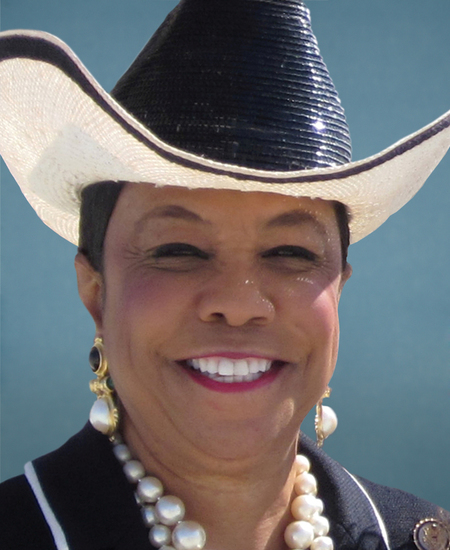
Rep. Frederica S. Wilson
Sponsored bills
Justice for Exonerees Act This bill increases the maximum amount of damages that an individual who was unjustly convicted and incarcerated may be awarded and requires that this amount be adjusted annually for inflation.
Disarm Hate Act The bill expands the categories of persons who are prohibited from receiving or possessing a firearm. Specifically, it prohibits firearm sale or transfer to and receipt, possession, shipment, or transport by a person (1) who has been convicted of a misdemeanor hate crime, or (2) who has received an enhanced hate crime misdemeanor sentence.
Eviction Prevention Act of 2021 This bill authorizes the Department of Justice to provide grants to state and local governments to make legal counsel available to eligible tenants undergoing eviction proceedings. An eligible tenant is an individual whose income is less than 125% of the federal poverty level. The bill also requires the Department of Housing and Urban Development to establish a national database of evictions. The Government Accountability Office must report on the national status of legal representation of tenants in eviction proceedings, including the effects of access to representation on case outcomes.
Menstrual Equity For All Act of 2021 This bill expands access to free sanitary napkins and tampons (i.e., menstrual products) in certain locations and for particular groups. It also requires Medicaid to cover menstrual products, as well as liners, cups, and similar items used by individuals with respect to menstruation. Specifically, the bill imposes requirements to make free menstrual products available in federal and state correctional facilities (including facilities that house aliens detained by the Department of Homeland Security) and restrooms in federal buildings that are open to the public. It also establishes a demonstration grant program to support the provision of free menstrual products on campuses of institutions of higher education and permits elementary and secondary schools to use certain grants to provide menstrual products to students. Furthermore, the bill requires employers with at least 100 employees to provide free menstrual products for employees. It also permits the use of certain grants for emergency food and shelter to provide menstrual products to homeless individuals.
Keeping Our Promise Act This bill authorizes issuing visas to certain individuals who were previously refused a diversity immigrant visa or admission into the United States because of certain executive orders or the COVID-19 public health emergency. (Diversity immigrant visas are available to eligible immigrants from countries with relatively low rates of immigration to the United States.) Specifically, this bill applies to individuals who were refused such a visa solely due to certain executive orders from 2017 to 2020, including orders which suspended the entry of individuals from certain countries. The bill also applies to diversity visa applicants who, because of the COVID-19 emergency, were (1) unable to receive a visa interview despite requesting one, or (2) unable to be admitted into the United States despite being approved for a visa. The Department of State must notify each individual covered under this bill of the individual's visa eligibility. To retain eligibility, an individual must respond to the State Department's notice within one year of the notice. An individual may also lose eligibility if the State Department determines that the applicant fails to meet certain requirements. The bill also relaxes certain annual numerical limits for individuals obtaining a visa under this bill. An individual who was a child when initially selected for a visa shall be treated as a child for the purposes of a visa application under this bill.
Tulsa-Greenwood Massacre Claims Accountability Act of 2021 This bill provides a cause of action for the victims of the 1921 race massacre that occurred in the Greenwood community of Tulsa, Oklahoma. Specifically, any person who acted under color of authority of the State of Oklahoma or the City of Tulsa to deprive a victim, on account of race, of any constitutional right secured to the victim at that time shall be liable to the victim or the victim's beneficiary or heir in a civil action for compensation.
No Stolen Trademarks Honored in America Act This bill modifies the bar against U.S. courts enforcing or validating trademarks that were confiscated by the Cuban government. The bill prohibits U.S. courts from enforcing or validating such confiscated trademarks if the mark had been used in connection with a confiscated business or asset. Currently, the prohibition applies only if the confiscated trademark is being asserted in the United States by a Cuban national. Under the bill, the prohibition shall not apply if the original trademark owner, or a successor, has expressly consented to the enforcement action. The prohibition shall apply only if the entity asserting the trademark rights knew or should have known, when it acquired the rights, that the mark was the same or substantially similar to one connected to a confiscated business or asset.
Original National Domestic Violence Awareness Month Resolution of 2022 This resolution supports the goals and ideals of National Domestic Violence Awareness Month. Further, it expresses the sense of the House of Representatives that Congress should continue to raise awareness of and support programs to end domestic violence.
Protecting Wages of Essential Workers Act of 2022 This bill expands the federal restriction on the garnishment of wages to protect from any garnishment the first $1,000 of an individual's weekly disposable earnings.