Gun Violence Prevention Research Act of 2021 This bill authorizes the Centers for Disease Control and Prevention to conduct or support research on firearms safety or gun violence prevention.
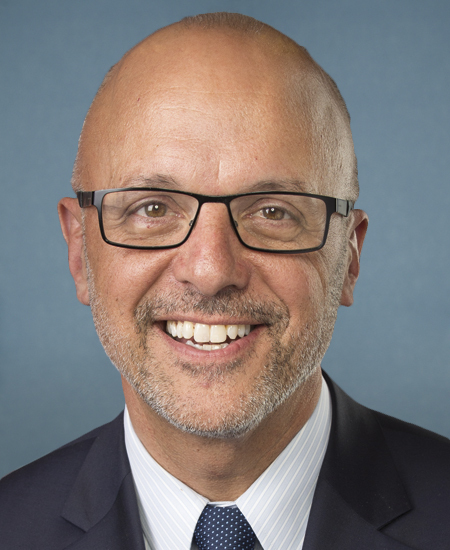
Rep. Theodore E. Deutch
Sponsored bills
This resolution removes Representative Marjorie Taylor Greene from the House Committee on the Budget and the House Committee on Education and Labor.
Real Economic Support That Acknowledges Unique Restaurant Assistance Needed To Survive Act of 2021 or the RESTAURANTS Act of 2021 This bill temporarily establishes and provides funding for the Restaurant Revitalization Fund, from which the Department of the Treasury shall make grants to eligible food and beverage purveyors to cover specified costs such as payroll, operational expenses, and paid sick leave. For the grant program's initial period, Treasury must (1) prioritize awarding grants to marginalized and underrepresented communities, and (2) only award grants to eligible food and beverage purveyors with annual revenues of less than $1.5 million in 2019. For tax purposes, grant amounts are excluded from the recipient's gross income. An entity that received a loan under the Paycheck Protection Program established to support small businesses in response to COVID-19 (i.e., coronavirus disease 2019) may not apply for or use a restaurant revitalization grant for the same expenses for which the entity received the paycheck protection loan. Further, a grant applicant may request an additional amount to cover the cost of providing 10 days of paid sick leave to its employees. Treasury must report a list of grant recipients with the amount each recipient received, as well as demographics and other specified information.
Family and Medical Insurance Leave Act or the FAMILY Act This bill entitles every employee to a family and medical leave insurance (FMLI) monthly benefit payment of two-thirds of the employee's regular pay, limited to a maximum of $4,000, for not more than 60 days of qualified caregiving. The bill establishes the Office of Paid Family and Medical Leave within the Social Security Administration to administer the FMLI program. An FMLI benefit payment must be coordinated with any periodic benefits received under a state or local temporary disability insurance or family leave program. The bill imposes a tax on employers, employees, and self-employed individuals to fund FMLI benefits. It also establishes the Federal Family and Medical Leave Insurance Trust Fund to hold tax revenues.
Health Care Affordability Act of 2021 This bill revises the tax credit for health care premium assistance to expand the eligibility of low-income taxpayers for such credit and reduce the cost of health care premiums.
COVID-19 Testing, Reaching, And Contacting Everyone (TRACE) Act This bill authorizes the Centers for Disease Control and Prevention to award grants for testing, contact tracing, monitoring, and other activities to address COVID-19 (i.e., coronavirus disease 2019). Entities eligible for these grants include certain clinics and hospitals, nonprofits, and schools.
USPS Fairness Act This bill repeals the requirement that the U.S. Postal Service annually prepay future retirement health benefits.
Stopping the Mental Health Pandemic Act This bill requires the Substance Abuse and Mental Health Services Administration to award grants to states, tribal nations, local governments, behavioral health and primary care providers, and community organizations to support behavioral health treatment and services during the COVID-19 (i.e., coronavirus disease 2019) pandemic.
Ensuring Coverage in Public Health Emergencies Act of 2021 This bill requires private health insurance plans to provide a 30-day special enrollment period for eligible individuals after a public health emergency is declared. An employee who is eligible but not enrolled may enroll in an employer-provided group health plan during the special enrollment period.
Quality Care for Nursing Home Residents and Workers During COVID-19 and Beyond Act This bill modifies several requirements for Medicare skilled nursing facilities (SNFs) and Medicaid nursing facilities (NFs) to address the public health emergency relating to COVID-19 (i.e., coronavirus disease 2019) and the overall standard and administration of care in such facilities. Specifically, during the public health emergency, SNFs and NFs must comply with specified quality of care, worker safety, and transparency requirements, subject to civil penalties. Requirements include (1) testing residents and employees for COVID-19 weekly or before shifts, respectively, and reporting any lack of available testing kits on a daily basis; (2) providing at least two weeks of paid sick leave to each employee; and (3) reporting the number of COVID-19 cases and deaths, including demographic information, on a daily basis. The bill also establishes general requirements for SNFs and NFs with respect to minimum staffing levels and protections for whistleblowers and residents, subject to civil penalties, as well as training requirements for nurses. It also requires specific consent procedures in relation to the administration of certain psychotropic drugs and prohibits the use of pre-dispute arbitration agreements in such facilities.