

Duty to Report Act This bill requires political committees, candidates for federal office, and other individuals to report to the Federal Election Commission (FEC) and the Federal Bureau of Investigation (FBI) any offers of prohibited contributions, including offers of nonpublic information regarding other candidates, by foreign nationals. Specifically, political committees and candidates must report to the FEC within 24 hours any (1) offers of prohibited contributions from foreign nationals, and (2) meetings with foreign governments or their agents. In addition, the bill requires political committees, candidates, immediate family members of candidates, and individuals affiliated with a campaign (e.g., employees and independent contractors) to report to the FBI within 24 hours any offers of prohibited contributions from foreign nationals. Further, the bill establishes a new criminal offense for knowingly and willfully failing to comply with this reporting requirement. A violator is subject to criminal penalties—a fine, a prison term of up to two years, or both. Such reported information may not be used to enforce certain immigration provisions related to the removal of undocumented aliens.
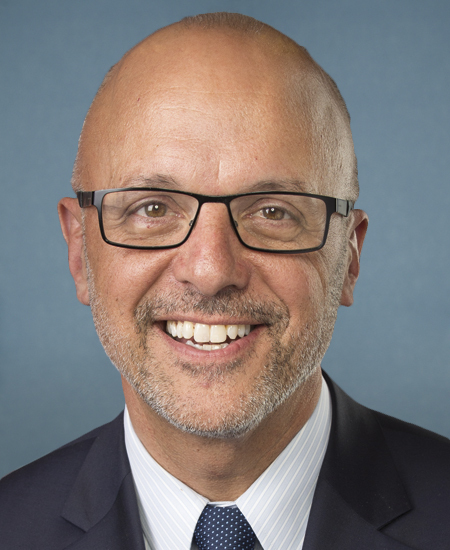
Rep. Theodore E. Deutch
Sponsored bills
Juror Non-Discrimination Act of 2021 This bill prohibits the exclusion of individuals from jury service on the basis of their sexual orientation or gender identity.
U.S. Citizenship Act This bill establishes a path to citizenship for certain undocumented individuals. The bill also replaces the term alien with noncitizen in the immigration statutes and addresses other related issues. Specifically, the bill establishes a new status of lawful prospective immigrant . This status shall be available to an applying noncitizen who meets certain requirements, including being continually present in the United States from January 1, 2021, and passing background checks. After at least five years with this status, an eligible noncitizen may apply for and receive permanent resident status. The bill also provides permanent resident status to certain applying noncitizens, specifically for eligible noncitizens who (1) entered the United States as a minor, (2) were eligible for temporary protected status or deferred enforced departure on January 1, 2017, or (3) worked a certain amount of agricultural labor in the five years prior to applying. Among other things, the bill also redefines for immigration purposes the term conviction to exclude convictions that have been expunged or vacated, requires the Department of State to implement a strategy to advance reforms in Central America and address key factors contributing to migration from the region to the United States, requires the State Department to establish refugee processing centers in Central America, requires Customs and Border Patrol sectors and stations to have a certain number of employees with certain qualifications such as paramedic training, generally prohibits religious discrimination in granting or denying immigration benefits, and establishes grant programs for providing training and services to immigrants.
Preventing Tragedies Between Police and Communities Act of 2021 This bill requires a state or local government that receives funding under the Edward Byrne Memorial Justice Assistance Grant (JAG) program to train law enforcement officers on de-escalation techniques and require law enforcement to use such techniques. The Department of Justice (DOJ) may reduce the JAG allocation of a state or local government that fails to comply with the training requirement. DOJ must reduce by 15% the JAG allocation of a state or local government that fails to require law enforcement officers to use de-escalation techniques.
Elijah E. Cummings Lower Drug Costs Now Act This bill establishes several programs and requirements relating to the prices of prescription drugs. In particular, the bill requires the Department of Health and Human Services (HHS) to negotiate prices for certain drugs (current law prohibits HHS from doing so). Specifically, HHS must negotiate maximum prices for single-source, brand-name drugs that lack certain generics and that are among either the 125 drugs that account for the greatest national spending or the 125 drugs that account for the greatest Medicare spending. HHS must negotiate the prices of at least 25 such drugs for 2024 and of at least 50 such drugs thereafter and must also negotiate prices for certain newly approved drugs and for insulin products. The negotiated prices must be offered under Medicare and may also be offered under private health insurance unless the insurer opts out. The negotiated maximum price may not exceed (1) 120% of the average price in Australia, Canada, France, Germany, Japan, and the United Kingdom; or (2) if such information is not available, 85% of the U.S. average manufacturer price. Drug manufacturers that fail to comply with the bill's negotiation requirements are subject to civil and tax penalties. The bill also makes a series of additional changes to Medicare prescription drug coverage and pricing, including by (1) requiring drug manufacturers to issue rebates to the Centers for Medicare & Medicaid Services for covered drugs that cost $100 or more and for which the average manufacturer price increases faster than inflation, and (2) capping annual out-of-pocket spending under the Medicare prescription drug benefit. The bill also requires drug manufacturers to report specified information for certain high-cost drugs, and it provides funds for opioid epidemic initiatives and biomedical research.
Lady Liberty Act of 2021 This bill sets a floor of 125,000 for the maximum number of refugees who may be admitted into the United States each fiscal year. Under current law, the President sets the annual cap on refugee admissions at the beginning of each fiscal year. (The cap for FY2021 is 15,000, and the cap for FY2020 was 18,000.)
This bill modifies the eligibility criteria for an elderly offender to qualify for early release from prison and placement in home detention. Specifically, it reduces the amount of a prison term an elderly offender must serve by the amount of good time credits earned by the offender.
Black Maternal Health Momnibus Act of 2021 This bill directs multi-agency efforts to improve maternal health, particularly among racial and ethnic minority groups, veterans, and other vulnerable populations. It also addresses maternal health issues related to COVID-19 (i.e., coronavirus disease 2019). The Department of Health and Human Services (HHS) and other specified departments must address the social determinants of maternal health, which include child care, housing, food security, transportation, and environmental conditions. The bill also extends to 24 months postpartum eligibility for the Special Supplemental Nutrition Program for Woman, Infants, and Children. Additionally, HHS and other agencies must take actions to grow and diversify the maternal health workforce. To increase access to maternity care, HHS and other agencies must (1) award specified grants; (2) test an alternative payment model for perinatal care under Medicaid and the Children's Health Insurance Program (CHIP); and (3) support training, technology, and telehealth initiatives. The bill also increases research and data collection on maternal morbidity and mortality, particularly among tribal populations and minority groups. The Bureau of Prisons and the Department of Justice must establish programs to improve maternity care for incarcerated populations. The Medicaid and CHIP Payment and Access Commission must also report on the impact of Medicaid ineligibility for pregnant and postpartum prisoners. Additionally, as a condition for certain grants, states and territories must have laws limiting the use of restraints on pregnant individuals in prisons. The bill also directs activities to mitigate adverse maternal health outcomes associated with climate change and to improve maternal vaccination rates.
Justice for Incarcerated Moms Act of 2021 This bill establishes new requirements related to grants, programs, and reports to improve the treatment and care of pregnant and postpartum women who are incarcerated. Specifically, the bill requires the following: states must restrict the use of restraints on pregnant women in prison in order to receive full funding under the Edward Byrne Memorial Justice Assistance Grant program; the Bureau of Prisons must establish programs to optimize maternal health outcomes for pregnant and postpartum women in federal prisons; the Bureau of Justice Assistance must award state grants for programs to support pregnant and postpartum women in state and local prisons and jails; the Government Accountability Office must report on adverse maternal and infant health outcomes among incarcerated individuals and infants born to such individuals, with a particular focus on racial and ethnic disparities; and the Medicaid and CHIP Payment and Access Commission must report on the impact of Medicaid ineligibility for pregnant and postpartum women in prison.
Jamal Khashoggi Press Freedom Accountability Act of 2021 This bill establishes measures to protect the human rights of journalists. Specifically, the bill (1) expands the scope of required reports related to violations of the human rights of journalists, (2) requires the President to impose certain property- and visa-blocking sanctions on persons responsible for gross violations of the human rights of journalists, and (3) prohibits certain foreign assistance to a governmental entity of a country if an official acting under authority of the entity has committed a gross violation of human rights against a journalist.