

Maddy summaryThis bill designates the U.S. Postal Service facility at 859 North State Road 21 in Melrose, Florida, as the "Pamela Jane Rock Post Office Building" for commemorative purposes. It updates all official U.S. government references to the location to use this new name. The bill is procedural and does not create new policies or affect any other entities. It was enacted on May 7, 2024, after passing both chambers of Congress.
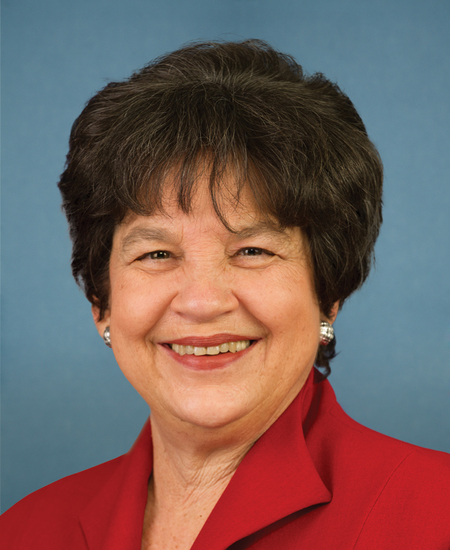
Rep. Lois Frankel
Sponsored bills
Maddy summaryHR 8061, the Crime Victims Fund Stabilization Act of 2024, ensures stable funding for the Crime Victims Fund by directing certain False Claims Act collections into it from 2024 through 2029. Specifically, it adds a provision requiring that amounts collected under the False Claims Act (excluding whistleblower rewards and government reimbursement for damages) be deposited into the fund during this period. This directly affects crime victims who rely on the fund for services like counseling and emergency aid, as it prevents potential shortfalls in funding. The bill makes a concrete policy change by redirecting specific federal civil penalties into the fund, rather than altering the fund's existing purposes or eligibility rules.
Maddy summaryThis resolution (HRES 288) urges the European Union to formally designate Iran's Islamic Revolutionary Guard Corps (IRGC) as a terrorist organization under EU legal framework Common Position 931. It does not create new laws but requests the EU take this specific action, noting the EU has previously sanctioned IRGC individuals but not the organization as a whole. The resolution cites the IRGC's role in human rights abuses, support for proxy groups, and involvement in conflicts like Ukraine as context for the request. Introduced in April 2023 by 20+ House members, it is a non-binding expression of congressional preference.
Maddy summaryHR 1083, the Caring for Survivors Act of 2023, increases financial support for surviving spouses of veterans. It amends Title 38 to raise dependency and indemnity compensation from a fixed $1,154 to 55% of the monthly compensation rate under section 1114(j), effective six months after enactment. The bill also modifies eligibility for survivors of veterans who died before 1993, ensuring they receive the greater of their current benefit or the new calculation. Additionally, it reduces the required continuous service rating period for survivors from 10 years to five years when a veteran was totally disabled at death. These changes directly affect surviving spouses, particularly those with veterans who died prior to 1993.
Maddy summaryThis resolution (HRES 1147) calls on the U.S. to urge the UN Security Council to investigate sexual violence and torture reported during Hamas' October 7, 2023, attack on Israel. It references a UN report finding "reasonable grounds" for incidents including rape, gang rape, and mutilation of victims, based on interviews, medical evidence, and survivor accounts. The resolution demands the international community hold perpetrators accountable for these acts. As a non-binding House resolution, it does not create new law but expresses congressional support for accountability through UN mechanisms.
Maddy summaryHRES 1136 is a non-binding House resolution expressing support for designating April 2024 as "Parkinson’s Awareness Month." It highlights that Parkinson’s disease affects over 1 million people in the U.S. annually, causes significant health impacts, and requires increased research and support. The resolution urges continued funding for Parkinson’s research, recognizes individuals participating in clinical trials, and commends organizations aiding those living with the disease and their caregivers. This resolution has no legal effect but aims to raise public awareness and support for Parkinson’s advocacy efforts.
Maddy summaryHR 7921, the Countering Antisemitism Act, establishes a National Coordinator to Counter Antisemitism within the Executive Office of the President and creates an Interagency Task Force to coordinate federal efforts against antisemitism across multiple agencies. The bill requires federal agencies to report on implementing the U.S. National Strategy to Counter Antisemitism, mandates annual threat assessments of antisemitic violent extremism from the FBI, DHS, and National Counterterrorism Center, and addresses antisemitic discrimination in higher education through a designated Office for Civil Rights Designee. It also includes provisions for a study on Holocaust education by the U.S. Holocaust Memorial Museum, a study on online antisemitism with recommendations for Congress, and amendments to the Nonprofit Security Grant Program to require public reporting on grant applications and awards.
Maddy summaryThe STAMP Act of 2024 bans state and local governments from taxing menstrual products. It prohibits taxes on items like pads, tampons, menstrual cups, discs, and period underwear that meet industry standards. The law directly affects consumers purchasing these products and state/local governments that previously imposed such taxes. It takes effect 120 days after enactment, removing tax burdens on menstrual products nationwide.
Maddy summaryHR 7866, the United States-Israel Anti-Tunnel Cooperation Enhancement Act, increases funding for U.S.-Israel collaboration on anti-tunnel technology from $50 million to $80 million. The bill directly affects U.S. defense and homeland security agencies working with Israel to detect, map, and disrupt underground terror tunnels used by groups like Hamas. Key provisions include authorizing the higher funding level under existing law to enhance joint efforts against subterranean threats, such as tunnels used for attacks, weapon storage, and hostage holding beneath civilian areas in Gaza. This focuses on concrete policy changes to scale up bilateral cooperation on a specific security technology.
Maddy summaryHRES 1110 is a symbolic resolution passed by the U.S. House of Representatives in March 2024 to commemorate March 2024 as National Women’s History Month. It formally supports the month’s goals, recognizes women and organizations advancing women’s history education, and highlights the intersectional contributions of Black, Hispanic, Asian, Native American, Pacific Islander, LGBTQ+, and disabled women throughout U.S. history. The resolution has no legal effect or policy changes - it serves solely as a ceremonial acknowledgment of historical milestones and ongoing advocacy for gender equality. It directly affects all Americans by affirming the significance of women’s historical contributions through official congressional recognition.