

Maddy summaryHR 2799, the Closing the Bump Stock Loophole Act of 2025, prohibits the sale, possession, and modification of devices that increase the firing rate of semi-automatic firearms to mimic machine guns (commonly called "bump stocks"). It specifically bans manual, power-driven, or electronic devices designed to speed up firing, as well as modified firearms that achieve this effect. Owners of pre-existing modified firearms must register them within 120 days of the law's enactment, with exemptions for government entities and firearms already lawfully modified and registered before the bill passes. The bill does not restrict standard semi-automatic firearms or require registration of unmodified guns.
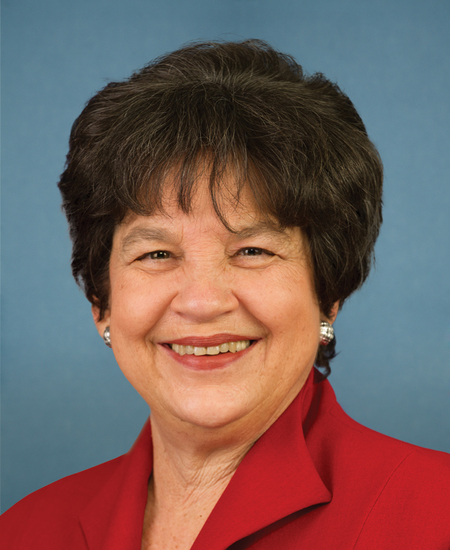
Rep. Lois Frankel
Sponsored bills
Maddy summaryThis bill establishes federal minimum standards for collective bargaining rights for public employees and supervisors. The Federal Labor Relations Authority would determine if state laws provide these rights, and if not, would establish them for affected employees. The bill guarantees public employees the right to form unions, bargain collectively, and engage in concerted activities, while requiring public employers to recognize unions and put agreements in writing. It also prohibits strikes or lockouts that would disrupt emergency services. This would apply to public employees in states that don't meet the federal standards for collective bargaining rights.
Maddy summaryThis bill requires the Secretaries of Defense and Veterans Affairs to evaluate existing and ongoing research on menopause, perimenopause, and mid-life health for women in the military and as veterans. It directs them to identify gaps in knowledge about treatments, the impact of military service (including combat roles and exposure to toxins like burn pits), mental health effects, and healthcare provider training needs. Within 180 days of enactment, the departments must submit a report with findings and a strategic plan to address identified gaps and prioritize future research. The bill ensures this work supplements, rather than duplicates, existing efforts by the Department of Health and Human Services.
Maddy summaryHR 2687, the End Kidney Deaths Act, creates a federal tax credit for living kidney donors who give non-directed donations (meaning they don't know the recipient's identity). It provides a $10,000 annual credit for five years ($50,000 total) to donors whose kidney is removed after December 31, 2026, with special rules if the donor dies during this period. The credit applies only to living, non-directed kidney donations and explicitly states it does not count as "valuable consideration" under laws prohibiting organ sales. This bill directly affects living kidney donors who choose to donate anonymously, aiming to incentivize such donations by offsetting related costs through tax relief. The credit expires after December 31, 2036.
Maddy summaryThis bill prohibits new federal oil and gas leasing and drilling in specific offshore areas near Florida. It directly affects federal energy leasing decisions by banning exploration, development, and production in three designated zones: the eastern Gulf of Mexico (per a 2006 law), a portion of the South Atlantic Planning Area south of 30°43'N latitude, and the Straits of Florida. The key mechanism is an amendment to federal law that blocks new leases in these areas, though existing leases remain unaffected. This policy change prevents future offshore drilling in these environmentally sensitive Florida coastal waters.
Maddy summaryThe No Tax Breaks for Union Busting Act would deny tax deductions for employers who spend money to influence employees' decisions about union activities, such as union elections or collective bargaining. It defines "labor organization activities" broadly to include union elections, labor disputes, and collective actions. The bill requires employers to report such spending on tax returns and prevents them from deducting these expenses from taxable income. This would apply to employers using tactics like captive audience meetings, outside consultants, or other efforts to sway workers' union decisions. The policy aims to remove tax incentives for employers to interfere with workers' rights under labor law.
Maddy summaryHR 2680, the Expanding Access to School Meals Act of 2025, ends reduced-price breakfast and lunch programs under federal law and expands free meal eligibility. It raises the income threshold for free lunch eligibility from 130% to 224% of the federal poverty level (Sec. 201) and allows schools to directly certify children receiving Medicaid benefits as eligible for free meals without additional applications (Sec. 202). The bill also permits schools to request retroactive reimbursement for meals served to eligible children starting the first day of the school year (Sec. 203) and increases the community eligibility program multiplier to 2.5 for schools serving high-poverty areas (Sec. 204). These changes directly affect public school students from low-income families and school districts receiving federal meal reimbursement funds.
Maddy summaryThe Tax Fairness for Workers Act (HR 2671) would allow certain employees to deduct work-related expenses directly from their gross income. Specifically, it creates an above-the-line deduction for union dues (amending IRC Section 62(a)(1)) and reinstates a deduction for other out-of-pocket work costs like uniforms or tools (amending IRC Section 67(g)), effective for 2025 tax years. This directly affects union members and workers with significant job-related expenses who previously could not deduct these costs. The bill removes the prior limitation that barred these deductions, making them available without needing to itemize. The policy change simplifies tax filing for affected workers by treating these expenses as deductible business costs.
Maddy summaryThis bill, HR 2253 (Puppy Protection Act of 2025), sets new federal standards for commercial dog dealers who sell puppies to the public. It requires specific housing sizes based on dog size (e.g., 12-30 square feet per dog), daily exercise in safe outdoor areas, clean water and nutritious food twice daily, and annual veterinary exams including dental checks. The bill also limits breeding frequency (max 2 litters in 25 months), sets age minimums for breeding (18 months for small dogs, 2 years for large dogs), and mandates health screenings to prevent genetic diseases. These requirements apply directly to commercial dealers, with final regulations to be issued within 18 months of enactment.
Maddy summaryThis bill, HR 2102 (Major Richard Star Act), allows veterans with combat-related disabilities to receive both full military retired pay and veterans' disability compensation simultaneously, without the previous offset that reduced retired pay. It directly affects veterans already eligible for both benefits due to combat-related injuries, removing the requirement that their retired pay be reduced by the disability compensation amount. The key provision amends Title 10 and Title 38 to eliminate the offset rule (sections 5304 and 5305 of Title 38) for these veterans. The change applies to payments starting after the bill’s enactment date, effective for all qualifying veterans. This is a policy change to increase financial support for affected veterans, not a new benefit.