

Maddy summaryHR 1435, the Preserving Choice in Vehicle Purchases Act, amends the Clean Air Act to restrict states from implementing vehicle emissions rules that limit the sale or use of new gasoline-powered cars. It directly affects states with stricter emissions standards (like California) by adding a new definition that blocks state rules "directly or indirectly" limiting internal combustion engine vehicles as defined in federal regulations as of January 1, 2023. The bill requires the EPA to revoke existing state emissions waivers granted between January 2022 and the bill’s enactment if they don’t comply with this new definition. This creates a concrete federal standard preventing states from advancing policies that could reduce demand for conventional vehicles.
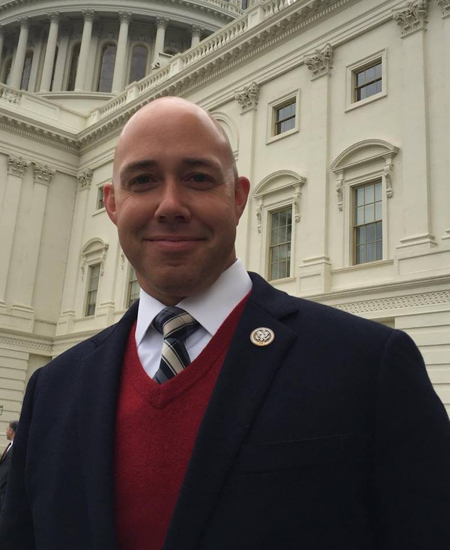
Rep. Brian J. Mast
Sponsored bills
Maddy summaryHRES 688 is a non-binding House resolution expressing support for designating September 16-23, 2023, as "National Estuaries Week." It highlights estuaries' critical role in the U.S. economy, noting they support 39% of jobs, 47% of economic output, and 68% of commercial fish by value. The resolution aims to raise public awareness about estuaries' ecological importance - such as providing habitat for fish, flood control, and carbon sequestration - and encourages efforts to protect and restore them. It does not create new laws or funding but symbolically acknowledges ongoing conservation work by federal, state, and community partners.
Maddy summaryHR 3152, the "Fight CRIME Act," aims to maintain international restrictions on Iran's missile-related activities by requiring diplomatic efforts to extend these restrictions before they expire in October 2023. The bill mandates annual reports detailing U.S. diplomatic strategies, potential impacts of expiration, and measures to deter missile technology transfers to Iran. It establishes sanctions against foreign individuals or entities that knowingly support Iran's missile or drone programs, including asset freezes and visa restrictions. These sanctions apply regardless of whether UN restrictions remain in effect after their expiration, directly affecting foreign entities involved in these activities.
Maddy summaryThis bill requires the Bureau of Prisons to develop and implement a strategy for scanning all incoming mail at federal prisons to stop fentanyl and other synthetic drugs from entering facilities. It directs the Bureau to evaluate existing scanning technology within 180 days and submit a detailed plan to Congress within 90 days, including how to provide digital copies of mail to inmates within 24 hours and physical copies within 30 days (if safe). The strategy must achieve 100% mail scanning capacity at all federal prisons, prioritize high-security facilities, and include a budget proposal for fiscal years 2024-2026. This directly affects federal prisons, inmates, and Bureau employees by changing mail processing procedures to enhance safety and reduce staffing burdens from manual mail checks.
Providing Essential Temporary Shelter Assistance For Emergencies Act of 2023 or the PETSAFE Act of 2023 This bill directs the Federal Emergency Management Agency (FEMA) to establish a pilot program to provide grants for mobile pet shelters during emergencies and major disasters. FEMA may provide funds to state, local, and tribal governments to establish a new pet shelter site that is a mobile unit, which may be a companion animal mobile equipment trailer, to be used in case of evacuation due to emergencies and major disasters. FEMA's authority to approve projects under this bill shall cease on January 1, 2029.
Maddy summaryHRES 624 is a non-binding resolution recognizing Gibraltar's right to self-determination regarding its status as a British Overseas Territory. It highlights that Gibraltarians have consistently voted (99.6% in 1967, 98.48% in 2002) to remain under UK sovereignty and notes U.S. military reliance on Gibraltar's facilities since 1801, including during WWII and the 2011 Libya operation. The resolution states the House honors Gibraltar's security contributions and affirms that Gibraltarians' views must be central to any future discussions about its status. It does not change U.S. policy or impose new obligations, merely expressing the House's position.
This bill requires the Department of State to make certain information regarding the 2021 withdrawal of U.S. personnel from Afghanistan available to Congress and to the public. Specifically, the State Department must provide Congress with the July 13, 2021, dissent channel cable regarding the likely consequences of a U.S. withdrawal from Afghanistan and the official State Department response to the cable. (The dissent channel is a tool that foreign service officers may use to communicate alternative or dissenting views about foreign policy matters with senior State Department officials. ) The unredacted cable and official response must be provided to Congress within five days of the bill's enactment, except that the names of the cable signatories may be redacted. The bill also requires the State Department to complete a declassification review of (1) the dissent channel cable and official response, and (2) the after-action review developed with respect to the Afghanistan withdrawal. After determining what information may be declassified, the State Department must publish such information online within 60 days of the bill's enactment.
Maddy summaryHR 4517, the Ensuring Voluntary Actions are Compensated Act of 2023 (EVAC Act), requires the Secretary of State to create a plan within 120 days to reimburse U.S. citizens, lawful permanent residents, and eligible Afghan allies for personal expenses paid to evacuate during August 1-November 1, 2021. The plan must detail eligibility, reimbursement limits, claim processes, required documentation, and processing timelines for those who used personal funds to evacuate. It mandates consultation with the Defense Secretary and relevant NGOs/veteran groups, and includes cost estimates and a list of consulted organizations. The bill directly affects individuals and entities who covered evacuation costs during this specific period, aiming to provide financial compensation for voluntary evacuation efforts.
Maddy summaryThis bill directs the U.S. Treasury to mint commemorative coins marking the Marine Corps' 250th anniversary in 2025. It authorizes three coin types: $5 gold coins (max 50,000), $1 silver coins (max 400,000), and half-dollar coins (max 750,000), with surcharges of $35, $10, and $5 respectively. The surcharge proceeds will fund the Marine Corps Heritage Center's educational programs, with no net cost to taxpayers as the Treasury must recover all minting costs through the surcharges. The coins can only be issued during 2025, and the Treasury must ensure all costs are covered before distributing funds to the Heritage Foundation.
Cease Animal Research Grants Overseas Act of 2023 or the CARGO Act of 2023 This bill prohibits the National Institutes of Health from awarding support for any research that uses live animals unless the research occurs in the United States (including U.S. territories and possessions).