

Maddy summaryThe Closing the Meal Gap Act of 2023 amends the Food and Nutrition Act to update how SNAP (Supplemental Nutrition Assistance Program) benefits are calculated. It replaces the "thrifty food plan" with a "low-cost food plan" based on a specific 4-person family diet, requiring the government to reevaluate this plan by 2029 and every 5 years after. The bill also updates medical expense deductions, eliminates time limits on benefits, and allows Puerto Rico to join SNAP with specific transition requirements. These changes directly affect SNAP recipients, particularly in Puerto Rico, Hawaii, and Alaska, by adjusting benefit calculations to better reflect current food costs.
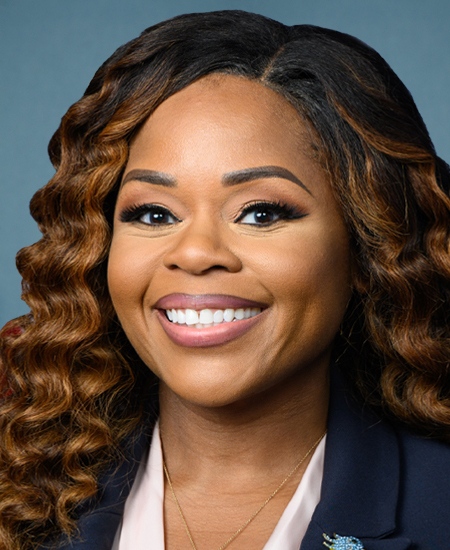
Rep. Sheila Cherfilus-McCormick
Sponsored bills
Maddy summaryHRES 455 is a symbolic House resolution expressing support for Black service members who died protecting the U.S. during military conflicts while facing racism in the Armed Forces and systemic inequities. It acknowledges their historical contributions and struggles, citing examples from the Revolutionary War through the Global War on Terror. The resolution has no legislative effect - it solely affirms recognition on Memorial Day without proposing policy changes or requiring action. As a non-binding resolution, it directly affects public acknowledgment of this group but does not alter military policies or address systemic issues.
Maddy summaryHR 3713 creates federal grants to fund comprehensive school-based mental health programs for students in grades K-12, including those in Bureau of Indian Education schools. It requires partnerships between schools and community mental health providers to deliver trauma-informed, culturally appropriate services addressing suicide risk, grief, violence, and trauma exposure. The bill authorizes $300 million annually (2024-2027) for these programs, mandating privacy protections under HIPAA and FERPA, and requires annual reporting on program effectiveness.
Maddy summaryThe Cady Housh and Gemesha Thomas Student Suicide Prevention Act of 2023 requires states to establish a policy mandating annual suicide prevention training for school staff and high school students (grades 9-12). The training must be evidence-based, cover recognizing suicide warning signs, appropriate responses, and referrals to mental health services, while including cultural competency. It allocates $48 million in federal funds, with at least 15% dedicated to supporting this training program, and requires states to collaborate with mental health experts. The bill directly affects school staff and high school students in states that adopt the policy and receive federal funding.
Maddy summaryHR 3619, the Toxic-Free Beauty Act of 2023, bans the intentional addition of specific chemicals - including formaldehyde, certain parabens, phthalates, mercury, and two dyes - to cosmetic products sold across state lines. It directly affects cosmetic manufacturers and retailers, requiring them to reformulate products to remove these substances. The ban prohibits these chemicals in cosmetics introduced into interstate commerce starting January 1, 2025. This policy change updates federal safety standards under the Federal Food, Drug, and Cosmetic Act to restrict the use of identified chemicals in beauty products.
Maddy summaryThis bill establishes research programs to study health impacts of cosmetic chemicals on communities of color and professional salon workers. It requires manufacturers to provide translated safety data sheets for professional cosmetics in multiple languages, including Spanish, Vietnamese, Chinese, and Korean. The bill funds two resource centers: one focused on beauty justice for communities of color and another specifically for salon worker health and safety. It also allocates funds for research into developing safer cosmetic alternatives, particularly for products marketed to women and girls of color and used by salon workers.
Cosmetic Fragrance and Flavor Ingredient Right to Know Act of 2023 This bill imposes disclosure and labeling requirements on cosmetic products that contain certain ingredients. A cosmetic product that fails to meet such requirements may not be sold. Within two years of this bill's enactment, a cosmetic product's labeling or packaging must include a full list of its ingredients, as well as a specified statement that directs consumers to the brand owner's website for the health impacts of any ingredient that (1) is identified on specified lists of harmful or potentially harmful chemicals, such as chemicals identified as carcinogenic to humans by the Environmental Protection Agency or toxic air contaminants under California regulations; or (2) must be disclosed under certain European Union laws and is present in a product above specified concentrations. The Food and Drug Administration must publish and periodically update on its website a list of the ingredients subject to this requirement. Within one year of this bill's enactment, a brand owner must disclose the full list of ingredients for each cosmetic product on its website, as well as whether a cosmetic product contains any fragrance or flavor ingredient that is subject to this bill's labeling or packaging requirement and, if so, the ingredient's functional purpose.
Cosmetic Supply Chain Transparency Act of 2023 This bill requires the Food and Drug Administration (FDA) to maintain a list of certain nonfunctional constituents in cosmetics that are harmful to human health or the environment, authorizes the FDA to request from a brand owner (i.e., the entity bringing a cosmetic to market) certain information about a cosmetic's ingredients, and addresses related issues. For each listed nonfunctional constituent, the list must identify the ingredient or cosmetic (or category of ingredient or cosmetic) in which the constituent is known or reasonably expected to be present. The FDA must also (1) establish procedures for petitions to add substances to the list, (2) issue guidance for industry related to testing and detecting such nonfunctional constituents, and (3) establish a committee to provide advice on creating the list and developing the required industry guidance. Within a year of a nonfunctional constituent being added to the list, a supplier of an ingredient or cosmetic must test for that constituent and provide a brand owner the results and other information before selling the ingredient or cosmetic to the brand owner. A supplier of an ingredient or cosmetic must provide additional information about the item upon a brand owner's request. Brand owners must maintain records with information about the suppliers of ingredients and raw materials used in their cosmetics and provide such information to the FDA upon request. The bill also imposes civil penalties for brand owners and suppliers that violate this bill's provisions.
Maddy summaryThis bill creates a new grant program under the Public Health Service Act to provide emergency funding for health care facilities during declared emergencies (like pandemics or natural disasters). It authorizes grants to public or private nonprofit health care facilities and home health agencies to pay hazardous duty compensation to eligible health care workers - such as nurses, medical technicians, and facility cleaners - performing essential on-site work. Grants can cover up to $13 per hour in hazard pay (capped at $25,000 annually per worker) or fund safety measures like personal protective equipment and alternative transit. The program requires the Secretary of Health and Human Services to determine if work or commutes are hazardous during emergencies.
Secure Testing Resources Instead of Prosecuting Act or the STRIP Act This bill exempts the possession, sale, or purchase of fentanyl drug testing equipment, including test strips, from criminal penalties under the Controlled Substances Act.