

Maddy summaryThis bill authorizes a one-time $40,000 payment to former Air America employees who served at least five years during 1950-1976, or to their survivors (widows/widowers, dependents, or children). Additional $8,000 payments are provided for each full year of service beyond five years. The total funding is capped at $60 million, with claims due within two years of regulations being finalized. It does not create ongoing benefits or change Air America’s legal status, and payments are issued as a single lump sum.
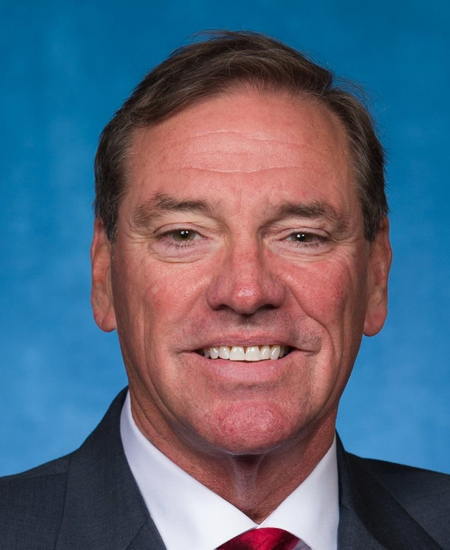
Rep. Neal P. Dunn
Sponsored bills
Health Care Practitioner Disaster Protection Act This bill extends certain liability protections available for health care practitioners who provide voluntary health care services in declared emergencies through a community health center other than the one that initially sponsored them. Current law makes the liability protections available to volunteer practitioners that are sponsored by a particular community health center. This bill maintains the liability protections for a volunteer practitioner who provides services through a different community health center if the center (1) seeks the assistance of the volunteer practitioner to respond to a declared emergency, and (2) promptly notifies the Department of Health and Human Services that the volunteer practitioner will be providing services.
Maddy summaryHR 5110, the Protecting Hunting Heritage and Education Act, amends the Elementary and Secondary Education Act of 1965 to clarify that federal education funds cannot be used for certain weapons - but this restriction does not apply to archery, hunting, or other shooting sports training programs. The bill directly affects schools and educational programs seeking to use federal funds for these specific activities, such as archery clubs or hunting safety education. It adds an explicit exception to the existing prohibition, allowing funds to support "educational instruction or enrichment activities" in these sports under authorized programs. This change removes ambiguity about funding eligibility for such educational initiatives in K-12 schools.
Maddy summaryThe American Broadband Deployment Act of 2023 sets specific timeframes for state and local governments to approve requests for placing, constructing, or modifying broadband infrastructure, requiring decisions within 60-150 days depending on facility type. If deadlines are missed, requests are deemed approved, and local governments must avoid discriminatory regulations that would prevent service improvements or new infrastructure. The bill also establishes rules for fees that must be competitive, neutral, and based on actual costs, and requires written decisions with evidence for denials. This directly affects broadband providers seeking to deploy infrastructure and the local governments that regulate such deployments.
Maddy summaryThis resolution designates the week of September 25-29, 2023, as "National Clean Energy Week" to recognize the growing role of clean energy in the U.S. economy. It expresses support for clean energy jobs and innovation, noting the sector employed about 8.1 million people in 2022. The resolution encourages federal, state, and local investment in affordable clean energy technologies and promotes "commonsense solutions" for energy needs. As a symbolic gesture, it has no legal force or funding implications - it simply urges recognition of clean energy's economic and environmental contributions.
Maddy summaryThis bill directs the CDC to launch public education campaigns about blood clot risks, symptoms, and prevention, with special focus on high-risk groups including Black Americans, cancer patients, seniors, and hospitalized individuals. It creates a new 18-month advisory committee to study DVT/PE data collection, develop prevention guidelines, and recommend improved care standards for at-risk patients. The bill also mandates a federal study on electronic health record systems for better DVT/PE surveillance and authorizes $20 million annually for these efforts through fiscal year 2029. These provisions aim to reduce preventable deaths and improve early diagnosis, directly affecting millions at risk of blood clots nationwide.
Maddy summaryHRES 700 is a non-binding congressional resolution expressing support for designating September 2023 as "National Prostate Cancer Awareness Month." It highlights that prostate cancer affects 1 in 8 U.S. men and has significantly higher mortality rates among African-American men, while urging increased public awareness, early screening promotion, and research funding. The resolution does not create new laws or allocate funds but encourages the public, healthcare providers, and organizations to promote awareness and support efforts to improve detection and treatment. It aligns with existing federal cancer research investments, such as the $7.1 billion allocated to the National Cancer Institute in 2023.
Venezuelans Overcoming Interference and Corruption in Elections Act or the VOICE Act This bill requires the President to impose sanctions on any foreign persons who prevent opposition candidates from participating in the 2024 Venezuelan presidential election. Specifically, the President must impose sanctions on any foreign persons (including Venezuelan officials) who prevent opposition candidates from participating in, or who materially assist in preventing opposition candidates from participating in, the 2024 Venezuelan presidential elections. Sanctions include asset blocking, inadmissibility into the United States, and visa revocation. The President may waive sanctions based on a determination that such a waiver is in the national interest of the United States.
Maddy summaryThis bill appropriates $16.5 billion from the Treasury for disaster relief under the Robert T. Stafford Act, covering major disasters declared between 2020 and 2023. It provides tax relief by increasing deductible casualty losses for individuals in qualifying disaster areas, allowing deductions up to 10% of adjusted gross income (instead of the usual 10% floor) and raising the standard deduction by the net disaster loss amount. The tax provisions exclude areas affected solely by COVID-19 or previously covered by prior relief acts. It also includes minor procedural updates, such as allowing block grants for agricultural losses and requiring a Department of Defense report on Hurricane Idalia damage.
Maddy summaryHR 5044, the Timber Innovation for Building Rural Communities Act, creates a federal platform to track carbon emissions and storage from forests and wood products, using data from USDA programs. It establishes grant programs to fund wood-building projects in rural areas with high unemployment, support wood-based construction education at colleges, and pilot innovative wood infrastructure projects like mass timber buildings in rural communities. The bill prioritizes projects that boost local jobs, reduce wildfire risks, and demonstrate economic benefits from wood products, requiring matching funds from non-federal sources. These grants, totaling up to $10 million annually per program, aim to strengthen rural economies tied to forestry while promoting wood as a carbon-friendly building material.