

Maddy summaryHR 7159, the Pacific Partnership Act, mandates the U.S. government to develop a comprehensive strategy for engagement with Pacific Island nations. It requires the President, by January 1, 2026, and every four years thereafter, to submit a detailed strategy to Congress outlining U.S. diplomatic, defense, and economic goals in the region, including assessments of threats like natural disasters, illegal fishing, and foreign military activity. The strategy must detail plans to address these threats, coordinate with Pacific Island governments and regional organizations like the Pacific Islands Forum, and outline required resources and staffing. This bill directly affects U.S. foreign policy operations and shapes how the federal government engages with Pacific Island nations on shared security, economic, and environmental priorities.
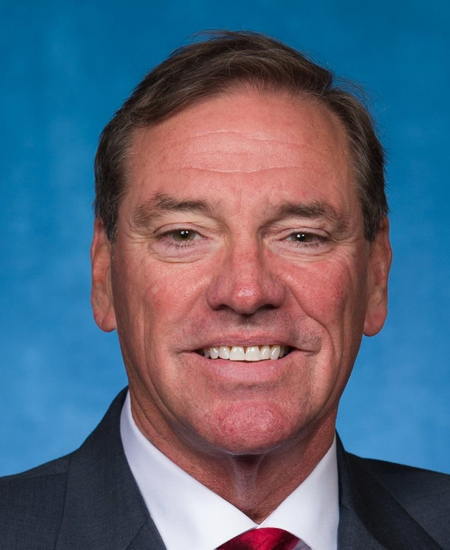
Rep. Neal P. Dunn
Sponsored bills
Maddy summaryHR 5245 requires the Secretary of State to provide detailed notifications to Congress before entering, renewing, or extending any science and technology agreement with China. The notification must include the full agreement text, national security justification, risk assessments (including technology transfer concerns), human rights considerations, and monitoring plans, and must be submitted 30 days before any agreement takes effect. Existing agreements with China must be revoked unless the Secretary submits the required notification within 60 days of the bill's enactment. This bill directly affects the Department of State's ability to negotiate such agreements and gives Congress enhanced oversight authority. It applies to all future agreements and existing ones in effect when the law takes effect.
Maddy summaryThis bill blocks U.S. federal funding for two international environmental agreements until China's country status changes under those treaties. Specifically, it prohibits funds for the Montreal Protocol (ozone protection) until China is removed from "developing country" status, and for the UN Climate Change Convention until China is added to Annex I (developed nations list). The bill requires the President to certify these status changes to Congress before funding can resume. It directly affects U.S. government budget allocations for these global environmental programs. The bill does not alter the treaties themselves but conditions U.S. financial participation on China's reclassification.
Maddy summaryHR 9374, the Stand with Israel Act, prohibits U.S. federal funds from being used to support the United Nations or its entities if they restrict Israel's full participation as a member state. The bill specifically blocks funding for any UN body that expels, downgrades, or suspends Israel's membership or limits its ability to participate equally with other nations. This affects U.S. government contributions to the UN, requiring the Department of State and other agencies to halt funding for such UN actions. The key mechanism is a new provision in the UN Participation Act that mandates this funding restriction whenever Israel's UN participation is impaired.
Maddy summaryThe SAFER at the Border Act prohibits the U.S. Department of Homeland Security from temporarily admitting (paroling) certain individuals at the border. It defines "known terrorists" (those arrested, charged, or convicted for terrorism), "suspected terrorists" (reasonably suspected of terrorism), and "special interest aliens" (those with potential terrorism links based on travel patterns). The bill explicitly bans parole for these individuals, even for humanitarian reasons or public benefit, and also prohibits parole for refugees. Additionally, it allows states to sue the Department of Homeland Security if they suffer financial harm exceeding $100 from the parole of such individuals.
Maddy summaryHR 9376, "Lulu’s Law," requires the Federal Communications Commission (FCC) to update wireless emergency alert regulations within 60 days of enactment. It specifically adds "shark attack" as an event eligible for emergency Alert Messages under FCC rules. This change directly affects how emergency alerts are categorized and transmitted to the public via wireless devices. The bill modifies existing FCC regulations (Title 47, Part 10) to include shark attacks as a triggering event for emergency alerts, without altering other alert types or requirements.
Maddy summaryHR 8757, the REAL Meat Act of 2024, prohibits federal funding for cell-cultured meat production, research, promotion, or related facilities. It directly affects federal programs, agencies, and recipients of agricultural funding by banning the use of taxpayer money for any activity involving lab-produced meat. The bill defines cell-cultured meat as meat grown from animal cells in a lab and exempts NASA funding intended for space consumption. This policy change restricts federal support for the emerging cell-cultured meat industry while allowing specific space-related research.
Maddy summaryHRES 1412 is a formal congressional resolution condemning the People’s Republic of China Coast Guard for specific actions against multiple nations. It cites recent incidents, including harassment of Malaysian oil projects, an attack on Philippine soldiers, standoffs near Japan’s Senkaku Islands, and the interception of a Taiwanese fishing vessel. The resolution demands China respect international maritime law, calls for global condemnation of its actions, and urges the U.S. to strengthen alliances with partners like Japan and the Philippines while holding Chinese officials accountable. As a symbolic resolution (not a binding law), it expresses U.S. policy stance but does not impose new legal requirements.
Maddy summaryThis resolution aims to block a rule issued by the National Highway Traffic Safety Administration (NHTSA) that sets new fuel efficiency standards for passenger cars, light trucks (starting in 2027), and heavy-duty pickup trucks/vans (starting in 2030). If passed, it would prevent this specific rule from taking effect by disapproving it under a congressional review process. The rule directly affects vehicle manufacturers by requiring them to meet these updated fuel economy targets for future model years. This is a procedural resolution, not a new law, focused solely on halting the implementation of the existing NHTSA rule.
Maddy summaryHouse Resolution 1400 designates August 21, 2024, as Fentanyl Prevention and Awareness Day. It expresses the House's support for efforts to raise public awareness about the dangers of fentanyl, a highly potent synthetic opioid linked to overdose deaths. The resolution encourages Americans to promote drug prevention, support healthy lifestyles, and participate in community activities focused on fentanyl safety, without creating new laws or funding. It directly affects communities, schools, and families working to address the fentanyl crisis.