

Maddy summaryThis resolution supports designating June 9-15, 2025, as "National Men's Health Week," an annual observance established by Congress in 1994. It does not create new laws or programs but formally encourages the President to issue a proclamation urging public awareness of male health issues. The resolution cites statistics on health disparities affecting men (e.g., higher prostate cancer rates among Black men, lower preventive care usage) to emphasize the importance of early detection. It aligns with existing annual observances recognized by all 50 states and over 350 cities. The resolution’s only action is symbolic support for an established health awareness initiative.
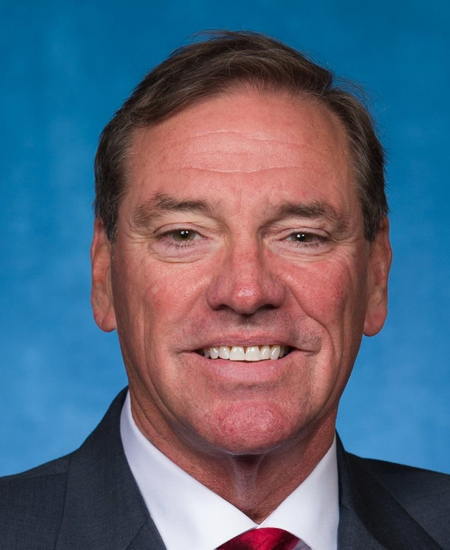
Rep. Neal P. Dunn
Sponsored bills
Maddy summaryHR 3759, the Streamlined FEMA Cost Exemption Act, shortens the timeframe for FEMA to reclaim certain disaster assistance funds from 3 to 2 years. It expands the President’s authority to waive recoupment requirements for states, businesses, or individuals affected by disasters, provided the waiver is in the public interest and avoids waste. The bill also allows for a 5% cost overrun on covered disaster recovery projects (like those under FEMA sections 403, 406, or 407) without triggering repayment, and establishes a standardized error ratio to prevent unnecessary fund reclaiming during eligibility reviews. These changes aim to reduce administrative hurdles for disaster-affected communities and streamline FEMA’s financial assistance process.
Maddy summaryHRES 470 is a non-binding House resolution commemorating the events of June 4, 1989, in Beijing and condemning the Chinese government's ongoing human rights practices. It expresses support for victims' families, calls for an independent UN investigation into the 1989 events, and urges China to cease censorship, uphold Hong Kong's autonomy under the Joint Declaration, and allow peaceful remembrance of the anniversary. The resolution has no legal force but serves as a symbolic expression of congressional concern regarding human rights in China and Hong Kong.
Maddy summaryHR 3397, the Pacific Ready Coast Guard Act, establishes a new Center of Expertise in Indo-Pacific Maritime Governance within the Coast Guard to provide education, training, and research on maritime governance best practices, particularly focused on building partner capacity in the Indo-Pacific region. The bill requires the Coast Guard Commandant to submit annual plans (by December 31) and budget displays (by February 15) to specific congressional committees detailing Pacific operations, resource needs, and projected demand for Coast Guard engagement. It also mandates three additional reports within specific timeframes: feasibility of a standing Indo-Pacific maritime group, a plan for forward operating bases, and an assessment of Coast Guard attaché staffing in the region. These provisions aim to enhance coordination with the State and Defense Departments and improve the Coast Guard’s operational planning and resource allocation in the Pacific.
Maddy summaryHR 3463 (COUNTER Act) expands the U.S. military's authority to counter drone threats by allowing the Department of Defense and Coast Guard to neutralize unmanned aircraft systems without being restricted by certain federal laws. It exempts related technology, procedures, and protocols from public disclosure requirements under federal and state laws, and permits military commanders to delegate these actions. The bill applies to both domestic and overseas operations, clarifying that other federal laws do not apply to U.S. military or Coast Guard activities mitigating drone threats abroad. Key changes include broadening legal authority beyond previous restrictions and extending reporting deadlines for related activities.
This joint resolution eliminates new, more stringent energy conservation standards for commercial refrigerators, freezers, and refrigerator-freezers. Under the joint resolution, such equipment is no longer required to comply with the new standards. Specifically, the joint resolution nullifies the rule titled Energy Conservation Program: Energy Conservation Standards for Commercial Refrigerators, Freezers, and Refrigerator-Freezers and published by the Department of Energy's Office of Energy Efficiency and Renewable Energy on January 21, 2025. Under the rule, the office adopted new energy conservation standards for commercial refrigeration equipment to achieve the maximum improvement in energy efficiency that is technologically feasible and economically justified. The rule required the equipment to comply with the those standards by January 22, 2029.
Maddy summaryHR 3277, the Ensuring Lasting Smiles Act, requires group health plans and health insurance issuers to cover medically necessary outpatient and inpatient treatments for congenital anomalies or birth defects primarily affecting the eyes, ears, teeth, mouth, or jaw. This includes reconstructive procedures, dental/orthodontic support during treatment, and follow-up care, but excludes purely cosmetic surgery not tied to a medical diagnosis. Cost-sharing (like copays) for these services must not be stricter than for other medical benefits. The law takes effect for plan years beginning January 1, 2026, and mandates insurers to provide notice about this coverage to beneficiaries.
Maddy summaryThis bill creates a new system for recognizing and regulating individuals who help veterans file benefit claims. It requires the VA to provide veterans with information about free assistance options and maintain a public list of accredited representatives. The bill sets a maximum fee limit of $12,500 or 5 times the monthly benefit increase for representatives, and establishes penalties for unaccredited representatives who charge improper fees. The law aims to protect veterans from unscrupulous representatives while ensuring they have access to quality assistance with their benefit claims.
Maddy summaryThis bill provides a 3-year transition period for newly insured banks to meet federal capital requirements, easing compliance for institutions that recently became federally insured. It allows these banks to request temporary deviations from approved business plans, with regulators required to respond within 30 days (or the request is automatically approved). Small rural banks with less than $10 billion in assets located in rural areas receive a lower 8% leverage ratio requirement during this transition. Additionally, the bill expands lending authority for certain banks to include agricultural loans and requires a federal study on increasing new bank formations in underserved areas.
Maddy summaryHR 3142, the Secure U.S. Leadership in Space Act of 2025, amends the federal tax code to provide spaceports with financial treatment similar to airports. It specifically allows spaceports to qualify for tax-exempt bonds used for infrastructure development and creates special rules for government leases of spaceport land. The bill defines "spaceport" broadly to include facilities for spacecraft manufacturing, launch services, reentry operations, and cargo transport. These changes directly benefit spaceport developers and operators seeking tax advantages for building and operating commercial space infrastructure. The policy change modifies existing tax code sections (142, 146, 149) to exclude spaceport bonds from certain state tax limits and federal guarantee restrictions.