

Make Russia Pay Act This bill requires the Department of the Treasury to liquidate all Russian assets seized by the United States and deposit the resulting funds into a Ukrainian Humanitarian Aid Fund established by the bill. Treasury may use the funds to provide assistance to Ukraine, including by providing funding to Ukraine's government for humanitarian and security assistance.
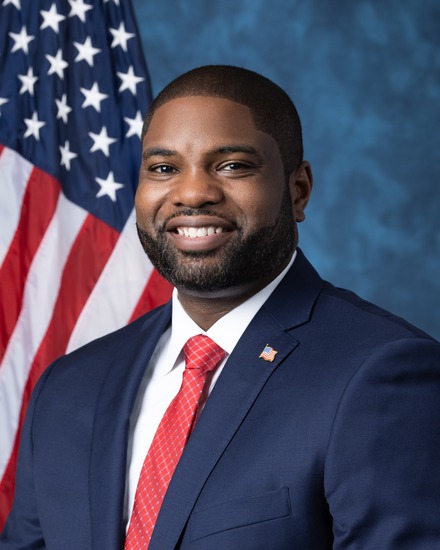
Rep. Byron Donalds
Sponsored bills
No Asylum for Criminals Act of 2023 This bill bars an individual who has been convicted of a crime from receiving asylum, with limited exceptions. Specifically, the Department of Homeland Security may designate political offenses committed outside of the United States that shall not be considered a crime for this purpose. Currently, an individual shall be barred from receiving asylum for only certain types of criminal convictions, such as if the individual is convicted for (1) an aggravated felony, or (2) a particularly serious crime and as a result deemed a danger to the United States.
Maddy summaryHR 935, the Safety and Opportunity for Girls Act of 2023, amends Title IX of the Education Amendments of 1972 to define "sex" as determined by reproductive biology and genetics at birth, and clarifies that "sex-segregated" means limited to or separated by that sex. The bill explicitly prohibits the Secretary of Education from requiring schools to eliminate sex-segregated bathrooms, locker rooms, or athletic/academic programs as a condition for receiving federal funding under Title IX. It directly affects educational institutions receiving federal funds by preventing federal enforcement actions that might compel them to abandon existing sex-segregated facilities or programs. The bill focuses on altering the legal interpretation of Title IX regarding sex-based accommodations, not creating new programs or services.
Maddy summaryHR 932 repeals two key congressional authorizations for military force in Iraq: the 1991 resolution (Public Law 102-1) and the 2002 resolution (Public Law 107-243). This bill removes the legal foundation that has permitted U.S. military operations in Iraq for over two decades. It directly affects the executive branch’s authority to conduct military actions under these specific resolutions, requiring future operations to seek new congressional approval. The repeal is a procedural change that would end the statutory basis for ongoing military engagement in Iraq without altering other laws or policies.
Maddy summaryThis bill amends the Higher Education Act to require colleges and universities receiving federal funding to disclose gifts or contracts exceeding $5,000 from groups connected to China's government, Communist Party, or military. It mandates annual reports on joint activities with such groups and requires institutions to publicly post all agreements with them on their websites. The law defines "affiliated" organizations broadly to include state-owned enterprises, think tanks receiving significant Chinese funding, and entities with Chinese officials on their boards. Reports must be filed by January 31 or July 31 each year, detailing donor names, agreement terms, and supporting documentation.
Maddy summaryThe REEF Act requires the Secretary of the Navy to notify Congress 90 days before retiring any naval vessel that is a viable candidate for artificial reefing. It also states that Congress believes the Navy should actively seek opportunities to repurpose such vessels for environmental benefits through artificial reefs. This bill does not change retirement procedures but mandates a formal notification process to inform Congress about potential reefing options for eligible vessels.
Exposing Lewd Outlays for social Networking companies Act or the ELON Act This bill requires a report on Department of Justice (DOJ) payments to certain companies (i.e., Twitter, Meta, Google, Microsoft, and Apple) and imposes a one-year moratorium on payments to these companies. Specifically, the bill requires the Government Accountability Office to submit a report to specified congressional committees on all payments made by DOJ to these companies since January 1, 2015. Additionally, the bill imposes a one-year moratorium on DOJ that temporarily prohibits the use of federal funds to make payments to these companies, unless such funds are lawfully owed to any such company.
Finish the Wall Act This bill requires the Department of Homeland Security (DHS) to resume activities related to the construction of a barrier system along the U.S.-Mexico border and addresses other border-related issues. DHS must resume all such construction activities that were planned or underway prior to January 20, 2021. DHS must also expend all funds appropriated or explicitly obligated since October 1, 2016, for construction of this barrier system. DHS may not cancel contracts for activities related to such construction entered into on or before January 20, 2021. Furthermore, within 14 days of this bill's enactment, DHS must certify to Congress that U.S. Customs and Border Protection facilities that process adults taken into custody at the border are fully compliant with certain laws related to the collection of DNA. (Among other things, these laws allow for the collection of DNA samples from non-U.S. persons detained under U.S. authority.)
Illicit Arms Trafficking Security Enforcement Act This bill directs the Department of Homeland Security to establish a new unit—a Border Enforcement Security Task Force unit—to investigate transnational criminal organization arms smuggling across the international border between the United States and Mexico. The purposes of the new unit include, among other things, reducing arms smuggling from the United States to Mexico.
Security First Act This bill reauthorizes the Operation Stonegarden program from FY2024 through FY2027 and addresses other border security issues. (Operation Stonegarden provides grants to enhance the border security capabilities of state, local, and tribal governments.) From FY2024 through FY2027, the money from unreported monetary instruments seized from individuals crossing the U.S.-Mexico border and transferred into the Department of the Treasury general fund shall be made available without further appropriation to the Department of Homeland Security (DHS) to fund Operation Stonegarden. DHS must report to Congress on (1) DHS hiring practices from 2018 to 2021, and (2) whether certain Mexican drug cartels meet the criteria to be designated as foreign terrorist organizations. DHS must also periodically report to Congress about the technology needed to secure the U.S.-Mexico land border.