

Maddy summaryThis bill updates legal definitions in customs law to replace the outdated "four leagues" standard with current international law boundaries. It clarifies that U.S. customs enforcement applies to waters within the U.S. territorial sea (up to 12 nautical miles, as defined in Presidential Proclamation 5928) and contiguous zone (up to 24 nautical miles, as defined in Proclamation 7219). The change directly affects U.S. Customs and Border Protection's maritime enforcement operations but does not alter the actual geographic scope of enforcement areas. The bill amends the Tariff Act of 1930 and the Anti-Smuggling Act to align their language with existing international law standards.
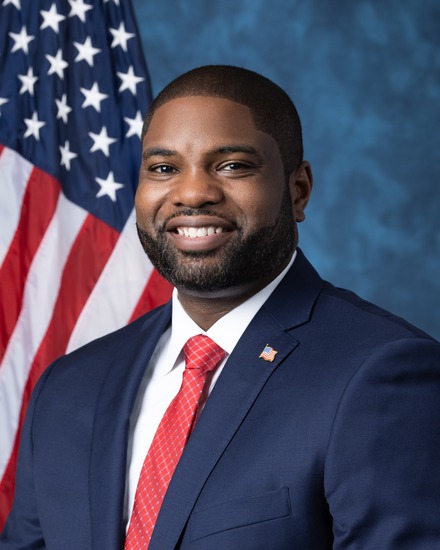
Rep. Byron Donalds
Sponsored bills
Maddy summaryThe Investing in All of America Act of 2023 amends the Small Business Investment Act to expand eligibility for a leverage exclusion, allowing Small Business Investment Companies (SBICs) to count more investments toward their leverage limits when funding businesses in low-income or rural areas, or in critical technology sectors vital to national security. It requires the Small Business Administration to adjust exclusion limits annually using the Consumer Price Index to account for inflation and to submit annual reports to Congress on economic activity and jobs generated by these investments. This bill directly affects SBICs and the businesses they support in designated underserved communities and strategic technology industries.
Maddy summaryHR 1069, the Clean Energy Demonstration Transparency Act of 2023, requires the Department of Energy to provide detailed reports to specific congressional committees every six months about federally funded clean energy demonstration projects. The reports must include copies of initial contracts, a list of completed or missed milestones, and any major changes to project scope, schedule, or funding. This applies to projects administered under the Infrastructure Investments and Jobs Act and directly affects the Department of Energy and the project recipients receiving federal funding. The bill aims to increase transparency for congressional oversight without changing funding levels or project requirements.
Maddy summaryHRES 1170 prohibits U.S. House Members, Delegates, and Resident Commissioners from bringing or displaying any foreign nation's flag on the House floor during sessions, except for lapel pins or flags shown during speeches under House rules. The resolution applies to all flag sizes and is enforced by the House Sergeant-at-Arms. It directly affects House members' conduct during floor proceedings but allows limited exceptions for personal accessories and official speeches. This is a procedural rule change, not a substantive policy.
Maddy summaryThis resolution (HRES 1157) is a symbolic gesture recognizing the work of linemen. It does not create new laws or policies; instead, it formally expresses the House's support for designating April 18, 2024, as "National Lineman Appreciation Day." The resolution highlights linemen's critical role in maintaining power infrastructure, their work as first responders during emergencies, and their safety risks. It directly affects no individuals or entities through policy changes - it solely offers ceremonial recognition of linemen's contributions to public safety.
Maddy summaryHR 8129, the American Nuclear Workforce Act, creates a Department of Energy initiative to strengthen nuclear workforce development. It directs the Secretary of Energy to encourage states to enhance nuclear science education at "covered schools" (defined as schools within 25 miles of operating nuclear plants or developers, or designated by the Secretary). Key provisions include promoting relevant degrees (like nuclear engineering), arranging plant tours for students, establishing industry mentorship programs, and leveraging campus research reactors for student training. The bill directly affects schools near nuclear facilities and aims to connect students with internships, scholarships, and career opportunities in the nuclear energy sector.
Maddy summaryThe EARN IT Act of 2023 clarifies that Section 230 of the Communications Act does not shield online service providers from liability for child sexual abuse material, while specifically protecting providers who use encryption technologies from liability for using those technologies. The bill amends over 50 federal statutes to replace "child pornography" with "child sexual abuse material" to ensure consistent terminology across legal contexts. It updates the CyberTipline (operated by the National Center for Missing & Exploited Children) to improve reporting of child sexual abuse material, extending the preservation period for reports from 90 days to one year. The law affects internet service providers, law enforcement, and child protection programs by clarifying legal responsibilities around child sexual abuse material.
Maddy summaryThe HEIRS Act of 2024 establishes grant programs to help homeowners resolve ownership issues with "heirs' property" - residential land passed to multiple heirs without a will, held as shared ownership. It provides $30 million annually (2025-2035) to states and local governments that adopt the Uniform Partition of Heirs Property Act, covering costs like title reports, legal fees, and estate planning. Additionally, it allocates $10 million yearly (2025-2029) for direct assistance through HUD-approved counselors and nonprofits, prioritizing minority and low-to-moderate-income homeowners in high-need neighborhoods. The law requires housing counselors to explain heirs' property risks and available solutions, aiming to clarify ownership and prevent displacement.
Maddy summaryHR 8102, the Flood Insurance Relief Act, creates a federal income tax deduction for qualified flood insurance premiums paid by homeowners. It allows individuals to deduct eligible flood insurance costs from their taxable income, but only if their adjusted gross income is below $200,000 ($400,000 for joint returns). The deduction covers premiums from both the federal National Flood Insurance Program and qualifying private flood insurance policies, including specific fees and surcharges defined in existing law. This change applies to tax returns filed for years beginning after the bill's enactment date.
Maddy summaryHR 8101, the Maintaining Cooperative Permitting Act of 2024, prevents the Environmental Protection Agency (EPA) from revoking approval of three specific state environmental programs without explicit congressional authorization. The bill directly affects Michigan, New Jersey, and Florida, which operate state-level permit systems for dredged or fill material under the Clean Water Act. It requires that any EPA withdrawal of approval for these programs must be authorized by a new Act of Congress, rather than through agency action alone. The bill also clarifies that the EPA's approval of these state programs does not count as a federal rule or regulation. This ensures the continued operation of these state programs unless Congress passes a new law to change them.