

Maddy summaryHR 1007, the Antisemitism Awareness Act of 2025, clarifies how the Department of Education enforces Title VI of the Civil Rights Act of 1964 to address discrimination against Jewish individuals. It requires the Department to consider the International Holocaust Remembrance Alliance (IHRA) definition of antisemitism when investigating complaints involving discrimination based on actual or perceived Jewish ancestry or ethnic characteristics. This affects Jewish students and communities in K-12 schools and colleges receiving federal funding, as it ensures antisemitism is assessed under existing civil rights protections. The bill does not create new laws but specifies that the IHRA definition - already used by the Department since 2018 - must be applied in Title VI enforcement cases.
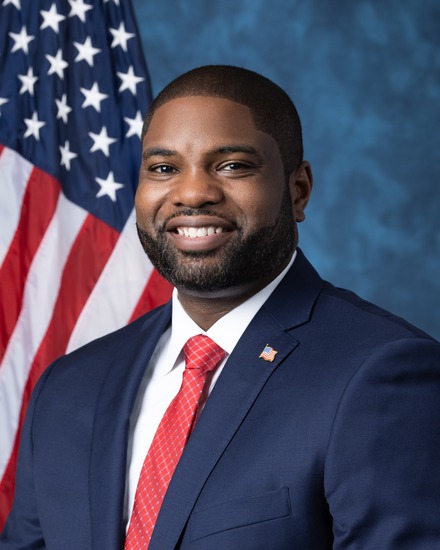
Rep. Byron Donalds
Sponsored bills
Maddy summaryThis bill, titled "Prison Rape Prevention Act of 2025" (HR 1015), actually establishes rules for housing and medical care in federal prisons, not rape prevention. It requires the Bureau of Prisons to house and transport inmates only with others of the same biological sex (defined by reproductive anatomy) and prohibits providing gender-related medical treatments. This includes banning treatments like hormone therapy, surgeries (e.g., hysterectomy, phalloplasty), or puberty blockers for transgender inmates, except for specific medical conditions like disorders of sex development or injuries from prior treatments. The bill directly affects all federal prison inmates and applies only to the Bureau of Prisons.
Maddy summaryHR 934, the Chinese Spy Balloon Assessment Act, requires the Secretary of Defense to submit a report to Congress within 90 days of the bill's enactment. The report must analyze the national security effects of surveillance conducted by China via the high-altitude balloon shot down in U.S. airspace in February 2023, specifically covering impacts on military installations and the technology recovered from the balloon, including its country of origin. This bill directly affects the Department of Defense and Congress by mandating a formal assessment of a specific security incident. It does not create new policies or funding but establishes a procedural requirement for transparency regarding the balloon incident. The report must be unclassified but may include a classified annex.
Maddy summaryHR 943, the "No User Fees for Gun Owners Act," bans states and local governments from requiring insurance, taxes, or user fees as conditions for owning, buying, or selling firearms. It specifically prohibits these fees for firearm manufacture, importation, acquisition, transfer, or continued ownership, except for general sales taxes applied equally to all goods. The bill amends federal law to prevent states from imposing such conditions on gun ownership or commerce, while allowing standard sales taxes to apply uniformly. This directly affects gun owners, dealers, and manufacturers by removing mandatory fees tied to firearm transactions. The law does not restrict general sales taxes but eliminates state-specific fees as a prerequisite for firearm-related activities.
Maddy summaryHR 925, the "Dismantle DEI Act of 2025," would eliminate diversity, equity, and inclusion (DEI) programs across federal government operations. The bill requires federal agencies to close DEI offices, rescind related executive orders, and prohibit the use of federal funds for DEI training, offices, or initiatives. It defines "prohibited diversity, equity, or inclusion practice" as any activity that discriminates based on race, ethnicity, religion, biological sex, or national origin, or requires employees to complete training asserting that certain groups are inherently superior or inferior. The legislation also prohibits requiring employees to sign statements about race, ethnicity, or gender, and establishes private lawsuits for violations with potential damages of $1,000 per violation per day. This bill would directly affect federal agencies, contractors, grantees, and advisory committees receiving federal funding.
Defending Domestic Orange Juice Production Act of 2025 This bill requires finished pasteurized orange juice to contain at least 10% by weight of orange juice soluble solids, exclusive of the solids of any added optional sweetening ingredients. (Current regulations require at least 10.5% by weight of orange juice soluble solids.)
Maddy summaryThis bill updates disaster assistance rules to clarify eligibility for specific housing types affected by disasters. It defines "residential common interest communities" (including condos, housing co-ops, and manufactured home communities) and requires the President to issue rules allowing debris removal from these properties when a state determines it threatens safety or recovery. It also expands repair funding eligibility for essential shared areas (like roofs, elevators, and utilities) in these communities, provided residents document their share of costs. The changes apply to disasters declared after the bill's enactment, directly affecting residents of these housing types who seek federal disaster aid.
Maddy summaryH.J. Res. 31 proposes a constitutional amendment requiring all voters to be U.S. citizens, U.S. nationals, or lawful permanent residents (green card holders) for any election. This would prohibit non-citizens without national status or a green card from voting in federal, state, tribal, local, or territorial elections - including city council or school board races. The amendment must be ratified by 38 states (three-fourths of all states) within seven years to become part of the Constitution. Currently, most states already restrict voting to citizens, but this would extend that requirement nationwide and constitutionally.
Maddy summaryHR 882 prohibits states and local jurisdictions from hiring non-U.S. citizens to administer federal elections. It requires all election administrators for federal office (like president or Congress) to be U.S. citizens, applying to elections held on or after the bill's enactment date. This directly affects election officials in all states and localities managing federal races by changing their hiring eligibility rules. The bill does not alter voting rights or election procedures for voters, only the citizenship requirement for those managing the process.
Maddy summaryHR 833 creates a federal tax credit for individuals and corporations that contribute to scholarship granting organizations (SGOs) providing scholarships for elementary and secondary education. The credit allows taxpayers to deduct up to 10% of their adjusted gross income or $5,000 (whichever is less) for contributions to SGOs serving students from households with income up to 300% of the area median income. The bill establishes a $10 billion annual cap on the tax credit program, requires SGOs to verify student eligibility and maintain separate accounts, and prohibits government control over SGOs or private schools. It ensures scholarships can be used at public, private, or religious schools without discrimination based on religious character. The tax credit would be available for contributions made after December 31, 2025, with annual volume cap increases based on usage.