Treatment Restoration for Emergency Antibody Therapeutics Act or the TREAT Act This bill prohibits the Department of Health and Human Services (HHS) from implementing any policy that restricts health care facilities from ordering and receiving COVID-19 monoclonal antibody therapies directly from manufacturers and distributors. In addition, the bill expressly nullifies a policy announced on September 13, 2021, under which HHS allocated supplies of these therapies through state or territorial governments.
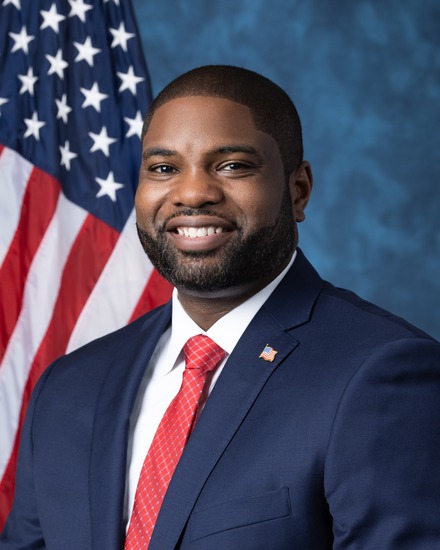
Rep. Byron Donalds
Sponsored bills
Clean Water Allotment Modernization Act of 2021 This bill revises the formula the Environmental Protection Agency (EPA) uses to determine how to distribute funds from the Clean Water State Revolving Fund (SRF) program. Under the program, the EPA allocates funding to states for water quality infrastructure projects, such as wastewater systems and stormwater management projects. In FY2022-FY2026, the EPA must provide an initial allotment to each state that is equal to the amount the state received in FY2023. The EPA must also provide an additional allotment to each state that is based on its share of the U.S. population. In FY2027 and each subsequent fiscal year, the EPA must use an updated allotment formula, which is based on the needs of states as identified in the most recently available clean watersheds needs survey. Beginning in FY2022, the formula must also provide allotments for Indian tribes and territories. In addition, the formula must provide an allotment for EPA's oversight of SRF projects to ensure they use American iron and steel.
Comparison of Sustainable Transportation Act or the COST Act This bill requires the Government Accountability Office to conduct a cost analysis of replacing certain federally owned or operated vehicles with electric vehicles or flex-fuel ethanol vehicles. In addition, the bill requires the Department of Energy to conduct an analysis of the overall greenhouse gas impacts of the following types of vehicles: (1) a conventional gasoline vehicle, (2) an E85 (a fuel containing 85% ethanol and 15% gasoline) capable flex-fuel vehicle, or (3) a battery electric vehicle.
Safeguarding Children's Privacy in Schools Act This bill revises the standards for parental consent with respect to the online collection, use, and disclosure of the personal information of a child. First, it revises the definition of verifiable parental consent to require websites and online services to obtain consent by a parent before collecting a child's personal information. Currently, websites and online services must make a reasonable effort to ensure that a parent authorizes the collection, use, and disclosure of such personal information before collecting it. The bill also prohibits elementary and secondary school employees from acting as the agent of a child enrolled in such school for the purpose of providing verifiable parental consent.
This resolution recognizes and appreciates the dedication and devotion demonstrated by the men and women of law enforcement. It also condemns calls to defund, disband, dismantle, or abolish the police.
This resolution recognizes law enforcement agencies and officers for their tireless work to protect us and make our communities safer. It also condemns calls to defund, disband, dismantle, or abolish the police.
Maximum Pressure Act This bill expands sanctions and economic penalties on Iran. It also restricts the President from unilaterally lifting or waiving the sanctions or penalties and increases congressional oversight of them. Specifically, the bill requires the President to impose visa- and asset-blocking sanctions. Additionally, it modifies existing sanctions, including by (1) providing statutory authority for executive orders imposing sanctions; (2) applying sanctions to additional sectors of Iran's economy; and (3) broadening sanctionable conduct to cover, for example, assisting Iran with the acquisition of ballistic missiles and the complicity of Iranian officials in human rights violations in specified countries. The bill also requires reporting on licenses that authorize activities subject to sanctions. The bill prohibits U.S. representatives at the International Monetary Fund from voting to allow Iran's access to special drawing rights (a currency support tool) and places restrictions on financial transactions with Iran. The restrictions include requiring domestic financial institutions to implement special measures with respect to foreign financial institutions that conduct significant transactions connected to the Instrument in Support of Trade Exchanges (a European mechanism that bypasses U.S. sanctions when carrying out trade with Iran). The Department of State must maintain the Islamic Revolutionary Guard Corps' designation as a terrorist organization and must designate Ansharallah (or Houthis), which operates in Syria, as a foreign terrorist organization. The bill also requires reports on U.S. sanctions concerning Iran, the status of Iran's nuclear weapons program, and other matters.

Drug Cartel Terrorist Designation Act This bill directs the Department of State to designate the Reynosa/Los Metros faction of the Gulf Cartel and the Cartel Del Noreste faction of Los Zetas as foreign terrorist organizations and to submit a detailed report on those drug cartels and any other cartels it may identify. Based on this report, the State Department must designate as a foreign terrorist organization any such identified cartel (or faction thereof) that meets certain criteria for designation as a foreign terrorist organization.
Camp Lejeune Justice Act of 2021 This bill allows certain individuals to sue and recover damages for harm from exposure to contaminated water at Camp Lejeune in North Carolina between August 1, 1953, and December 31, 1987. This action is available only to individuals who were exposed to contaminated water for at least 30 days. The bill prohibits the U.S. government from asserting specified immunity from litigation in response to such a lawsuit. The bill also prohibits an individual who brings such an action from bringing a separate tort action against the United States based on the same harm.
COVID-19 Border Protection (CBP) Act This bill requires the Department of Homeland Security (DHS) to devise and implement a strategy to ensure that no alien with COVID-19 (i.e., coronavirus disease 2019) in DHS or Department of Health and Human Services custody may be released into the community during a public health emergency related to COVID-19. Funds previously provided to the Department of State for supporting international efforts to help migrants and refugees respond to COVID-19 shall be transferred to DHS to implement this strategy.