

Protecting Kids from Candy-Flavored Drugs Act This bill establishes enhanced criminal penalties for certain federal drug offenses involving the manufacture or distribution of candy-flavored controlled substances or similar products for minors. Specifically, the bill imposes enhanced criminal penalties for a federal drug offense that involves manufacturing, creating, distributing, dispensing, or possessing with intent to distribute a controlled substance listed in schedule I or II that is combined with a candy or drink, marketed to appear similar to a candy or drink, or modified by flavoring or coloring to appear similar to a candy or drink. To be subject to an enhanced penalty, the individual must have knowledge or reasonable cause to believe that the controlled substance will be distributed, dispensed, or sold to an individual who is under 18 years of age.
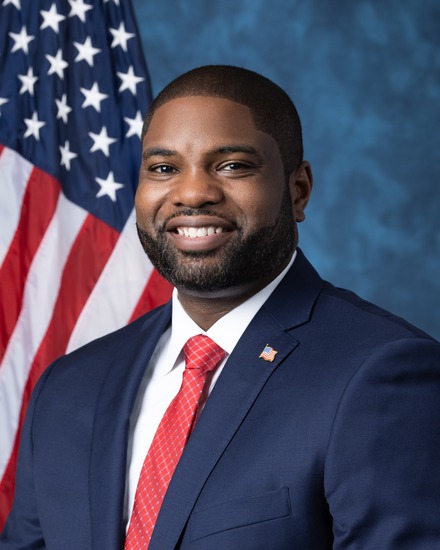
Rep. Byron Donalds
Sponsored bills
Protect Children's Innocence Act This bill places restrictions on the provision of gender affirming care. Gender affirming care includes performing surgery, administering medication, or performing other procedures for the purpose of changing the body of an individual to correspond to a sex that differs from the individual's biological sex. Specifically, the bill makes it a felony to perform any gender affirming care on a minor and it permits a minor on whom such care is performed to bring a civil action against each individual who provided the care. Additionally, the bill prohibits the use of federal funds for gender affirming care or for health insurance that covers such care. Such care may not be provided in a federal health care facility or by a federal employee. The bill also prohibits qualified health plans from including coverage for gender affirming care. Further, plans that include coverage for such care are not eligible for federal subsidies. Finally, the bill prohibits institutions of higher education from offering instruction in gender affirming care. It also makes any non-U.S. national ( alien under federal law) who performs gender affirming care on a minor deportable and inadmissible to the United States. The restrictions under this bill do not apply to the provision of care under certain circumstances such as when an individual does not have normal sex chromosome structure, sex steroid hormone production, or sex steroid hormone action.
Require Evaluation before Implementing Executive Wishlists Act of 2022 or the REVIEW Act of 202 2 This bill prohibits a final agency rule from taking effect until (1) the agency submits the rule to the Office of Information and Regulatory Affairs (OIRA), and (2) OIRA makes a determination as to whether the rule is a high-impact rule that may impose an annual cost on the economy of at least $1 billion. In addition, an agency must postpone the effective date of a high-impact rule until the final disposition of all actions seeking judicial review of the rule.
Terrorist Reporting Act of 2022 This bill requires the Department of Homeland Security to periodically report to Congress information about any non-U.S. nationals ( aliens under federal law) who (1) were apprehended by the U.S. Border Patrol after unlawfully crossing the border, and (2) appear in the terrorist screening database maintained by the Terrorist Screening Center.
No IDs for Illegals Act This bill prohibits using federal funds to establish or otherwise support the Secure Docket Card Program of U.S. Immigration and Customs Enforcement.
Maddy summaryHR 8563, the Sunset Act of 2022, requires most federal agency rules to automatically expire 10 years after issuance unless Congress passes a specific extension. Agencies must submit reports to Congress 180 days before expiration and identify rules for annual review, with 10% of rules reviewed each year for 9 years. Congress can extend rules only through a joint resolution introduced within 3 days of receiving the agency report, requiring bipartisan leadership sponsorship. This law directly affects federal agencies (who create rules) and Congress (who must vote on extensions), changing how long regulations remain in effect without renewal.
Stop the Cartels Act This bill addresses various issues including matters relating to immigration, law enforcement cooperation with Mexico, and drug cartels. The bill bars federal financial assistance for state or local jurisdictions that (1) restrict compliance with immigration detainers issued by the Department of Homeland Security, or (2) have any law or policy that violates immigration laws. Furthermore, under this bill, the detention of alien minors must be governed by specified sections of the Immigration and Nationality Act and not any judicial decree or settlement. (A 1997 settlement agreement imposes requirements related to the treatment of such minors, including limits on how long they may be detained under certain conditions.) The bill also makes various changes to asylum applications, including by (1) increasing the burden that an asylum applicant must meet to establish a credible fear of persecution, and (2) establishing refugee application and processing centers in Central America. In addition, certain Department of State and U.S. Agency for International Development assistance may not be made available to Mexico's government until the State Department certifies that Mexico has removed certain barriers to law enforcement cooperation and intelligence sharing between the United States and Mexico. The bill also establishes the foreign Special Transnational Criminal Organization designation and establishes penalties related to designated organizations, such as making it a crime to knowingly provide material support to such an organization. The State Department must designate specified organizations, including the Sinaloa Cartel, with the designation, and may designate other organizations that fit criteria established in this bill.
Shall Not Be Infringed Act This bill repeals the Bipartisan Safer Communities Act, which was signed into law on June 25, 2022. The act makes various changes to federal firearms laws, including to expand background check requirements, broaden the scope of existing restrictions, and establish new criminal offenses. The act also reauthorizes, funds, and supports various programs, grants, and activities to promote access to behavioral and mental health services, enhance school safety and security initiatives, and address gun violence in communities.
Migrant Protection Protocols Act of 2022 This bill requires the Department of Justice (DOJ) to remove certain aliens from the United States while such an alien's application for admission is pending. Specifically, if an alien arrived by land from a foreign country bordering the United States and the alien is not clearly and beyond a doubt entitled to admission into the United States, DOJ must return that alien to that bordering foreign country while the alien's application for admission is pending. (Currently, DOJ may choose to detain such an alien or return the alien to the bordering foreign country while the application for admission is pending.)
Stop Pills That Kill Act This bill increases criminal penalties for offenses relating to the manufacture of fentanyl or counterfeit substances. It also establishes requirements for federal agencies to address the use of counterfeit substances. Specifically, the bill applies an increased criminal penalty for possessing, manufacturing, or distributing certain equipment or materials that are used to illegally manufacture fentanyl, an analogue of fentanyl, or a counterfeit substance (the increased penalty is currently limited to offenses involving methamphetamine). The bill also requires the United States Sentencing Commission to review sentencing guidelines and amend them, if appropriate, to include an enhanced penalty for those who knowingly misrepresent counterfeit pills that have fentanyl, a fentanyl analogue, or methamphetamine as legitimate pills. The Drug Enforcement Administration must establish and implement a plan to address counterfeit fentanyl or methamphetamine substances through law enforcement action and education and prevention efforts. In addition, the Department of Justice must annually report on the collection of counterfeit fentanyl or methamphetamine substances by law enforcement and on related prosecutions.