

Maddy summaryThis concurrent resolution (HCONRES 4) expresses congressional support for U.S. law enforcement agencies and condemns efforts to defund or dismantle them. It does not create new funding or policy changes but formally rejects "misguided and dangerous efforts to defund and dismantle" police departments, citing officer safety concerns and rising fatalities. The resolution specifically references the 2021 increase in law enforcement deaths (458 officers killed) and opposes rhetoric that "vilifies" officers, while emphasizing their role in community safety and crisis response. It is a symbolic statement with no binding legal or financial impact.
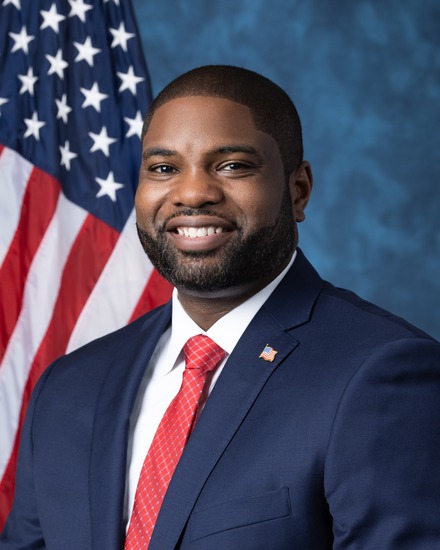
Rep. Byron Donalds
Sponsored bills
Maddy summaryHJRES 8 proposes a constitutional amendment to permanently set the Supreme Court's size at nine justices. The bill would require any future changes to the Court's composition to follow this specific number, locking in the current structure. It does not alter the existing Court size (which has been nine since 1869) but aims to prevent future adjustments through legislative action. The amendment must be ratified by three-fourths of state legislatures within seven years to take effect. This is a procedural proposal focused on constitutional structure, not a direct policy affecting citizens or programs.
Maddy summaryHR 24, the Federal Reserve Transparency Act of 2023, requires a comprehensive audit of the Federal Reserve System's Board of Governors and Federal Reserve banks within 12 months of the bill's enactment. The Congressional auditor (Comptroller General) must then submit a detailed report to Congress within 90 days, including findings, conclusions, and recommendations for improving transparency. This bill directly affects the Federal Reserve System by mandating greater oversight of its operations and financial activities. The key provision repeals a prior limitation that prevented audits of certain Fed programs, aiming to clarify which activities are subject to audit under existing law.
WHO Withdrawal Act This bill requires the President to immediately withdraw the United States from the World Health Organization (WHO) and prohibits using any federal funds to provide for U.S. participation in the WHO. The bill also repeals the 1948 act authorizing the United States to join the WHO.
Maddy summaryHR 59, the SAVE Act, prohibits the sale of petroleum products drawn from the U.S. Strategic Petroleum Reserve (SPR) to entities headquartered in specific countries listed in federal regulations or to any entity based in Russia. This policy change directly affects energy companies and organizations operating in those designated countries or Russia, restricting their access to the government's emergency oil stockpile. The bill amends the Energy Policy and Conservation Act by adding a new section (170) that mandates this sales prohibition, with minor updates to existing law to reflect the change. The key mechanism is a direct ban on SPR petroleum sales to the specified entities, effective upon the bill's enactment.
FairTax Act of 2023 This bill imposes a national sales tax on the use or consumption in the United States of taxable property or services in lieu of the current income taxes, payroll taxes, and estate and gift taxes. The rate of the sales tax will be 23% in 2025, with adjustments to the rate in subsequent years. There are exemptions from the tax for used and intangible property; for property or services purchased for business, export, or investment purposes; and for state government functions. Under the bill, family members who are lawful U.S. residents receive a monthly sales tax rebate (Family Consumption Allowance) based upon criteria related to family size and poverty guidelines. The states have the responsibility for administering, collecting, and remitting the sales tax to the Treasury. Tax revenues are to be allocated among (1) the general revenue, (2) the old-age and survivors insurance trust fund, (3) the disability insurance trust fund, (4) the hospital insurance trust fund, and (5) the federal supplementary medical insurance trust fund. No funding is authorized for the operations of the Internal Revenue Service after FY2027. Finally, the bill terminates the national sales tax if the Sixteenth Amendment to the Constitution (authorizing an income tax) is not repealed within seven years after the enactment of this bill.
Maddy summaryThis bill allows states to choose names for post offices located within their borders through state legislation, directly affecting state governments and local communities. It requires states to pass laws authorizing specific names, while ensuring federal naming decisions (like those for new post offices) take precedence and override any state selection. The bill also mandates that states notify Congress 30 days in advance before renaming a post office already named by the federal government. Federal authority to name post offices remains supreme, and the bill does not change existing USPS naming practices for offices not yet designated by the federal government.
Close Biden's Open Border Act This bill provides $15 billion for the Department of Homeland Security to construct a border wall along the southern border of the United States. It also imposes a two-year moratorium on funding for U.S. contributions to the United Nations (U.N.). During the two-year period, funds may not be authorized or otherwise made available for contributions to the U.N.
Maddy summaryHR 53 (FIND Act) requires federal contractors to certify they do not refuse to work with firearm manufacturers, dealers, ammunition sellers, or related safety device companies based on bias. It prohibits main contractors from awarding subcontracts exceeding 10% of a contract’s value to entities that fail to make this certification, and bans efforts to circumvent the rule through complex subcontract tiers. The law applies to all federal procurement contracts, directly affecting businesses bidding on government work. Violations risk contract termination and suspension from future government contracts.
Maddy summaryHR 49, the REVIEW Act of 2023, requires federal agencies to delay implementing new rules that cost the economy over $1 billion annually. Specifically, agencies must submit such "high-impact rules" to the Office of Management and Budget for review before publication. The rule cannot take effect until after all judicial review challenges are resolved, unless no one challenges it within 60 days of publication. This directly affects federal agencies creating major economic regulations and delays their implementation to allow for legal scrutiny. The bill does not change existing judicial review timelines but adds a mandatory delay period for high-cost rules.