

Maddy summaryHR 1405, the IMPACTT Human Trafficking Act, establishes two programs within U.S. Immigration and Customs Enforcement's Homeland Security Investigations (HSI). The IMPACTT Program provides trauma support training for HSI staff working with trafficking victims, focusing on recognizing burnout and stress, self-care resources, and supervisor training. The Victim Assistance Program mandates specific staffing (including forensic interview specialists and victim assistance specialists) at HSI offices and task forces to deliver victim-centered, trauma-informed support, including emergency aid like food, shelter, and transportation. The bill requires annual reports to Congress on training participation and victims assisted, aiming to improve both staff well-being and victim support services.
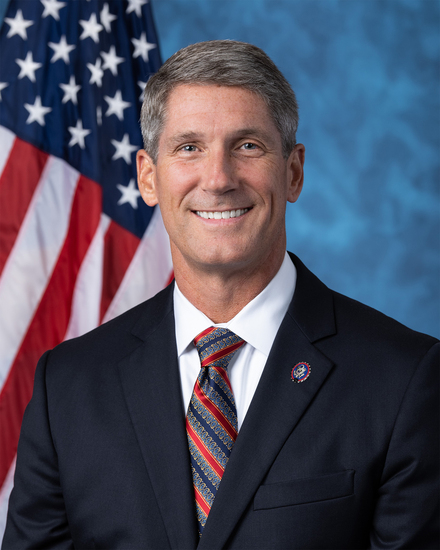
Rep. Scott Franklin
Sponsored bills
Maddy summaryThis bill prohibits the Department of Defense from using funds to pay for or reimburse abortion services, except when the pregnancy endangers the mother's life, results from rape, or results from incest. It directly affects military personnel, civilian DOD employees, and contractors receiving medical care at military facilities by restricting funding for abortion-related expenses. Key provisions include amending federal law to ban reimbursement for travel or licensing costs related to abortion services and repealing a 2022 DOD memo that expanded access to such care. The bill explicitly blocks all funding for abortion services beyond the existing exceptions, with no new exceptions added. It does not change abortion access for civilians outside the military healthcare system.
Maddy summaryThis bill amends the Higher Education Act to exempt certain family-owned assets from being counted when calculating federal student aid eligibility. Specifically, it excludes family farms where the family resides and small businesses with 100 or fewer full-time equivalent employees owned and controlled by the family. These assets will no longer be considered when determining a student's financial need for aid programs. The change directly affects students from qualifying family farms or small businesses when applying for federal financial aid. The exemption applies to assets held by the family, not just the business itself.
Maddy summaryHR 1218, the Expediting Israeli Aerial Refueling Act of 2023, requires the U.S. Air Force to train Israeli pilots and ground personnel to operate KC-46 aircraft within 60 days of enactment, including participation in the U.S. Military Personnel Exchange Program. The bill mandates the rotational deployment of U.S. KC-46 aircraft to Israel for up to five years or until Israel commissions its own KC-46s, with each deployment lasting at least 270 days annually. It directly affects the Israeli Air Force by enabling their use of U.S. refueling capabilities and the U.S. military through specific training and deployment obligations. The law expires ten years after enactment.
Maddy summaryHR 1200, the National Right-to-Work Act, prohibits requiring workers to join a union or pay dues as a condition of employment in both private-sector workplaces (covered by the National Labor Relations Act) and railroad industries (covered by the Railway Labor Act). The bill amends key sections of these laws to eliminate provisions that allowed union security agreements, meaning workers in unionized settings would no longer be forced to pay dues to retain their jobs. This directly affects employees in unionized workplaces across the U.S., particularly those in industries with existing union contracts that included mandatory dues. The law changes the legal framework to ensure union membership and dues payment remain voluntary for all workers.
Maddy summaryHR 1008 adds harmful algal blooms to the list of qualifying events for federal disaster assistance under the Stafford Act, enabling affected communities to access emergency aid. It also requires the CDC to conduct a study on health effects from airborne toxins during blooms within one year of enactment, to be shared with relevant congressional committees. The bill establishes a framework for federal response but does not provide new funding or directly regulate pollution sources. It primarily affects coastal and lake communities where blooms threaten public health, tourism, and local economies through potential beach closures, fishing restrictions, and property value declines.
Maddy summaryHR 1012, the Cardiac Arrest Survival Act of 2023, creates a uniform federal liability shield for individuals and entities involved in using or managing automated external defibrillators (AEDs) during cardiac emergencies. It protects AED users (including non-professionals), property owners/managers where AEDs are located, and AED owners/acquirers from civil lawsuits - unless harm resulted from gross negligence, willful misconduct, or a licensed professional acting within their scope of practice. The law overrides inconsistent state "Good Samaritan" laws, ensuring consistent protection regardless of AED signage, registration, or user training. This aims to encourage wider AED deployment in public spaces by reducing liability concerns for businesses and property owners.
CBDC Anti-Surveillance State Act This bill limits the ability of the Federal Reserve to (1) provide direct services to individuals, and (2) use a central bank digital currency. A central bank digital currency is a digital currency (e.g., Bitcoin or Ether) issued by a government-backed central bank. Specifically, the bill prohibits the Federal Reserve and the Federal Open Market Committee from using any central bank digital currency to implement monetary policy. In addition, a Federal Reserve bank is prohibited from offering products or services directly to an individual, maintaining an account on behalf of an individual, or issuing a central bank digital currency directly to an individual. The Federal Reserve must (1) consult with each Federal Reserve bank with respect to any central bank digital currency study or pilot program, and (2) issue quarterly reports on the findings and determinations of any such study or program.
Maddy summaryHR 970 imposes a 12-year moratorium (through June 2032) on energy development leases for oil, gas, and wind projects in specific Gulf of Mexico areas critical to military operations. It directly affects energy developers seeking permits in zones east of the Military Mission Line or areas identified in Defense reports as threatening military readiness. The bill prohibits leasing in these zones but allows exceptions for environmental conservation projects like wetlands restoration. It also requires the Department of Defense to submit reports by 2024 and 2031 detailing how energy development impacts military capabilities in designated Gulf planning areas. This policy change aims to protect military testing ranges by restricting commercial energy activities in sensitive waters.
Maddy summaryHR 1088, the Shirley Chisholm Congressional Gold Medal Act, authorizes a posthumous Congressional Gold Medal to honor Congresswoman Shirley Chisholm, the first African-American woman elected to Congress (1968) and the first Black candidate for a major party's presidential nomination (1972). The bill directs the Treasury Secretary to design and strike a gold medal featuring Chisholm's image, which will be presented by Congress and then permanently displayed at the Smithsonian Institution. Duplicate bronze medals may be sold to the public to cover production costs, with proceeds deposited into the U.S. Mint fund. This bill commemorates Chisholm's legacy and achievements without creating new laws or affecting any current policies.