

Maddy summaryThis bill requires Congress to authorize any U.S. vote to allocate IMF funds (Special Drawing Rights) or support quota increases for eight specific countries: China, Russia, Iran, North Korea, Cuba, Venezuela, Nicaragua, and Afghanistan under Taliban control. It directs the U.S. Treasury to oppose IMF proposals that would benefit these nations through funding or policy changes. The law applies directly to U.S. representation at the International Monetary Fund, preventing automatic U.S. support without legislative approval. It targets countries designated as adversaries or subject to U.S. sanctions.
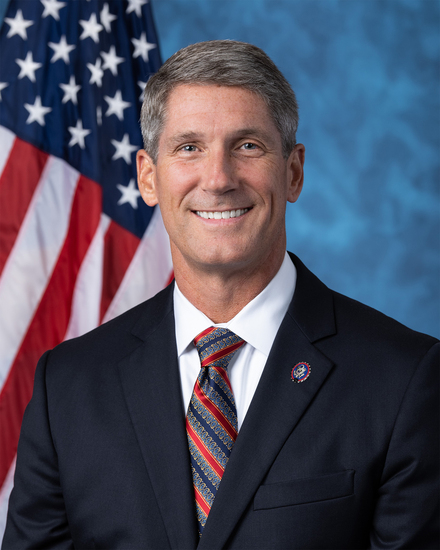
Rep. Scott Franklin
Sponsored bills
Maddy summaryHR 6131, the Commercial Space Act of 2023, establishes a new certification system for U.S. commercial space companies to operate spacecraft, replacing some existing licensing requirements. The bill requires companies to submit space debris mitigation plans and liability insurance as part of their certification application, with the Department of Commerce's Office of Space Commerce handling the process within 60 days. The law aims to reduce regulatory burdens while maintaining U.S. compliance with international space law obligations. This certification system directly affects commercial entities seeking to launch or operate spacecraft in outer space.
Maddy summaryHR 6300, the Veterans Education is Timeless Act of 2023, removes expiration dates for all Department of Veterans Affairs (VA) education benefits. It directly affects veterans and their dependents who use programs like the Post-9/11 GI Bill, Survivors' Benefits, and others, allowing them to access education benefits at any time without a deadline. The bill amends multiple sections of Title 38 to state that benefits "shall be afforded... at any time and are not subject to any delimiting date." It also requires the VA to refund veterans for contributions if they apply for a refund, and applies retroactively to all eligible individuals.
Maddy summaryThis bill appropriates $14.3 billion in supplemental security funding to Israel following the October 7, 2023 attacks. The funding includes $4 billion for Iron Dome and David's Sling defense systems, $1.35 billion for the Iron Beam defense system development, and $3.5 billion for foreign military financing. The bill requires regular reporting to Congress on security assistance provided to Israel and designates all funds as "emergency requirements" under federal budget law. It also modifies existing laws to facilitate the transfer of defense articles and services to Israel, aiming to strengthen Israel's defense capabilities against rocket threats.
Maddy summaryThis bill exempts farmed sturgeon and their offspring held in U.S. captivity or controlled environments from certain provisions of the Endangered Species Act (ESA), specifically sections 9(b)(1) and 7(a)(2). It directly affects sturgeon aquaculture businesses and farms operating under existing U.S. regulations. The key provision requires owners to maintain documentation proving their sturgeon qualify for the exemption and to provide requested records to the Secretary of the Interior, without duplicating existing ESA requirements. The exemption remains in effect until the sturgeon or its progeny is intentionally released back into the wild. This change streamlines regulatory compliance for the sturgeon farming industry while maintaining ESA protections for wild populations.
Maddy summaryThe SHIP Act imposes sanctions on foreign entities that knowingly handle Iranian petroleum, targeting those involved in port operations, transportation, refining, or ship-to-ship transfers of Iranian oil. Starting 90 days after enactment, the President must block assets, deny visas, and impose penalties on individuals or companies engaging in these activities, including family members or owners of sanctioned entities. It requires annual reports tracking Iran's oil exports, revenues, and key players like shipping companies and ports. The sanctions terminate if the President certifies Iran has stopped supporting terrorism and dismantled weapons programs.
Maddy summaryHR 6212, the PROTECT Florida Act, extends the existing moratorium on oil and gas leasing and exploration in the Gulf of Mexico until 2032 and adds a new ban on such activities off Florida's Atlantic coast until June 2029. The bill blocks federal permits for oil and gas exploration, leasing, and seismic testing in two specific areas: the Straits of Florida and the southern portion of the South Atlantic Planning Area south of Florida's coastline. These restrictions apply to all related activities, including preleasing and seismic testing, directly affecting federal agencies and companies seeking to conduct offshore drilling operations in those regions. The legislation aims to prevent new oil and gas development in Florida's coastal waters for the specified periods.
Maddy summaryHRES 798 is a House resolution condemning support for Hamas, Hezbollah, and other terrorist organizations at colleges and universities. It states such support may create a hostile environment for Jewish students, faculty, and staff, citing incidents like blaming Israel for the October 7 Hamas attack. The resolution urges the Secretary of Education to direct the Office for Civil Rights to investigate and take action where appropriate. This non-binding resolution expresses the House's position but does not create new law or policy changes.
Maddy summaryHR 6201, the Iranian Sanctions Enforcement Act of 2023, creates the Iran Sanctions Enforcement Fund to cover costs related to seizing and forfeiting property from Iran or its designated proxies (like Hezbollah or the Revolutionary Guard Corps) that violate U.S. sanctions. The fund, initially $150 million, pays for investigative costs, property management, informant rewards, and equipment for federal, state, and local agencies involved in enforcement. It also establishes an Export Enforcement Coordination Center within Homeland Security to improve interagency cooperation on enforcing export controls targeting Iran. The bill requires annual reports on fund usage and mandates repayment of the initial $150 million by 2034, unless waived for national security reasons.
Maddy summaryHRES 830 is a non-binding House resolution condemning the Chinese Communist Party for its role in the U.S. fentanyl crisis. It urges the Biden administration to take six specific actions: impose sanctions on Chinese entities supplying fentanyl precursors, designate Chinese financial institutions evading U.S. sanctions, sanction Chinese officials linked to fentanyl trafficking, develop a plan to counter precursor shipments, and add China to a U.S. drug transit country list. The resolution focuses on holding China accountable for inaction on fentanyl precursor production in provinces like Hebei and suspended U.S.-China counternarcotics cooperation. It does not create new law but serves as a policy recommendation to the executive branch.