

Maddy summaryHR 450, the FORCE Act, prevents the U.S. government from removing Cuba from the State Sponsors of Terrorism list. It requires the President to make a specific determination under the 1996 LIBERTAD Act before Cuba can be removed. The bill directly affects Cuba's international designation status and U.S. foreign policy actions toward the country. It does not change existing law but blocks any removal until the specified determination is made. The provision applies to both the President and the Secretary of State.
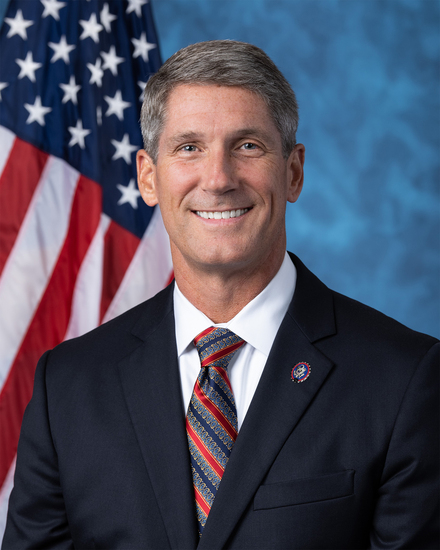
Rep. Scott Franklin
Sponsored bills
Maddy summaryThe READY Accounts Act creates a new tax-advantaged savings account that allows individuals to deduct up to $4,500 annually (adjusted for inflation) for contributions toward home disaster preparedness and recovery. These accounts can only be used for specific qualifying expenses, including disaster mitigation measures like reinforcing roofs, installing impact-resistant windows, or recovering from disaster damage like fire or storm. Contributions must be in cash, accounts must be administered by banks or approved entities, and distributions not used for qualifying expenses are taxable with a 20% additional tax penalty. The bill applies to taxable years beginning after December 31, 2024.
Maddy summaryHR 28, the *Protection of Women and Girls in Sports Act of 2025*, amends Title IX to prohibit federally funded schools from allowing male-identified individuals (based on biological sex at birth) to compete on women’s or girls’ sports teams. It explicitly states that such participation would violate federal civil rights law, with exceptions only for training/practice that doesn’t displace female athletes from roster spots, competitions, scholarships, or other benefits. The bill mandates a Comptroller General study to define "other benefits" lost by girls when males compete in single-sex sports, including impacts on psychological well-being, scholarship access, and safe participation environments. This bill directly affects all athletic programs receiving federal funding, requiring compliance with its biological-sex-based eligibility rules.
Maddy summaryHR 401, the "No Taxpayer Funding for the World Health Organization Act," prohibits the U.S. government from providing any assessed or voluntary contributions to the World Health Organization (WHO) starting on the day the bill becomes law. This directly affects the WHO, which would lose U.S. funding through these specific channels, and the U.S. government, which would no longer allocate taxpayer money for this purpose. The key mechanism is a statutory ban that overrides existing law, requiring immediate cessation of such payments without needing additional authorization. The bill does not impact other U.S. international health programs or the WHO's broader operations.
This joint resolution proposes a constitutional amendment prohibiting total outlays for a fiscal year from exceeding total receipts for that fiscal year unless Congress authorizes the excess by a two-thirds roll call vote of each chamber. The prohibition excludes outlays for repayment of debt principal and receipts derived from borrowing. The amendment also requires the President to submit an annual budget in which total outlays do not exceed total receipts.
Maddy summaryHRES 36 creates a new House committee, the Committee on the Elimination of Nonessential Federal Programs, to review and recommend cutting underperforming or unnecessary federal programs. The committee, composed of 14 members (including four from key committees and a bipartisan chair/vice chair), must annually report findings and propose specific legislation to eliminate targeted programs. It establishes expedited rules for such legislation, including a 10-hour debate limit and no amendments, while dissolving after the 120th Congress. This resolution directly affects House procedures and future budget decisions by streamlining program-cutting efforts.
Maddy summaryHR 342, the Honor Inauguration Day Act, requires the U.S. flag to be flown at its highest peak on every presidential Inauguration Day, overriding any conflicting laws. This procedural bill directly affects all federal buildings and properties where the flag is displayed on that specific day. It mandates a ceremonial flag display to "commemorate and celebrate" the presidential election process, as stated in the congressional findings. The bill makes no substantive policy changes but establishes a specific flag protocol for Inauguration Day.
Maddy summaryHR 346, the Preserving Choice in Vehicle Purchases Act, amends the Clean Air Act to clarify that state emissions standards directly or indirectly limiting sales of new internal combustion engine vehicles (ICE) would not qualify for federal EPA waivers. It adds a specific definition to the law, requiring states to avoid restrictions on ICE vehicle sales to maintain waiver eligibility. The bill also mandates the EPA to revoke existing waivers granted between January 2022 and the bill's enactment if those waivers didn't comply with the new definition. This directly affects states with their own vehicle emission standards (like California), the EPA's waiver approval process, and automakers selling vehicles in those states.
Maddy summaryThis bill designates the U.S. Postal Service facility at 290 NW Peacock Boulevard in Port St. Lucie, Florida, as the "Trooper Zachary Fink Post Office Building." It updates all official U.S. government references (including laws, maps, and documents) to use this new name for the facility. The bill directly affects the postal facility and any federal records mentioning its location. As a naming resolution, it has no policy or funding provisions beyond the official designation.
Maddy summaryThis proposed constitutional amendment would limit Members of Congress to serving a maximum of three terms in the House of Representatives or two terms in the Senate. It directly affects current and future members by preventing those who have already served the maximum terms from seeking re-election. Key provisions include counting vacancies filled for more than a year (House) or three years (Senate) as a full term toward the limit, while excluding terms served before ratification from the count. As a constitutional amendment proposal, it requires approval by three-fourths of state legislatures to become law.