

287(g) Program Protection Act This bill requires the Department of Homeland Security (DHS) to allow qualified state and local law enforcement agencies to perform certain immigration enforcement activities if the agency requests such authority. DHS may refuse to grant the request only if there is a compelling reason. Currently, DHS is authorized to grant such authority but is not required to do so.
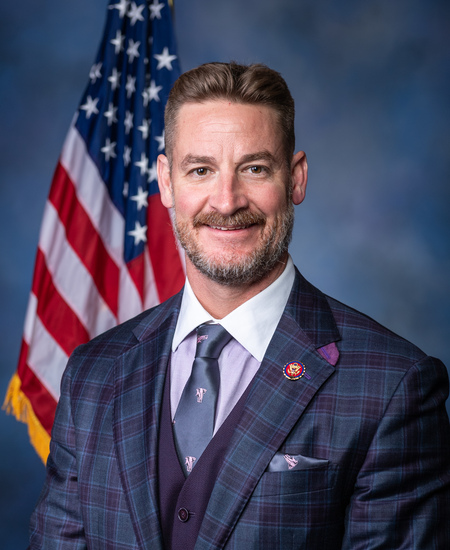
Rep. W. Gregory Steube
Sponsored bills
Ending Catch and Release Act of 2022 This bill changes the treatment of certain non-U.S. nationals ( aliens under federal law) without lawful immigration status, including by prohibiting the release of asylum seekers into the United States while their cases are pending. The Department of Homeland Security (DHS) may not (with some exceptions) release an individual who is not clearly entitled to admission into the United States while the individual's case is pending, even if the individual is an asylum seeker. DHS may instead detain the individual or return the individual to a neighboring country in certain situations. The bill also expands expedited removal from the United States (i.e., removal without further hearing or review) to include individuals present in the United States without being admitted, with certain exceptions. Under current law, individuals are subject to expedited removal if they lack proper documentation or obtained an immigration benefit through fraud; such individuals are still subject to expedited removal under the bill. The bill also modifies the standard for establishing a credible fear of persecution to avoid expedited removal. Generally, an asylum seeker may avoid expedited removal if an asylum officer finds such a credible fear. Under this bill, an officer may find credible fear if it is more likely than not the individual can establish their eligibility for asylum, whereas under current law, the officer may find credible fear if there is a significant possibility that the individual can establish their eligibility.
Preventing Underhanded and Nefarious Iranian Supported Homicides Act of 2022 or the PUNISH Act of 2022 This bill extends sanctions and national emergencies related to Iran established by specified executive orders and limits the authority of the President to waive sanctions related to Iran. The bill requires the Department of State to periodically report whether Iran or any foreign person has supported specified activities, including murder or politically motivated detention in Iran of a U.S. citizen.
Protecting Kids from Candy-Flavored Drugs Act This bill establishes enhanced criminal penalties for certain federal drug offenses involving the manufacture or distribution of candy-flavored controlled substances or similar products for minors. Specifically, the bill imposes enhanced criminal penalties for a federal drug offense that involves manufacturing, creating, distributing, dispensing, or possessing with intent to distribute a controlled substance listed in schedule I or II that is combined with a candy or drink, marketed to appear similar to a candy or drink, or modified by flavoring or coloring to appear similar to a candy or drink. To be subject to an enhanced penalty, the individual must have knowledge or reasonable cause to believe that the controlled substance will be distributed, dispensed, or sold to an individual who is under 18 years of age.
Protecting Pain-Capable Unborn Children from Late-Term Abortions Act This bill establishes a new criminal offense for performing or attempting to perform an abortion if the probable gestational age of the fetus is 15 weeks or more. A violator is subject to criminal penalties—a fine, a prison term of up to five years, or both. The bill provides exceptions for an abortion (1) that is necessary to save the life of the pregnant woman, or (2) when the pregnancy is the result of rape or incest. A physician who performs or attempts to perform an abortion under an exception must comply with specified requirements. A woman who undergoes a prohibited abortion may not be prosecuted for violating or conspiring to violate the provisions of this bill.
Protect Children's Innocence Act This bill places restrictions on the provision of gender affirming care. Gender affirming care includes performing surgery, administering medication, or performing other procedures for the purpose of changing the body of an individual to correspond to a sex that differs from the individual's biological sex. Specifically, the bill makes it a felony to perform any gender affirming care on a minor and it permits a minor on whom such care is performed to bring a civil action against each individual who provided the care. Additionally, the bill prohibits the use of federal funds for gender affirming care or for health insurance that covers such care. Such care may not be provided in a federal health care facility or by a federal employee. The bill also prohibits qualified health plans from including coverage for gender affirming care. Further, plans that include coverage for such care are not eligible for federal subsidies. Finally, the bill prohibits institutions of higher education from offering instruction in gender affirming care. It also makes any non-U.S. national ( alien under federal law) who performs gender affirming care on a minor deportable and inadmissible to the United States. The restrictions under this bill do not apply to the provision of care under certain circumstances such as when an individual does not have normal sex chromosome structure, sex steroid hormone production, or sex steroid hormone action.
No IDs for Illegals Act This bill prohibits using federal funds to establish or otherwise support the Secure Docket Card Program of U.S. Immigration and Customs Enforcement.
Maddy summaryHR 8563, the Sunset Act of 2022, requires most federal agency rules to automatically expire 10 years after issuance unless Congress passes a specific extension. Agencies must submit reports to Congress 180 days before expiration and identify rules for annual review, with 10% of rules reviewed each year for 9 years. Congress can extend rules only through a joint resolution introduced within 3 days of receiving the agency report, requiring bipartisan leadership sponsorship. This law directly affects federal agencies (who create rules) and Congress (who must vote on extensions), changing how long regulations remain in effect without renewal.
American Confidence in Elections Act or the ACE Act This bill addresses election administration and security, campaign finance, and other related provisions. Among other provisions, the bill reduces certain election assistance payments for states and local jurisdictions that allow noncitizens to vote in state and local elections, establishes certain requirements related to election and political mail, prohibits foreign nationals from making contributions or donations in connection with state or local ballot initiatives or referenda, repeals certain limits on coordinated party expenditures and aggregate contributions by individuals, terminates the Presidential Election Campaign Fund and requires remaining funds to be transferred to the 10-Year Pediatric Research Initiative Fund, and prohibits the use of federal funds to establish a Disinformation Governance Board.
Body Armor Safety Act of 2022 This bill requires body armor (for use by law enforcement) to comply with certain safety requirements in order to be imported into the United States. It also establishes new criminal offenses related to fraud in connection with such body armor.