

Maddy summaryHCONRES 3 is a non-binding congressional resolution expressing support for pro-life facilities, groups, and churches targeted by vandalism and threats following the Supreme Court's Dobbs decision. It condemns specific incidents like graffiti, window-smashing, and arson at pregnancy centers and churches (e.g., in Frederick, MD, and Portland, OR), while recognizing the role of these organizations in supporting pregnant women. The resolution calls on the Biden Administration to use law enforcement to protect these facilities but does not create new laws or policies. As a symbolic measure, it has no legal effect on the incidents described.
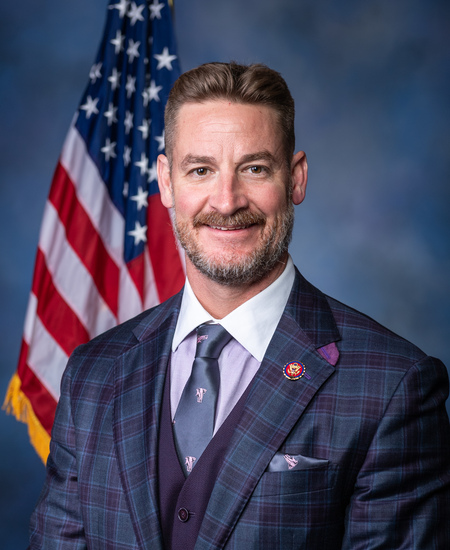
Rep. W. Gregory Steube
Sponsored bills
This resolution declares that every state within the United States has the sovereign right to exclude any person who does not have the right to be there. It also declares that the states along the southern border (1) are being invaded by terrorists, narco-terrorist cartels, and criminal actors; and (2) have the sovereign and unilateral authority to defend themselves against such an invasion.
Life at Conception Act This bill declares that the right to life guaranteed by the Constitution is vested in each human being at all stages of life, including the moment of fertilization, cloning, or other moment at which an individual comes into being. Nothing in this bill shall be construed to authorize the prosecution of any woman for the death of her unborn child.
This resolution maintains that North Korea's seizure of the USS Pueblo and its crew is a violation of international law and declares that the ship should be returned to the United States.
Maddy summaryHR 391, the Safe Bases Act of 2023, allows eligible active-duty U.S. military members to carry concealed firearms on military installations. The bill requires the Secretary of Defense to create a single Department of Defense office to issue permits for this purpose within one year of the law's enactment. It applies only to active-duty service members who are legally permitted to own firearms under federal law (18 U.S.C. § 922). The law establishes a standardized permit process but does not change existing firearm ownership rules for military personnel.
Maddy summaryHR 392, the Religious Insignia on Dog Tags Act, requires the Department of Defense to update military ID policies within 90 days to allow religious symbols to be combined with official military trademarks on commercial dog tags sold by licensed vendors. This directly affects military personnel who wear dog tags and the companies authorized to produce and sell them under military trademark licenses. The bill mandates that the Department of Defense revise Directive 5535.12 to permit religious insignia on these tags, effective retroactively from September 13, 2013. The change formalizes an existing practice without altering military ID standards or requiring new equipment.
No User Fees for Gun Owners Act This bill prohibits a state or local government from imposing any insurance requirement, tax, user fee, or similar charge as a condition of the manufacture importation, acquisition, transfer, or continued ownership of a firearm or ammunition, with the exception of a proportionate sales tax. The bill imposes the same prohibition under the Internal Revenue Code for firearms, pistols, or revolvers, but allows for the assessment of a proportionate sales tax.
No Taxpayer Funding for the World Health Organization Act This bill prohibits the United States from providing any assessed or voluntary contributions to the World Health Organization.
Maddy summaryHR 297 requires the military Secretary to reinstate service members who were involuntarily separated solely for refusing a COVID-19 vaccine. It applies specifically to those separated only due to vaccine refusal, not other reasons. If a covered member chooses reinstatement, they must be returned to their previous rank and branch of service. The bill mandates this action without requiring the member to receive the vaccine.
Maddy summaryHR 263, the STOVE Act, prohibits federal agencies from creating or implementing rules that ban or restrict gas-powered stoves, cooktops, ranges, or ovens in the United States. It blocks agencies like the EPA or DOE from proposing or finalizing regulations that would limit the sale or use of these appliances. The bill directly affects federal rulemaking processes related to home energy appliances, preventing new restrictions from being enacted. This is a policy change that stops federal action on appliance bans, not a change to existing appliance use.