

Maddy summaryHR 998, the 287(g) Program Protection Act, strengthens the federal program allowing state and local law enforcement agencies to collaborate with U.S. Immigration and Customs Enforcement (ICE) on immigration enforcement. The bill requires the Department of Homeland Security (DHS) to enter written agreements with any state or local agency that requests them - without arbitrary denial, with 180 days' notice to Congress if denied - and to process requests within 90 days. It gives participating agencies flexibility to choose enforcement models (like jail or task force operations) and prohibits federal programs from replacing 287(g) agreements. The bill also adds strict rules preventing DHS from terminating agreements without compelling reasons and requires annual reports on program performance, including removal statistics and compliance.
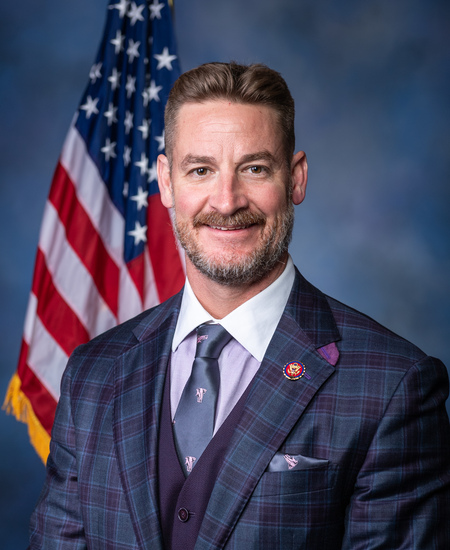
Rep. W. Gregory Steube
Sponsored bills
Maddy summaryThis bill authorizes a single Congressional Gold Medal to honor all U.S. Army Dustoff crews who served during the Vietnam War (1962-1973). It recognizes their critical role in evacuating nearly 900,000 wounded personnel, including U.S., South Vietnamese, and allied forces, under extreme combat conditions. The medal, designed with input from the Secretary of Defense, will be presented to the U.S. Army Medical Department Museum for permanent display. Duplicate bronze medals may be sold to cover costs, but the primary action is the commemorative recognition of these crews' service.
Protect Farmers from the SEC Act This bill prohibits the Securities and Exchange Commission from requiring the disclosure of greenhouse gas emissions related to agricultural products.
Maddy summaryHR 185 ends a Centers for Disease Control and Prevention (CDC) rule requiring foreign travelers entering the U.S. by air to show proof of a COVID-19 vaccination. The bill takes effect immediately upon enactment, terminating the specific requirement outlined in the CDC’s April 2022 order (and any similar future orders). It also prohibits federal funding from being used to enforce this rule. This change directly affects foreign air travelers entering the United States, removing a vaccination proof requirement for their entry. The bill does not impact domestic travel, other entry methods, or vaccination requirements for U.S. citizens.
Maddy summaryHR 987 authorizes the U.S. Mint to produce commemorative coins honoring Golda Meir, Israel's first female Prime Minister, and the 75th anniversary of U.S.-Israel relations. It specifies three coin types: $5 gold coins (max 50,000), $1 silver coins (max 400,000), and half-dollar clad coins (max 750,000), with detailed weight and composition requirements. All coins will include Golda Meir's image, her name, and commemorative inscriptions, and will be sold during 2026. A surcharge ($35 for $5 coins, $10 for $1 coins, $5 for half-dollars) will be paid to the American Friends of Kiryat Sanz Laniado Hospital Inc. to support its hospital operations.
Maddy summaryHR 985, the "Productivity Over Pronouns Act," prohibits federal agencies from using appropriated funds to develop or implement gender-neutral or inclusive communication principles. Specifically, it blocks funding for resources, training, or suggestions aimed at avoiding gender stereotypes, using preferred terms for identity groups, applying an equity lens to communications, or addressing people inclusively through language. This directly affects all federal agencies (as defined by law) when carrying out any program, project, or activity funded by the government. The bill restricts how agencies can communicate with the public or structure their materials, banning the use of federal money for these inclusive communication approaches.
Maddy summaryHR 976, the TCJA Permanency Act, makes permanent many tax provisions from the 2017 Tax Cuts and Jobs Act (TCJA) that were scheduled to expire after 2025. The bill affects individual taxpayers by keeping lower tax rates, higher standard deductions, increased child tax credits, and other key changes permanently. Key provisions include permanent modifications to income tax brackets, repeal of personal exemptions, limits on state and local tax deductions, and increased estate and gift tax exemptions. These changes would prevent the tax code from reverting to pre-TCJA rates and rules for millions of taxpayers.
This resolution expresses the sense of the House of Representatives that (1) for purposes of federal law, a person's sex means the person's biological sex at birth; and (2) distinctions between the sexes are justified in certain settings, laws, and policies.
This bill repeals provisions of the National Voter Registration Act of 1993 (NVRA), with specified exceptions. (NVRA established certain voter registration requirements for federal elections, such as the requirement for states to allow individuals to register to vote when they apply for a driver's license and the requirement for states to offer voter registration opportunities by mail-in application.) The bill retains certain provisions of NVRA, including (1) the requirement that each state must conduct a general program that makes a reasonable effort to remove the names of ineligible voters from the official lists of eligible voters, and (2) criminal penalties for fraudulent voter registration or voting activities.
Maddy summaryHR 936, the Tanning Tax Repeal Act of 2023, repeals a 10% federal excise tax on indoor tanning services that was originally enacted under the Affordable Care Act. This bill directly affects tanning salons and businesses providing indoor tanning services by eliminating their obligation to pay this tax on customer services. The repeal applies to services performed after the bill's enactment date, removing the tax provision from the Internal Revenue Code. The bill does not create new requirements or alter other tax policies, solely removing this specific tax.