

Maddy summaryThe Protecting Taxpayers and Victims of Unemployment Fraud Act allows states to retain 25% of funds recovered from fraudulent unemployment claims (for pandemic-related benefits) to improve fraud prevention systems. States can use these retained funds to modernize unemployment systems, hire fraud investigators, reimburse administrative costs, or conduct other fraud prevention activities. The bill requires states to use specific data matching systems like the National Directory of New Hires to detect fraud more effectively. It modifies federal rules to ensure states can use recovered funds without violating deposit requirements. This legislation aims to reduce unemployment fraud while protecting taxpayers and victims of fraud.
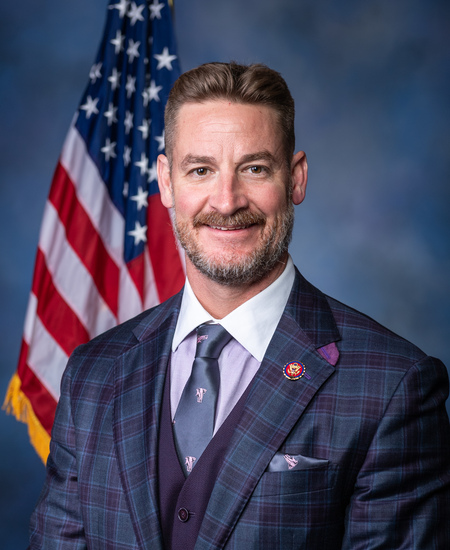
Rep. W. Gregory Steube
Sponsored bills
Maddy summaryHR 3175, the Regulation Reduction Act of 2023, requires federal agencies to repeal two existing regulations before issuing a new rule, and three for "major rules" (those with significant economic impact). For major rules, the new rule's cost must not exceed the cost of the repealed rules, and the Office of Management and Budget must certify this. Agencies must also submit a 90-day review to Congress identifying costly, ineffective, duplicative, or outdated regulations. This bill directly affects federal agencies and the businesses, states, and local governments subject to federal regulations.
Maddy summaryHR 1750 sets a new minimum standard for pasteurized orange juice, requiring finished products to contain at least 10.0% orange juice soluble solids (excluding any added sweeteners) by weight. This rule directly affects manufacturers producing and selling pasteurized orange juice in the U.S. market. The bill revises existing federal regulations to enforce this minimum juice content level, ensuring a more consistent product definition. It does not change the Secretary of Health and Human Services' existing authority to further adjust these standards.
Airlines Independent of Restrictions Act or the AIR Act This bill directs the Department of Transportation (DOT) to rescind no fly zone restrictions over Disney World in Orlando, Florida, and Disneyland in Anaheim, California, imposed under Federal Aviation Administration Notices to Air Missions (NOTAMs) and stop maintaining the restrictions imposed under such notices. DOT may not issue a regulation or a NOTAM to impose a no fly zone over Disney World or Disneyland for a period longer than 30 days, with specified exceptions for national security concerns.
Traditional Passport Act or the TPA Act This bill requires the Department of State to only permit passport applicants to select a gender designation that matches their biological gender. In addition, the gender designation may only be either male or female . The bill defines biological gender as the biological classification of the applicant as of the male or female sex in the context of reproductive potential or capacity as indicated by sex chromosomes, naturally occurring sex hormones, gonads, and nonambiguous internal and external genitalia present at birth.
Traditional Screening Application Act or the TSA Act This bill prohibits the Transportation Security Administration (TSA) from using the X gender designation in the TSA PreCheck advanced security program and instead authorizes the TSA to allow program applicants and participants to select from only Male or Female . The bill defines the terms male and female as the biological classification of male and female sex in the context of reproductive potential or capacity, as indicated by sex chromosomes, naturally occurring sex hormones, gonads, and nonambiguous internal and external genitalia present at birth.
Maddy summaryHR 3039, the DRIVE Act, prohibits the Federal Motor Carrier Safety Administration (FMCSA) from requiring speed limiting devices on trucks weighing over 26,000 pounds operating in interstate commerce. This directly affects commercial trucking companies and drivers transporting goods across state lines. The bill's key provision explicitly bans the FMCSA from issuing any rule mandating such devices, which are typically set to limit vehicle speed. The law applies specifically to interstate trucking operations and does not affect state-level regulations.
Maddy summaryThe SAFE Banking Act of 2023 would protect banks and financial institutions that provide services to state-legal marijuana businesses and hemp-related businesses by preventing federal regulators from taking adverse actions against them solely for serving these businesses. It clarifies that income from state-legal marijuana businesses can be considered for mortgage applications, and requires regulators to update guidance on suspicious activity reports related to these businesses. The bill does not require financial institutions to serve these businesses, but ensures they won't face penalties for doing so. It extends similar protections to hemp-related businesses, which have faced banking challenges despite being federally legal under the 2018 Farm Bill.
Maddy summaryHR 3071, the Small Business Credit Protection Act of 2023, requires credit reporting companies to promptly report data breaches involving sensitive small business data to affected businesses under state law timelines. It prohibits these companies from charging small businesses for credit reports during an 180-day period following a breach. The bill defines "small business concern" per the Small Business Act and mandates a GAO report on economic harm from such breaches within one year of enactment. This directly affects small businesses and credit reporting companies handling commercial credit data, focusing on breach transparency and cost protection.
Catastrophic Risk Transfer Act of 2023 or the CART Act of 2023 This bill establishes a system for the taxation of catastrophic risk transfer companies and their security holders to ensure sufficient capital to cover catastrophic insurance losses. The bill defines catastrophic risk as a risk of loss that has a low likelihood of occurring but that would be large in amount. The bill defines catastrophic risk transfer company as any domestic corporation created and regulated under state law with the purpose of entering into one or more insurance or reinsurance agreements covering catastrophic risk.