Foreign Gain-of-Function Research Prevention Act of 2021 This bill prohibits the use of federal funds to conduct or support gain-of-function research involving potential pandemic pathogens by China, Russia, Iran, North Korea, or other foreign adversaries. Gain-of-function research is any research that is anticipated to confer an attribute on a pathogen to enhance its pathogenicity or transmissibility in mammals. If the Department of State finds that an entity has used funds for prohibited research, the entity may not receive any federal funding for a period of five years.
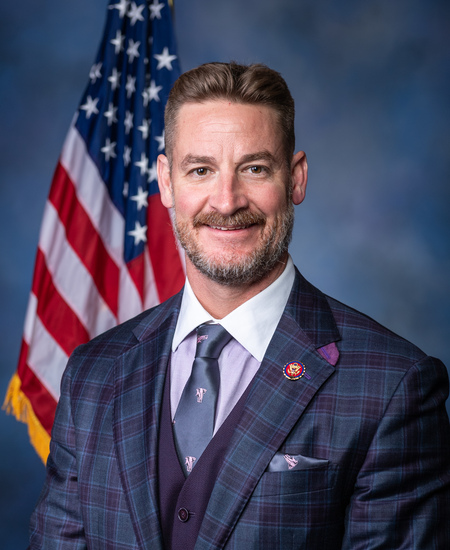
Rep. W. Gregory Steube
Sponsored bills
Puppy Protection Act of 2021 This bill requires the Department of Agriculture to expand standards that govern the humane handling, care, treatment, and transportation of animals to include new requirements for commercial dog dealers. Specifically, the standards must require dog dealers to provide to dogs adequate housing, exercise, and veterinary care; appropriate and nutritious food; continuous access to potable water; and meaningful socialization with humans and compatible dogs for at least 30 minutes each day. The standards must also include requirements for breeders to use safe breeding practices and make all reasonable efforts to find humane placement for retired breeding dogs.
Campus Free Speech Restoration Act This bill addresses expressive activities (e.g., peacefully assembling, distributing literature, or carrying signs) on college campuses. First, the bill generally prohibits a public institution of higher education (IHE) that participates in federal student-aid programs from restricting noncommercial expressive activities on campus. Further, the bill prohibits a public IHE from receiving federal funds if the Department of Education determines that the public IHE (1) maintains a policy that infringes upon the expressive rights of students; or (2) maintains or enforces time, place, or manner restrictions on expressive activities, except in limited circumstances. In addition, the bill prohibits retaliation against an individual because the individual reported or complained about restrictions on expressive activities or participated in an investigation or hearing. The bill also requires a private IHE that receives federal funds to provide students with its policies related to expressive rights. The bill also establishes a framework for investigating complaints and for IHEs to regain eligibility for federal funds.
Reopening to address Every COmplete Record request for Devoted Servicemembers Act of 2021 or the RECORDS Act of 2021 This bill directs the Office of the Archivist of the United States to take specified steps to address record request backlogs. Specifically, the office must take actions to ensure that (1) the number of individuals employed by the National Personnel Records Center is equal to or exceeds the number of such individuals employed on March 2, 2020, and (2) the percentage of such individuals regularly reporting to work in person is equal to or exceeds the percentage of such individuals regularly reporting to work in person on that date. The office shall submit to specified congressional committees a report that provides a comprehensive plan to address the record request backlog of the National Personnel Records Center and improve the efficiency and responsiveness of operations at the center, identifies measurable goals with respect to the comprehensive plan and metrics for tracking progress toward such goals, and describes strategies to prevent future record request backlogs.
U.S. Park Police Modernization Act This bill revises the pay scale that applies to officers and members of the U.S. Park Police by reducing the number of, and the time between, pay grade steps.
Defending Domestic Produce Protection Act This bill establishes a process by which a core seasonal industry may petition for countervailing and antidumping duties. A core seasonal industry means the producers (1) of a domestic like product that is a raw agricultural product, (2) whose collective output constitutes a majority of the total production in any state or group of states that accounts for a major portion of the total production during a discrete season or cyclical period of time, and (3) that make substantially all of their sales during that season or time period. The bill also provides that this process shall apply with respect to goods from Canada and Mexico.
Shark Fin Sales Elimination Act of 20 21 This bill addresses the sale of shark fins and the inclusion of rays and skates in the Seafood Traceability Program. The Seafood Traceability Program has data reporting and recordkeeping requirements at the time of entry for imported fish or fish products entered into U.S. commerce. The bill makes it illegal to possess, buy, or sell shark fins or any product containing shark fins, except for certain dogfish fins. A person may possess a shark fin that was lawfully taken consistent with a license or permit under certain circumstances. Penalties are imposed for violations under the Magnuson-Stevens Fishery Conservation and Management Act. The Department of Commerce must revise its regulations to include rays and skates as species that are subject to the Seafood Traceability Program.
Toxic Exposure in the American Military Act or the TEAM Act This bill requires the Department of Veterans Affairs (VA) to expand health care, benefits, and resources for veterans with conditions related to exposure to toxic substances. Specifically, the bill expands eligibility for VA hospital care, medical services, and nursing home care to include veterans who (1) were exposed to toxic substances, radiation, or other conditions, and were awarded certain medals (e.g., the Armed Forces Service Medal); (2) are eligible for inclusion in the Airborne Hazards and Open Burn Pit Registry; or (3) have been identified by the Department of Defense to have been possibly exposed during service to an open burn pit, toxic substance, or specified hazardous sites. (A burn pit is an area used for burning solid waste in open air without equipment.) The bill establishes a presumption of service-connection for diseases associated with exposure to certain toxic substances and that become manifest within a certain time period; the VA must specify such diseases and requirements through regulations. Under a presumption of service-connection, specific conditions diagnosed in certain veterans are presumed to have been caused by the circumstances of their military service. Health care benefits and disability compensation may then be awarded. The bill also requires the VA to take specified actions to (1) evaluate scientific evidence regarding associations between diseases and exposure to toxic substances; (2) train its health care personnel on identifying, treating, and assessing illnesses related to such exposure; and (3) provide resources to veterans exposed to toxic substances.

Time of Service Act This bill adjusts the time limitation on the use of a veteran's educational assistance entitlement under the Post-9/11 GI Bill. Specifically, veterans' entitlements shall not expire for those who were discharged or released from active duty on or after January 1, 2001.
This bill designates the community-based outpatient clinic of the Department of Veterans Affairs in Middleburg, Florida, as the A.K. Baker VA Clinic.