

Reducing Accidents In Locomotives Act or the RAIL Act This bill addresses safety requirements for rail carriers and trains transporting hazardous materials. Specifically, the Department of Transportation (DOT) must issue safety regulations for trains carrying hazardous materials to require that rail carriers (1) provide state emergency response commissioners with advance notice and information about the hazardous materials; (2) reduce blocked rail crossings; and (3) comply with certain requirements regarding train length and weight specifications, track standards, speed restrictions, and response plans. DOT must also establish requirements for wayside defect detectors. These are used by railway systems alongside the tracks to detect defects and failures (e.g., wheel bearing failures). Current federal regulations do not require their use, but federal guidance does address their placement and use. Under the bill, DOT must issue regulations establishing requirements for the installation, repair, testing, maintenance, and operation of wayside defect detectors for each rail carrier operating a train carrying hazardous materials. Further, these regulations must establish requirements that safety placards be able to withstand heat in excess of 180 degrees. The bill also increases the maximum fines DOT may impose on rail carriers for violating safety regulations, requires DOT to update rail car inspection regulations and audit the federal inspection program, phases out certain railroad tank cars by May 1, 2028 (one year sooner than required under current law), expands training for local first responders, and imposes a new fee on certain rail carriers.
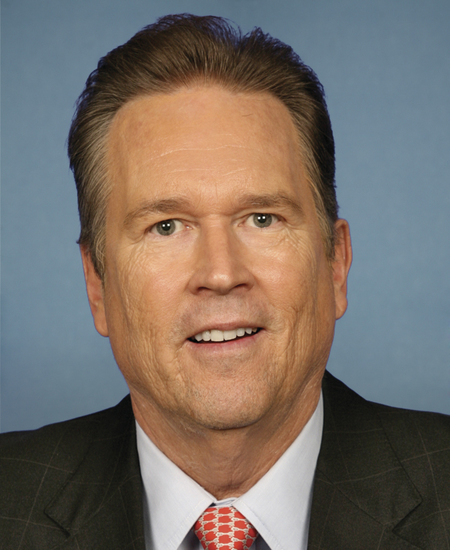
Rep. Vern Buchanan
Sponsored bills
Maddy summaryThe LAKES Act (HR 6906) allows local governments and nonprofit organizations to collect and retain user fees for managing lakes and recreation facilities under Army Corps of Engineers projects. It requires that at least 80% of fees collected at a specific site be used for that site's maintenance, while permitting entities to keep up to 100% of fees for related operations. The bill modifies existing laws to ensure these fees supplement, not replace, regular federal funding for recreation facilities. It directly affects local public entities and nonprofits managing Corps-managed water resources. The key change is enabling these groups to retain and use user fees they collect, improving local funding for facility upkeep.
Maddy summaryThe Death Tax Repeal Act would eliminate the federal estate tax and generation-skipping transfer tax for estates of people who die on or after the bill's enactment date, and for generation-skipping transfers made after that date. It would also establish a new $10 million lifetime gift tax exemption (adjusted annually for inflation) and replace the existing gift tax rate schedule with a revised structure. These changes would primarily affect high-net-worth individuals and their heirs, as the estate tax and gift tax typically apply to large estates or gifts exceeding the new exemption threshold. The bill's provisions would take effect on the date of enactment, with transitional rules for the year the bill is signed into law.
Maddy summaryHR 6744, the "No VA Resources for Illegal Aliens Act," prohibits the Department of Veterans Affairs (VA) from providing health care or processing health care claims for individuals unlawfully present in the United States who are not already eligible for VA health care under existing law. This bill directly affects undocumented immigrants who do not qualify for VA benefits through standard veteran eligibility criteria. The key provision explicitly bars VA resources from being used for any care or claims processing for such individuals. The bill does not alter VA eligibility rules for veterans but prevents the use of VA funds for non-eligible non-citizens unlawfully present in the U.S.
This bill denies tax-exempt status to certain professional sports leagues with gross receipts exceeding $1 billion during any of the five preceding taxable years.
Maddy summaryThis bill reauthorizes and extends funding for programs addressing substance use disorders and opioid addiction, including residential treatment for pregnant and postpartum women, first responder training, and community recovery initiatives. It increases funding levels for these programs, adds xylazine to Schedule III of controlled substances, and requires a study on remote monitoring for patients prescribed opioids. The bill also expands Medicaid coverage requirements for medication-assisted treatment and mandates reporting on mental health condition data alongside substance use disorder data, directly affecting individuals with substance use disorders, healthcare providers, and state and tribal governments.
Maddy summaryHR 6646 modifies how corporations apply business tax credits under the Internal Revenue Code. It removes a requirement that certain credits (like those for research or energy efficiency) must be claimed in a specific sequence. This change directly affects corporations claiming these credits, simplifying their tax filing process. The bill eliminates prior rules about credit order, allowing corporations to apply credits without following the previous sequence.
Maddy summaryHR 6578 establishes a 9-member bipartisan commission to study antisemitism in the United States. The commission will investigate current manifestations of antisemitism, evaluate government efforts to combat it, and report findings and recommendations to Congress within one year. It directly affects Jewish communities by examining incidents like the 300% surge in antisemitic activity reported by the Anti-Defamation League, and impacts federal, state, and local governments through its evaluation of existing policies. The commission terminates 120 days after submitting its report, with no predetermined conclusions or interference in ongoing law enforcement.
Maddy summaryThis bill appropriates $14.3 billion in supplemental security funding to Israel following the October 7, 2023 attacks. The funding includes $4 billion for Iron Dome and David's Sling defense systems, $1.35 billion for the Iron Beam defense system development, and $3.5 billion for foreign military financing. The bill requires regular reporting to Congress on security assistance provided to Israel and designates all funds as "emergency requirements" under federal budget law. It also modifies existing laws to facilitate the transfer of defense articles and services to Israel, aiming to strengthen Israel's defense capabilities against rocket threats.
Maddy summaryThe SHIP Act imposes sanctions on foreign entities that knowingly handle Iranian petroleum, targeting those involved in port operations, transportation, refining, or ship-to-ship transfers of Iranian oil. Starting 90 days after enactment, the President must block assets, deny visas, and impose penalties on individuals or companies engaging in these activities, including family members or owners of sanctioned entities. It requires annual reports tracking Iran's oil exports, revenues, and key players like shipping companies and ports. The sanctions terminate if the President certifies Iran has stopped supporting terrorism and dismantled weapons programs.