

Maddy summaryThis bill would terminate 39 federal diversity, equity, and inclusion offices across multiple departments, including the State Department, Treasury, Health and Human Services, and Agriculture. It specifically prohibits cabinet-level agencies from developing or maintaining any diversity-related initiatives or plans. The law would take effect immediately upon enactment, eliminating these offices without requiring new funding or implementation steps. This is a structural change to federal agency operations, directly affecting how government departments manage workforce diversity programs.
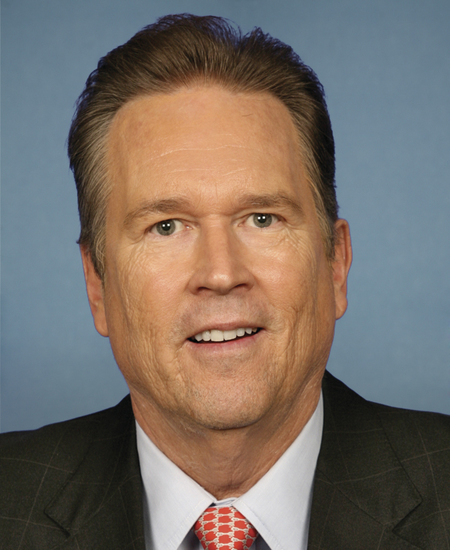
Rep. Vern Buchanan
Sponsored bills
Maddy summaryThis bill is a procedural naming resolution that designates a specific U.S. Postal Service facility in Key West, Florida (at 400 Whitehead Street) as the "Jimmy Buffett Post Office Building." It directly affects the postal facility and all official references to it in government documents. The key provision requires all federal laws, maps, regulations, and records to update their references to this location to the new name. This is a symbolic honorific designation with no policy or funding changes.
Maddy summaryThe AADAPT Act reauthorizes and expands the Project ECHO grant program to specifically address Alzheimer's disease and dementia care. It provides $1 million annually (2026-2031) for grants to eligible health care entities - such as rural clinics, tribal organizations, or community health centers - to develop online training programs for primary care providers working in underserved areas (including rural, frontier, or medically underserved communities). These programs aim to improve provider retention, increase early diagnosis of dementia, and enhance quality care. The bill requires grantees to report on outcomes and ensures funding supplements, rather than replaces, existing resources.
Maddy summaryThis bill establishes new eligibility rules for women's and girls' amateur sports by defining "female" and "male" based on biological sex at birth. It prohibits individuals designated as male under these definitions from participating in athletic competitions designated for females, women, or girls. The law amends existing U.S. Code provisions to add this requirement, directly affecting athletes and organizations managing female-designated teams. The key change is a clear ban on male-identified participants in female sports, replacing previous eligibility standards with biological sex criteria.
Maddy summaryThis bill sets a $100,000 lifetime limit on VA educational benefits for flight training at public colleges or universities under the Post-9/11 GI Bill, adjusted annually for inflation based on the Consumer Price Index. It directly affects veterans pursuing flight training programs at public institutions of higher learning, capping their total benefit for such training at $100,000 (adjusted yearly). The annual adjustment calculates the increase using the previous year's inflation rate (CPI change between June 30 and the prior year's June 30). The limit applies only to flight training programs at public institutions and begins for veterans starting such programs on or after August 1, 2025.
Maddy summaryThis bill prohibits the U.S. State Department from acquiring, leasing, or authorizing construction on overseas diplomatic facilities (like embassies and consulates) where the People’s Republic of China or its entities have ownership control (defined as 25% or more). It applies to all new building acquisitions, leases, and construction contracts after the law’s enactment. The law defines "covered construction" to include all building work, repairs, and essential systems like electrical or plumbing. Violations require the Secretary of State to notify relevant congressional committees within seven days.
Maddy summaryThis bill amends budget scoring rules to require the Congressional Budget Office to account for long-term savings from preventive health programs when evaluating legislation. It directs the CBO to assess if a bill reduces future government costs through evidence-based preventive health services (like screenings or vaccinations) and include those savings in budget projections. The change affects how Congress scores the fiscal impact of health-related bills, requiring them to consider savings over 20 years (not just the current budget cycle). It does not create new programs but changes the budget analysis process for preventive health measures.
Maddy summaryHR 7725 would block federal funding for graduate medical schools that require students or staff to adopt specific statements about race, gender, or identity (like claiming systemic racism or collective guilt), use race-based distinctions in admissions or programs, maintain DEI offices, or mandate "diversity statements" for admission. It directly affects graduate medical schools at colleges/universities receiving federal financial aid, including student loans. The bill exempts medical education about race-related health needs, demographic data collection for reporting, and religious institutions from adhering to policies conflicting with their beliefs. Schools violating these rules would lose eligibility for federal funds, though they could still comply with anti-discrimination laws and provide general academic instruction.
Maddy summaryThis bill prohibits U.S. app stores, hosting services, and distributors from enabling foreign adversary-controlled applications (like TikTok, owned by ByteDance) to operate within U.S. borders. It requires companies to provide users with their data in a machine-readable format before a ban takes effect, and imposes civil penalties of up to $5,000 per affected user for violations. The law directly affects major app platforms, app stores, and internet hosting services, targeting applications owned by entities controlled by designated "foreign adversary" countries (e.g., China). It includes exemptions for companies that divest U.S. operations to non-adversary entities before the ban date.
Maddy summaryThis bill prohibits the interstate transport, sale, breeding, or possession of captive American mink raised for fur production (including parts or offspring), directly affecting mink fur farmers and the fur industry. It includes a limited exception for entities covered under the Lacey Act and establishes a buy-out program where the government may purchase mink farms. The buy-out amount is based on the farmer's average mink count over three years and the farm's infrastructure value. Funding for the buy-out depends on available appropriations. The bill does not apply to mink not raised for fur or to certain wildlife management activities.