

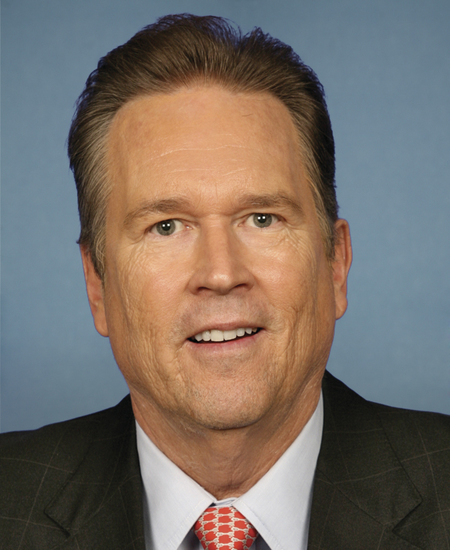
Photo of Vern Buchanan
R United States House · District 16 · Florida

Rep. Vern Buchanan

Compare
Total votes
2,837
all sessions
Attendance
95%
153 missed
Lower than 92% of chamber peers
With party
95%
of cast votes
Near the chamber average
Bipartisan score
3%
crosses aisle rarely
Near the chamber average
Sponsored
792
bills & resolutions
Near the chamber average
Committees
4
assignments
792 bills and resolutions

Sponsored bills

Total
792
Primary
112
Co-sponsor
680
This page
792
matching current filters
Co-sponsor HR 1081
In committee · United States House · Co-sponsor
Preventing SBA Assistance from Going to China Act

Maddy summaryHR 1081, the Preventing SBA Assistance from Going to China Act, amends the Small Business Act to bar certain businesses from qualifying as small business concerns for SBA programs. It prohibits businesses located or incorporated in China, or those with over 25% voting stock owned by Chinese affiliates, from accessing SBA loans, contracts, or other assistance. This directly affects U.S. businesses with significant Chinese ownership or ties that would otherwise qualify for federal small business support. The key mechanism is a new definition in the law that blocks eligibility based on foreign ownership or location.

In committee Feb 6, 2025 1 co-sponsor
Co-sponsor HR 1046
In committee · United States House · Co-sponsor
Marc Fischer Memorial Act

Maddy summaryHR 1046, the Marc Fischer Memorial Act, requires the Bureau of Prisons to implement digital mail scanning technology at all federal prisons to detect fentanyl and other synthetic drugs in inmate mail. It mandates a strategy within 90 days of an evaluation, including 100% scanning of all mail, digital copies of mail to inmates within 24 hours, and physical mail delivery within 30 days for non-contaminated items. The bill directly affects federal prison staff, inmates, and the Bureau of Prisons by aiming to reduce drug-related overdoses and alleviate staff workload tied to mail processing. Implementation must be completed within three years, with annual reports tracking detected drugs and strategy efficiency. The legislation focuses on concrete technological and procedural changes to enhance safety, referencing a successful pilot program at two facilities.

In committee Feb 6, 2025 1 co-sponsor
Co-sponsor HR 1057
In committee · United States House · Co-sponsor
Safe Passage on Interstates Act of 2025

Maddy summaryHR 1057, the Safe Passage on Interstates Act of 2025, creates a new federal criminal offense for intentionally obstructing interstate highways. It makes it illegal to deliberately delay traffic, stand near vehicles, or endanger movement on interstates with the intent to block normal use. The bill directly affects individuals who engage in such obstruction, with penalties including fines up to $15,000 or imprisonment up to 20 years (or life if death results). Exceptions cover lawful activities authorized by federal, state, or local governments. This bill amends Title 18 of the U.S. Code to establish specific penalties for highway obstruction.

In committee Feb 6, 2025 1 co-sponsor
Co-sponsor HR 1103
In committee · United States House · Co-sponsor
New Markets Tax Credit Extension Act of 2025

Maddy summaryThis bill permanently extends the New Markets Tax Credit (NMTC), a federal tax incentive that encourages private investment in low-income communities. It directly affects community development entities (CDEs) that channel capital into underserved neighborhoods for projects like housing, healthcare, and businesses. Key provisions include permanently extending the credit beyond 2025, adding annual inflation adjustments to the credit amount starting in 2026, and ensuring the credit isn't reduced by the alternative minimum tax for investments made after December 2024. The changes apply to taxable years beginning after December 2024, providing long-term stability for community development financing.

In committee Feb 6, 2025 1 co-sponsor
Primary HR 1050
In committee · United States House · Lead sponsor
Criminal Alien Gang Member Removal Act

Maddy summaryThis bill would make it easier to remove non-citizens who are members of or associated with criminal gangs from the United States. It defines a "criminal gang" as a group of five or more people whose primary purpose is committing serious crimes including drug offenses, violent crimes, human trafficking, and other specified offenses. The Secretary of Homeland Security, with Attorney General consultation, would have authority to designate groups as criminal gangs, with procedures for review and potential revocation. The bill would block asylum eligibility, temporary protected status, special immigrant juvenile visas, and parole for those designated as gang members, with limited exceptions for those assisting law enforcement.

In committee Feb 6, 2025 0 co-sponsors
Co-sponsor HR 71
In committee · United States House · Co-sponsor
Veterans Health Care Freedom Act

Maddy summaryHR 71, the Veterans Health Care Freedom Act, allows eligible veterans enrolled in VA healthcare to choose from a broader network of providers, including non-VA facilities, without geographic restrictions. The bill creates a 3-year pilot program in four diverse locations (rural and urban) where veterans can select primary care and specialty providers within a defined "covered care system" (VA facilities and approved community providers), with VA coordinating care through a primary provider. After the pilot, the law permanently requires the VA to offer this same choice of providers to all enrolled veterans, removing current barriers that limited access to non-VA care outside a veteran’s local VA network. The program uses existing VA funding and mandates regular reports to Congress on implementation and results.

In committee Feb 6, 2025 1 co-sponsor
Co-sponsor HR 987
In committee · United States House · Co-sponsor
Fair Access to Banking Act

Fair Access to Banking Act This bill places restrictions on certain banks, credit unions, and payment card networks if they refuse to do business with a person who complies with the law. Restrictions include prohibiting the use of electronic funds transfer systems and lending programs, termination of an institution's depository insurance, and specified civil penalties. Banks and other specified financial institutions are allowed to deny financial services to a person only if the denial is justified by a documented failure of that person to meet quantitative, impartial, risk-based standards established in advance by the institution. This justification may not be based upon reputational risks to the institution. The bill establishes the right for a person to bring a civil action for a violation of this bill.

In committee Feb 5, 2025 1 co-sponsor
Co-sponsor HR 1007
In committee · United States House · Co-sponsor
Antisemitism Awareness Act of 2025

Maddy summaryHR 1007, the Antisemitism Awareness Act of 2025, clarifies how the Department of Education enforces Title VI of the Civil Rights Act of 1964 to address discrimination against Jewish individuals. It requires the Department to consider the International Holocaust Remembrance Alliance (IHRA) definition of antisemitism when investigating complaints involving discrimination based on actual or perceived Jewish ancestry or ethnic characteristics. This affects Jewish students and communities in K-12 schools and colleges receiving federal funding, as it ensures antisemitism is assessed under existing civil rights protections. The bill does not create new laws but specifies that the IHRA definition - already used by the Department since 2018 - must be applied in Title VI enforcement cases.

In committee Feb 5, 2025 1 co-sponsor
Primary HR 920
In committee · United States House · Lead sponsor
Federal Initiative to Guarantee Health by Targeting Fentanyl Act

Maddy summaryHR 920, the *Federal Initiative to Guarantee Health by Targeting Fentanyl Act*, expands the definition of illegal substances under the Controlled Substances Act to include all fentanyl-related substances and their chemical variations, such as structural modifications to the phenyl, piperidine, or aniline rings. This directly affects individuals and entities producing, distributing, or possessing these substances, including many synthetic opioids. The bill removes mandatory minimum prison sentences for offenses involving these newly classified substances. It aims to more broadly criminalize fentanyl variants by defining them through chemical structure rather than specific compounds. The law amends Schedule I of the Controlled Substances Act and Section 401(b)(1)(C) of the Controlled Substances Act.

In committee Feb 4, 2025 0 co-sponsors
Co-sponsor HR 943
In committee · United States House · Co-sponsor
No User Fees for Gun Owners Act

Maddy summaryHR 943, the "No User Fees for Gun Owners Act," bans states and local governments from requiring insurance, taxes, or user fees as conditions for owning, buying, or selling firearms. It specifically prohibits these fees for firearm manufacture, importation, acquisition, transfer, or continued ownership, except for general sales taxes applied equally to all goods. The bill amends federal law to prevent states from imposing such conditions on gun ownership or commerce, while allowing standard sales taxes to apply uniformly. This directly affects gun owners, dealers, and manufacturers by removing mandatory fees tied to firearm transactions. The law does not restrict general sales taxes but eliminates state-specific fees as a prerequisite for firearm-related activities.

In committee Feb 4, 2025 1 co-sponsor
Showing 221 to 230 of 792 bills
Previous 1 … 22 23 24 … 80 Next