

Maddy summaryHR 698, the Assault Weapons Ban of 2023, prohibits the sale, manufacture, transfer, and possession of specific firearms and ammunition devices commonly referred to as "assault weapons" and "large capacity magazines" in interstate commerce. The bill defines "semiautomatic assault weapons" to include rifles like AR-15s and AK-47s, as well as firearms with specific features such as folding stocks, pistol grips, threaded barrels, and detachable magazines holding more than 15 rounds. It exempts law enforcement, military, antique firearms, and weapons already lawfully owned before the law's enactment (known as "grandfathered" weapons). The bill also requires new identification markings on these weapons and large capacity magazines, and adds background check requirements for transfers of grandfathered weapons.
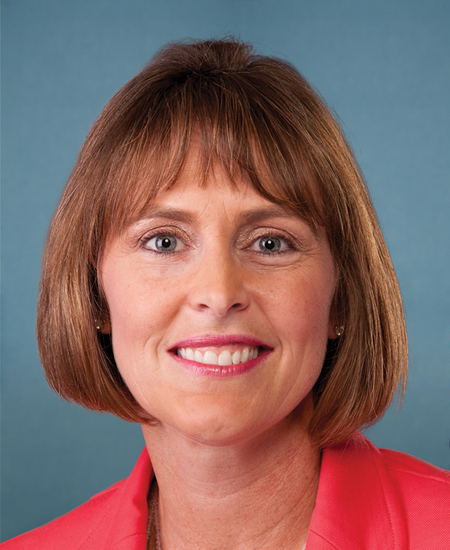
Rep. Kathy Castor
Sponsored bills
Maddy summaryH.Res. 460 is a non-binding resolution expressing the House of Representatives' support for Congress to enact the Older Americans Bill of Rights. This resolution does not create new laws but calls for a proposed bill that would establish specific rights for older Americans, including access to affordable health care, financial security, and community participation. It highlights challenges like high prescription drug costs, retirement insecurity, and barriers to care, urging Congress to address these through legislative action. The resolution directly affects older Americans (ages 65+) and their families by advocating for policy changes to ensure dignity and independence.
Maddy summaryThis bill requires healthcare providers, labs, and public health agencies to report standardized electronic health data to the CDC, including real-time information on cases, lab results, and demographic details like race, disability status, and housing. It mandates that data collection and sharing follow specific technical standards to improve quality, address health disparities, and ensure demographic data is captured accurately. The bill establishes an advisory committee to guide implementation and allocates $10 million annually (2024-2026) to fund best practices for improving data collection methods, particularly for underserved communities. It also includes safeguards to protect patient privacy and prevent unnecessary duplication of reporting burdens.
Maddy summaryThe ASSIST Act increases federal funding for mental health and substance use disorder services provided in schools and school-based health centers. It raises the federal funding match for these services to 90% (from the standard rate) and creates a new grant program to help schools hire more licensed mental health providers like counselors, social workers, and psychologists. Schools, school-based health centers, and students needing these services directly benefit from the increased funding and expanded access to care. The law requires grant recipients to provide culturally competent care and prohibits using funds for threat assessment teams, with annual reporting on provider numbers and service effectiveness.
Maddy summaryHR 3792 extends U.S. security funding for Israel through 2028 (Section 3) and expands energy cooperation to include advanced nuclear technologies and carbon capture (Section 5). It requires annual reports on regional security partnerships involving Israel (Section 6) and ensures countries in the Abraham Accords can access U.S. development programs (Section 8). The bill also mandates reports on diplomatic efforts against ICC investigations targeting the U.S. and Israel (Section 10) and encourages people-to-people programs to strengthen the Abraham Accords (Sections 7, 9). These provisions directly affect Israel’s diplomatic engagement, security partnerships, and economic cooperation in the Middle East.
Maddy summaryThe Universal School Meals Program Act of 2023 would establish a universal school meals program providing free breakfast and lunch to all children enrolled in participating schools, regardless of family income. Key provisions include eliminating income-based eligibility requirements for school breakfast and lunch programs, setting specific reimbursement rates ($2.80 for breakfast and $4.63 for lunch with annual inflation adjustments), and prohibiting schools from collecting debt for unpaid meals or "shaming" students. The bill also replaces references to "free or reduced price" with "economically disadvantaged students" in related laws and establishes new methods for identifying children from low-income backgrounds. This legislation would directly affect all public schools participating in the National School Lunch Program and School Breakfast Program.
Maddy summaryThis bill removes a barrier for college students seeking food assistance by amending the SNAP program rules. It directly affects students enrolled at least half-time in recognized colleges or training programs, who were previously automatically ineligible unless they met separate requirements. The key change eliminates the prior restriction (in section 6(e)) that barred most higher education students from SNAP, allowing them to qualify under the new provision in section 3(m)(5)(F). The changes take effect January 2, 2024.
Maddy summaryHRES 459 is a resolution expressing the House of Representatives' support for designating June 2, 2023, as "National Gun Violence Awareness Day" and June 2023 as "National Gun Violence Awareness Month." It encourages the public to wear orange, promote gun safety awareness, and discuss community safety measures during this time, particularly highlighting the summer months when gun violence often increases. The resolution references statistics on gun violence deaths and pays tribute to victims like Hadiya Pendleton, but does not create new laws or impose requirements.
Maddy summaryHR 3713 creates federal grants to fund comprehensive school-based mental health programs for students in grades K-12, including those in Bureau of Indian Education schools. It requires partnerships between schools and community mental health providers to deliver trauma-informed, culturally appropriate services addressing suicide risk, grief, violence, and trauma exposure. The bill authorizes $300 million annually (2024-2027) for these programs, mandating privacy protections under HIPAA and FERPA, and requires annual reporting on program effectiveness.
Maddy summaryThe PREVENT HPV Cancers Act of 2023 requires the CDC to launch a national public awareness campaign to increase HPV vaccination rates, particularly among males and underserved communities. It mandates culturally tailored materials targeting rural areas, Black and Hispanic women, LGBTQ+ individuals, and populations with high HPV cancer rates, while combating misinformation about vaccine safety. The campaign, funded at $5 million annually from 2024-2028, will use media, community partnerships, and provider outreach to promote vaccination for adolescents aged 9-17. Additionally, the bill increases annual funding for the Breast and Cervical Cancer Early Detection Program to $300 million per year through 2028. The bill directly affects adolescents, healthcare providers, and communities facing HPV cancer disparities.