

Maddy summaryHR 646, the Build Housing with Care Act of 2025, establishes a HUD grant program to fund the co-location of affordable housing developments with child care facilities. It directly affects housing developers, child care providers, and residents of affordable housing by requiring grants to support projects in "child care deserts" (areas with severe child care shortages), prioritizing low-income, rural, or Head Start-serving providers. Key provisions mandate that projects must not evict residents, include resident engagement plans, and ensure child care providers serve low-income families or dual-language learners. The bill authorizes $100 million annually (2025-2030) and requires annual reports tracking child care slots created, resident usage, and demographic data.
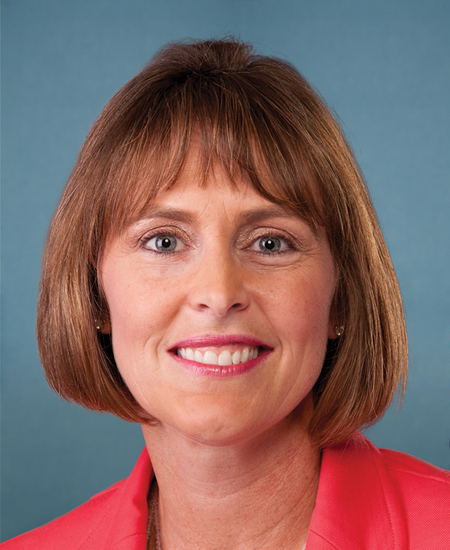
Rep. Kathy Castor
Sponsored bills
Maddy summaryHR 612, the Health Care Providers Safety Act of 2025, provides federal funding to help health care facilities improve safety. It authorizes the Secretary to award grants to hospitals, clinics, and other health care providers to cover costs for physical security (like structural improvements) and cyber security (such as data privacy tools and video surveillance systems). These grants directly help health care providers protect their facilities, staff, and patients from security threats. The bill creates a new funding mechanism under the Public Health Service Act, making specific security upgrades eligible for federal support.
Maddy summaryThe COVER Now Act allows cities, counties, or other local governments in states that have not expanded Medicaid to provide health coverage to Medicaid-eligible residents. Local governments in non-expansion states can apply for a federal demonstration project to cover these residents, with the federal government paying 90-100% of costs over seven years (starting at 100% for the first three years). The bill prohibits states from retaliating against localities that participate, such as by shifting costs, reducing funding, or blocking healthcare provider participation. This directly affects uninsured residents in non-expansion states and local governments seeking to fill coverage gaps.
Maddy summaryHR 485, the Muhammad Ali Congressional Gold Medal Act, authorizes Congress to award a gold medal in recognition of Muhammad Ali's lifetime contributions to sports, civil rights, and humanitarian causes. The bill directs the Treasury Secretary to strike the medal and present it to Ali's widow, Lonnie Ali, following his death in 2016. It also permits the sale of bronze duplicates to cover costs, with proceeds going to the U.S. Mint. This is a commemorative measure with no policy impact, solely honoring Ali's legacy through a symbolic medal.
Maddy summaryHR 429, the Rosie the Riveter Commemorative Coin Act, authorizes the U.S. Treasury to mint and sell three types of commemorative coins ($5 gold, $1 silver, and half-dollar) to honor women who worked on the U.S. home front during World War II. The coins will be sold at face value plus surcharges ($35 for gold, $10 for silver, $5 for half-dollar), with all surcharge revenue directed to the Rosie the Riveter Trust to support the Rosie the Riveter WWII Home Front National Historical Park and related educational programs. The coins must be issued between January 1, 2028, and December 31, 2028, in specified quantities (50,000 gold, 400,000 silver, 750,000 half-dollar), with all costs covered by the sales revenue to avoid net government expense.
Maddy summaryThe LNG Public Interest Determination Act of 2025 requires the Secretary of Energy to approve natural gas exports only if they meet a public interest standard. This standard mandates three specific assessments: climate impact (including effects on global warming and clean energy investment), economic impact on U.S. consumers (with focus on low-income households and businesses), and environmental justice (assessing burdens on vulnerable communities). The Secretary must complete these assessments within one year of receiving environmental data and make a public finding. The bill also requires public participation in the process and treats export approvals as major federal actions under environmental law.
Maddy summaryThe Proxy Voting for New Parents Resolution (HRES 23) would allow U.S. House Members who have given birth or whose spouse has given birth to appoint another Member as a proxy to cast their vote or record their presence in the House and committees for up to 12 weeks after childbirth. To use this, the new parent must submit a signed letter to the Clerk detailing the birth or medical condition and naming the proxy; the proxy must vote exactly as instructed and announce the vote as "by proxy." The proxy vote does not count toward quorum, and the new parent can revoke the proxy at any time by submitting a new letter or casting their own vote. This resolution applies to all House Members, including Delegates and the Resident Commissioner, though they cannot cast votes for the House itself.
This resolution honors the life, achievements, legacy, and distinguished public service of former President Jimmy Carter. The resolution also (1) acknowledges President Carter's contributions to the state of Georgia, the United States, and the world; and (2) establishes his legacy as one of the great leaders and statesmen of the United States.
Maddy summaryThis bill increases healthcare affordability for low- and middle-income people by expanding eligibility for premium tax credits under the Affordable Care Act. It removes the previous 400% of poverty level cap for subsidy eligibility and replaces it with a new sliding scale based on income tiers, ranging from 0% to 8.5% of household income for coverage costs. The scale adjusts linearly across income levels, with households earning 300-400% of poverty paying 6.0%-8.5% of income (up from the prior fixed 400% cap), while lower-income households pay progressively less. These changes apply to tax years beginning after December 31, 2025, directly affecting individuals purchasing health insurance through marketplace plans.
Maddy summaryHR 212, the Capitol Remembrance Act, requires the Architect of the Capitol to create a permanent exhibit in the U.S. Capitol within two years of the bill's enactment. The exhibit must include preserved Capitol property damaged during the January 6, 2021, attack, photographic records of the event, and a plaque honoring Capitol Police, other law enforcement, and Capitol staff who were injured or died protecting the building. It also allows for the inclusion of relevant artwork depicting the attack. This bill directly affects Capitol visitors and staff by establishing a permanent memorial to the events of January 6.