

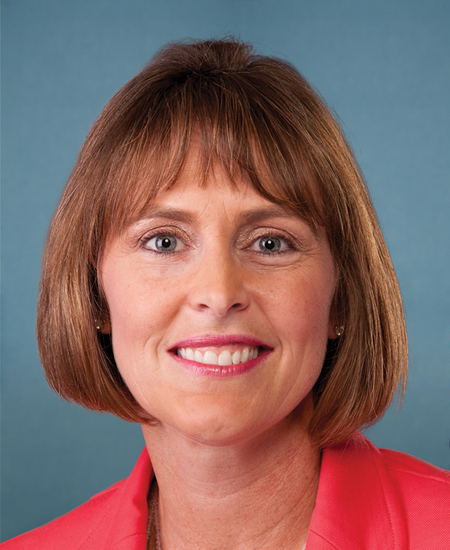
Photo of Kathy Castor
D United States House · District 14 · Florida On the 2026 ballot

Rep. Kathy Castor

Compare
Total votes
2,837
all sessions
Attendance
99%
40 missed
Near the chamber average
With party
98%
of cast votes
Near the chamber average
Bipartisan score
1%
crosses aisle rarely
Near the chamber average
Sponsored
1,412
bills & resolutions
Near the chamber average
Committees
4
assignments
1,412 bills and resolutions

Sponsored bills

Total
1,412
Primary
80
Co-sponsor
1,332
This page
1,412
matching current filters
Co-sponsor HR 4849
In committee · United States House · Co-sponsor
Protecting Health Care and Lowering Costs Act of 2025

Maddy summaryThis bill adjusts health insurance subsidies by modifying the premium tax credit structure under the Internal Revenue Code. It replaces previous income thresholds with a sliding-scale formula, increasing subsidies for households earning between 150% and 400% of the federal poverty level - reducing their required premium payments as income rises within these tiers. The changes apply to tax years beginning after December 31, 2025, directly affecting middle-income individuals and families purchasing coverage through health insurance marketplaces. It also repeals specific provisions from a prior reconciliation law related to health care.

In committee Aug 1, 2025 1 co-sponsor
Primary HR 4786
In committee · United States House · Lead sponsor
Honest Elections and Campaign, No Gain Act

Maddy summaryHR 4786, the "Honest Elections and Campaign, No Gain Act," requires federal candidates' campaign committees and leadership PACs to disburse any leftover funds within two years after an election. Committees must first pay existing obligations, then return contributions to donors, donate to qualified charities, or transfer funds to political parties - prohibiting direct payments to relatives except for documented committee expenses. Former candidates registering as lobbyists or foreign agents must certify compliance with these disbursement rules under penalty of perjury. The law applies to elections starting in 2026, aiming to prevent unused campaign funds from being retained or misused after elections.

In committee Jul 29, 2025 0 co-sponsors
Co-sponsor HR 4797
In committee · United States House · Co-sponsor
EATS Act of 2025

Maddy summaryThis bill removes a barrier preventing most low-income students from accessing SNAP benefits. It amends the Food and Nutrition Act to explicitly allow students enrolled at least half-time in recognized higher education programs to qualify for SNAP, reversing a prior exclusion. The key change eliminates the previous requirement that students meet specific exceptions (now deleted) and adds a new eligibility category under Section 3(m)(5). This directly affects low-income undergraduate and graduate students at colleges and training programs who were previously ineligible. The changes take effect January 2, 2026.

In committee Jul 29, 2025 1 co-sponsor
Co-sponsor HR 4796
In committee · United States House · Co-sponsor
Restoring Essential Healthcare Act

Maddy summaryHR 4796, the Restoring Essential Healthcare Act, repeals a provision that blocked Medicaid payments to certain healthcare providers during a specific period. It directly affects Medicaid beneficiaries who received care from these providers between the enactment of the prior law (Public Law 119-21) and this bill's enactment. The key provision retroactively restores Medicaid payments for services already provided during that blocked period, treating the payment restriction as if it never existed. This change ensures eligible individuals and providers receive reimbursement for covered care delivered during the prohibited timeframe.

In committee Jul 29, 2025 1 co-sponsor
Primary HR 4785
In committee · United States House · Lead sponsor
Ethics in Energy Act of 2025

Maddy summaryThe Ethics in Energy Act of 2025 prohibits large electric and natural gas utilities from charging customers (ratepayers) for expenses related to political influence activities. It directly affects major covered utilities - defined as electric companies with high annual sales volumes or major natural gas companies - and their customers. Key provisions require these utilities to publicly report all political-related expenses (including lobbying, PR campaigns, or trade association dues) and prevent them from recovering such costs through customer bills. The Federal Energy Regulatory Commission must create rules within 18 months to enforce this, impose penalties (up to triple the expense amount for large violations), and distribute half of collected penalties as customer rebates.

In committee Jul 29, 2025 0 co-sponsors
Co-sponsor HR 4744
In committee · United States House · Co-sponsor
Community Mental Wellness and Resilience Act of 2025

Maddy summaryHR 4744 establishes a federal grant program to fund community-based mental wellness and resilience initiatives. It provides planning grants (up to $250,000) and program grants (up to $500,000 annually for four years) to local coalitions - groups formed by representatives from at least five community sectors like schools, health services, faith organizations, and businesses. These coalitions must use a public health approach to identify community strengths and risks, build social connections, and implement evidence-based programs addressing mental wellness for all ages. The bill authorizes $36 million over five years (2025-2029), with 20% reserved for rural areas, and requires grantees to develop strategic plans and report on outcomes by 2030.

In committee Jul 23, 2025 1 co-sponsor
Co-sponsor HR 4640
In committee · United States House · Co-sponsor
Stop AI Price Gouging and Wage Fixing Act of 2025

Maddy summaryThis bill prohibits companies from using automated systems to set prices or wages based on surveillance data about consumers or workers. It bans "surveillance-based price setting" (personalized pricing based on consumer tracking) and "surveillance-based wage setting" (using personal data to determine worker pay), with limited exceptions for standard discounts like student or senior citizen rates when properly disclosed. Companies must publish clear procedures about how their automated systems work, including how data is used and how consumers/workers can challenge inaccuracies. The Federal Trade Commission and Equal Employment Opportunity Commission will enforce the law, and individuals can file lawsuits to challenge violations. The bill also prohibits pre-dispute arbitration agreements that would prevent class action lawsuits.

In committee Jul 23, 2025 1 co-sponsor
Co-sponsor HR 4688
In committee · United States House · Co-sponsor
COOL OFF Act

Maddy summaryThis bill requires a 3-business-day waiting period before someone can receive a handgun from another person who isn't a licensed gun seller. It applies to most private handgun transfers but includes exceptions for law enforcement, family loans (like between spouses or parents and children), temporary transfers to prevent imminent harm, and transfers for shooting or hunting under specific conditions. The waiting period begins when the recipient first offers to take possession of the gun. The law would take effect 90 days after enactment.

In committee Jul 23, 2025 1 co-sponsor
Primary HR 4641
In committee · United States House · Lead sponsor
Keep Kids Covered Act

Maddy summaryThe Keep Kids Covered Act extends continuous health coverage under Medicaid and CHIP for children. It requires states to maintain coverage for children under age 6 for six years (previously one year) and for children under age 19 for two years (previously one year), without requiring reapplication. Former foster youth will now remain covered until age 26. States must also annually update contact information for enrolled children and inform them about their coverage status and remaining eligibility period.

In committee Jul 23, 2025 0 co-sponsors
Co-sponsor HR 4731
In committee · United States House · Co-sponsor
Resident Physician Shortage Reduction Act of 2025

Resident Physician Shortage Reduction Act of 2025 This bill increases the number of residency positions eligible for graduate medical education payments under Medicare for qualifying hospitals, including hospitals in rural areas and health professional shortage areas. The bill provides for an additional increase of 2,000 positions per fiscal year from FY2026-FY2032; during this period, each hospital may receive up to 75 additional positions in total under the bill and current law. Additionally, one-third of the positions that are made available under the bill must be allocated to hospitals that are already operating above applicable resident limits. The bill also requires the Government Accountability Office to report on strategies to increase the diversity of the health professional workforce, including with respect to representation from rural, low-income, and minority communities.

In committee Jul 23, 2025 1 co-sponsor
Showing 181 to 190 of 1,412 bills
Previous 1 … 18 19 20 … 142 Next