

Maddy summaryThe Kids in Classes Act requires states receiving Title I federal education funds to provide those funds directly to parents and guardians if in-person instruction is unavailable for more than three days during a school year due to public health emergencies or collective bargaining actions. This provision allows families to use the money for educational expenses such as tutoring, curriculum materials, online learning resources, private school tuition, and educational therapies for students with disabilities. The bill is designed to ensure that disadvantaged students, who are disproportionately affected by school closures, continue to receive educational support when regular classroom instruction is not available. By mandating that Title I funds follow eligible children, the legislation aims to prevent widening educational gaps between low-income students and their peers during periods when schools cannot operate normally.
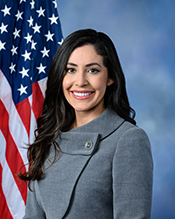
Rep. Anna Paulina Luna
Sponsored bills
Maddy summaryHR 1703, the SECURE Flights Act, prohibits the use of specific immigration forms (like I-94 arrival records or I-200 warrants) as valid ID at airport security checkpoints. If such a document is presented, TSA must notify U.S. immigration and law enforcement agencies, and the individual may be barred from entering secure airport areas unless traveling for deportation or presenting a valid "covered ID" (e.g., passport, Global Entry card, or driver’s license). The bill also requires TSA to collect biometric data (like fingerprints or facial scans) from travelers who cannot verify U.S. citizenship and lack a covered ID, submitting this to the Homeland Security IDENT system. It directly affects travelers using non-standard immigration documents at airports, aiming to enhance security coordination between TSA and immigration authorities.
Save Money on Auto Repair Transportation Act or the SMART Act This bill limits design patent infringement liability for component parts used to repair the exterior of a motor vehicle. Specifically, the bill limits liability for infringement of a design patent that claims the appearance of a component part of a motor vehicle's exterior, such as a hood or fender. The act of making, offering to sell within the United States, or importing into the United States an article of manufacture (such as an exterior component part from an aftermarket manufacturer) that would otherwise infringe such a design patent shall not constitute infringement if the purpose of the article of manufacture is to repair a motor vehicle to restore it to its original appearance. In addition, 30 months after a motor vehicle with an exterior component part covered by a design patent is offered for sale in any country, it shall not constitute design patent infringement to use or sell within the United States an otherwise-infringing article of manufacture if the purpose of that article of manufacture is to repair the motor vehicle to restore it to its original appearance.
Maddy summaryThe Build the Wall Now Act requires the Department of Homeland Security to immediately resume construction of physical barriers (such as reinforced fencing and levee walls), tactical infrastructure (including access gates and lighting), and border surveillance technology along the US-Mexico border that was underway or planned before January 20, 2021. It prohibits canceling existing contracts for border barrier projects and mandates using funds appropriated for border construction since October 2016. The bill grants the Secretary of Homeland Security new authority to waive numerous environmental, historic preservation, and land management laws to expedite construction, including exemptions from the Clean Air Act, Endangered Species Act, and National Environmental Policy Act. It also prohibits using federal funds to implement or enforce Presidential Proclamation 10142 from January 2021.
Maddy summaryH.J. Res. 26 is a congressional disapproval resolution blocking the District of Columbia Council's approval of its Revised Criminal Code Act of 2022 (D.C. Act 24-789). It directly affects the District of Columbia by preventing the new criminal code from taking effect, as Congress disapproved the Council's action under the Home Rule Act. The resolution formally rejects the Council's enactment of the code, which was transmitted to Congress on January 27, 2023. This procedural action stops the District from implementing the revised criminal code without further congressional action.
Maddy summaryThis is a procedural resolution (HRES 233), not a bill with policy changes. It formally supports designating March 18, 2023, as "National Osceola Turkey Day" to honor the Osceola subspecies of wild turkey, which is native only to peninsular Florida. The resolution references Florida's hunting traditions, conservation programs like the Wild Turkey Cost Share Program, and the Osceola turkey's ecological significance, but does not create new laws or affect any regulations. It simply encourages the public to observe the day with appropriate activities.
Maddy summaryHR 140, the Protecting Speech from Government Interference Act, prohibits federal employees from using their authority to censor speech, particularly affecting individuals with pending applications (like grants or permits) or under investigation by the agency. It bans employees from advocating censorship of speech, suppressing speech of people involved in agency matters, or engaging in censorship while on duty in government spaces, wearing uniforms, or using government vehicles. Exceptions cover law enforcement actions against child pornography, human trafficking, or national security threats. Violations can result in penalties including removal, fines up to $10,000, or reprimands. The bill defines "censorship" broadly to include removing speech from platforms or adding disclaimers.
Mayorkas Must Fly Coach Until We Secure the Border Act This bill prohibits any officer or official of the Office of the Secretary of the Department of Homeland Security (DHS), including the Secretary of DHS, from using any federal executive aircraft until certain conditions relating to the border have been met. Specifically, the prohibition shall apply until the number of encounters and apprehensions of non-U.S. nationals ( aliens under federal law) who have unlawfully crossed the border have been reduced to FY2020 numbers; DHS reports to Congress a plan to place 90% of deployed U.S. Border Patrol agents in duties in the field; and DHS reports to Congress a plan to offer resources, including financial support, to local communities and governments.
Protecting American Sovereignty Act This bill prohibits the federal government from implementing any obligations upon the United States that may be contained in a draft report by a World Health Organization (WHO) working group on strengthening the WHO's preparedness and response to health emergencies. This prohibition shall also apply to any related or successor reports and recommendations regarding pandemics.
Maddy summaryThis bill requires the U.S. State Department to officially designate four specific Mexican drug cartels (Gulf Cartel, Cartel Del Noreste, Cartel de Sinaloa, and Cartel de Jalisco Nueva Generacion) as foreign terrorist organizations under existing law. It mandates a 30-day report explaining why these groups meet the legal criteria for such designation, including justification if they don't. The report must be submitted to specified congressional committees and may lead to additional cartels being designated based on the findings. The bill also clarifies that this designation won't affect asylum eligibility for individuals fleeing these groups.