

Maddy summaryThis bill creates a presumption that certain health conditions (myocarditis, pericarditis, thrombosis with thrombocytopenia syndrome, Guillain-Barré Syndrome, and other diseases later determined by the VA) are connected to military service for veterans who received a COVID-19 vaccine under mandatory orders between August 24, 2021, and January 10, 2023. It directly affects veterans who developed these conditions after being required to get the vaccine during that period, streamlining their path to VA disability compensation by removing the need to prove a direct link to service. The bill requires the VA to report monthly on claim statuses and outcomes for four years, including approval rates and pending cases. This changes how the VA processes claims for these specific conditions, treating them as service-connected by default for affected veterans.
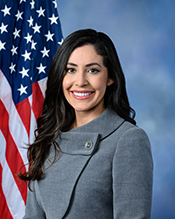
Rep. Anna Paulina Luna
Sponsored bills
Maddy summaryHR 5403, the CBDC Anti-Surveillance State Act, prohibits the Federal Reserve from issuing or facilitating central bank digital currency (CBDC) directly or indirectly to individuals through financial institutions. It specifically bans Federal Reserve banks from offering digital products to individuals, maintaining individual accounts, or using CBDC for monetary policy implementation. The bill also clarifies that its restrictions do not apply to existing physical cash or private, permissionless digital payment systems. This bill directly affects the Federal Reserve's ability to develop or deploy a government-run digital dollar. The law aims to prevent the Federal Reserve from creating a digital currency that could enable transaction tracking or government oversight of personal financial activity.
Maddy summaryHJRES 146 is a congressional disapproval resolution targeting a Centers for Medicare & Medicaid Services (CMS) rule published on May 8, 2024, that would have clarified eligibility for health insurance subsidies under the Affordable Care Act for Deferred Action for Childhood Arrivals (DACA) recipients and certain other noncitizens. The rule aimed to allow these individuals to access premium tax credits, cost-sharing reductions, and basic health programs through health insurance marketplaces. If enacted, this resolution would block the CMS rule from taking effect, maintaining current restrictions that prevent DACA recipients from qualifying for these subsidies.
Maddy summaryThe PROTECT Act (HR 8457) requires online pornography platforms to verify the identity and age (18+) of users before allowing content uploads, and to confirm that individuals appearing in images provided explicit written consent for each sexual act depicted and for the distribution of specific images. It mandates platforms to establish a 72-hour removal process for images distributed without consent and to block re-uploads of removed content. The bill targets major pornography websites that host user-uploaded content, aiming to prevent nonconsensual distribution of intimate images and exploitation of minors. Violations could result in civil penalties up to $10,000 per day per image. This legislation creates new requirements for platforms and adds a criminal penalty for nonconsensual distribution of intimate visual depictions.
Maddy summaryThis bill amends the 1971 Wild Free-Roaming Horses and Burros Act to strengthen protections for wild horses and burros. It shortens the time period for transferring ownership of these animals from one year to six months and adds criminal penalties for specific actions. The law makes it a felony to acquire wild horses or burros (or their carcasses) with the intent to sell them for commercial products like meat or hides, or to knowingly transfer them for that purpose. Violators face fines up to $2,000, over one year in prison, or both, and the Interior and Agriculture Secretaries are authorized to investigate and refer cases to prosecutors.
Maddy summaryHR 8519 prohibits federal departments and agencies from using government funds for three specific research programs: disinformation research grants, Secure and Trustworthy Cyberspace grants, and the National Science Foundation's Track F program focused on "Trust and Authenticity in Communications Systems." The bill directly affects federal agencies that administer research grants, preventing them from obligating or spending funds on these designated initiatives. It does not alter existing laws or regulations but restricts future funding allocations for these particular research areas. This is a procedural funding restriction, not a policy change affecting the public.
Maddy summaryHRES 1247 is a non-binding House resolution recognizing National Safe Boating Week. It acknowledges the significance of this annual observance (held in late May) and highlights statistics about boating safety, including that drowning causes 75% of boating fatalities. The resolution supports existing safety procedures like life jacket use and encourages Americans to boat safely. It does not create new laws or policies, but formally urges federal, state, and local partners to continue promoting safe boating through events during this week.
Maddy summaryHR 8360, the "No Toxic Chemicals in Cosmetics Act," bans the sale of sunscreens and cosmetics containing specific parabens (like methylparaben and propylparaben) after a two-year implementation period. It directly affects cosmetic manufacturers and retailers who would need to reformulate or remove products containing these preservatives from interstate commerce. The bill amends the Federal Food, Drug, and Cosmetic Act to define such products as "adulterated," making them illegal to sell. This creates a clear regulatory change for the cosmetics industry, requiring compliance with the new restrictions by the two-year deadline.
Maddy summaryHR 8424, the UAP Transparency Act, requires federal agencies to publicly release government documents about unidentified anomalous phenomena (UAPs) within 270 days of the bill becoming law. It directs agencies to remove security classifications and post these materials on their own public websites. Agencies must also submit quarterly progress reports to specific congressional committees for 360 days after enactment. The bill directly affects federal departments handling UAP-related information and makes this data accessible to the public. It references the UAP definition established in the 2022 National Defense Authorization Act.
Maddy summaryHR 8410, the "Let Trump Speak Act," prohibits judges from issuing gag orders (court orders restricting speech) in criminal or civil cases, except to protect confidential information, minors' privacy, or as part of a plea agreement. It directly affects defendants in court cases who face such orders by granting them the right to file a civil lawsuit seeking an injunction if a gag order violates this law. The bill establishes a clear legal mechanism for challenging improper gag orders while explicitly stating it does not limit a judge's authority to issue orders to court officers. This is a procedural change to court procedures affecting all defendants in federal and state cases.