

Maddy summaryHR 1046, the Marc Fischer Memorial Act, requires the Bureau of Prisons to implement digital mail scanning technology at all federal prisons to detect fentanyl and other synthetic drugs in inmate mail. It mandates a strategy within 90 days of an evaluation, including 100% scanning of all mail, digital copies of mail to inmates within 24 hours, and physical mail delivery within 30 days for non-contaminated items. The bill directly affects federal prison staff, inmates, and the Bureau of Prisons by aiming to reduce drug-related overdoses and alleviate staff workload tied to mail processing. Implementation must be completed within three years, with annual reports tracking detected drugs and strategy efficiency. The legislation focuses on concrete technological and procedural changes to enhance safety, referencing a successful pilot program at two facilities.
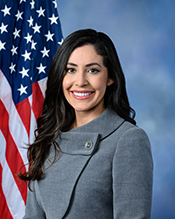
Rep. Anna Paulina Luna
Sponsored bills
Maddy summaryHR 1089, the BOWSER Act, would repeal the District of Columbia Home Rule Act (Public Law 93-198) one year after the bill's enactment. This action would eliminate the District's existing self-governing authority, directly affecting Washington, D.C. residents and its local government. The key provision is the outright repeal of the 1973 law that established the District's home rule structure, shifting governance control to Congress.
Maddy summaryHR 1040, the Senior Citizens Tax Elimination Act, would stop taxing Social Security benefits for seniors by repealing the current tax rule that includes some benefits in gross income. It directly affects senior citizens who currently pay federal income tax on portions of their Social Security payments. The bill adds a provision stating Section 86 of the tax code (which taxes Social Security benefits) no longer applies after enactment. To offset the lost tax revenue, the bill requires the government to appropriate funds to the Social Security and Railroad Retirement trust funds, ensuring they remain fully funded without requiring tax increases.
Maddy summaryHR 71, the Veterans Health Care Freedom Act, allows eligible veterans enrolled in VA healthcare to choose from a broader network of providers, including non-VA facilities, without geographic restrictions. The bill creates a 3-year pilot program in four diverse locations (rural and urban) where veterans can select primary care and specialty providers within a defined "covered care system" (VA facilities and approved community providers), with VA coordinating care through a primary provider. After the pilot, the law permanently requires the VA to offer this same choice of providers to all enrolled veterans, removing current barriers that limited access to non-VA care outside a veteran’s local VA network. The program uses existing VA funding and mandates regular reports to Congress on implementation and results.
Maddy summaryHR 1029 would end the United States Agency for International Development (USAID) by prohibiting all federal funding for its operations starting upon the bill's enactment. It requires the rescission of all unobligated funds held by USAID as of the day before enactment and transfers the agency's remaining assets and liabilities to the Secretary of State. This bill directly affects USAID, eliminating its legal authority and funding under the Foreign Assistance Act of 1961 and other laws. The measure would effectively dissolve USAID as a functioning federal agency.
Fair Access to Banking Act This bill places restrictions on certain banks, credit unions, and payment card networks if they refuse to do business with a person who complies with the law. Restrictions include prohibiting the use of electronic funds transfer systems and lending programs, termination of an institution's depository insurance, and specified civil penalties. Banks and other specified financial institutions are allowed to deny financial services to a person only if the denial is justified by a documented failure of that person to meet quantitative, impartial, risk-based standards established in advance by the institution. This justification may not be based upon reputational risks to the institution. The bill establishes the right for a person to bring a civil action for a violation of this bill.
Maddy summaryHR 925, the "Dismantle DEI Act of 2025," would eliminate diversity, equity, and inclusion (DEI) programs across federal government operations. The bill requires federal agencies to close DEI offices, rescind related executive orders, and prohibit the use of federal funds for DEI training, offices, or initiatives. It defines "prohibited diversity, equity, or inclusion practice" as any activity that discriminates based on race, ethnicity, religion, biological sex, or national origin, or requires employees to complete training asserting that certain groups are inherently superior or inferior. The legislation also prohibits requiring employees to sign statements about race, ethnicity, or gender, and establishes private lawsuits for violations with potential damages of $1,000 per violation per day. This bill would directly affect federal agencies, contractors, grantees, and advisory committees receiving federal funding.
Defending Domestic Orange Juice Production Act of 2025 This bill requires finished pasteurized orange juice to contain at least 10% by weight of orange juice soluble solids, exclusive of the solids of any added optional sweetening ingredients. (Current regulations require at least 10.5% by weight of orange juice soluble solids.)
Maddy summaryHR 899 would end the U.S. Department of Education by December 31, 2026, terminating its federal agency status. This bill directly affects all federal education programs and operations currently managed by the Department, such as student aid and school funding. The key mechanism is a fixed termination date, requiring the transfer of the Department's responsibilities to other federal agencies without specifying new administrative structures. The bill focuses solely on ending the agency's existence, not altering education policy or funding mechanisms.
Drug Cartel Terrorist Designation Act This bill directs the Department of State to designate four specified drug cartels as foreign terrorist organizations. (Among other things, such a designation allows the Department of the Treasury to require U.S. financial institutions to block transactions involving the organization.) The four specified cartels in the bill are the Gulf Cartel, the Cartel Del Noreste, the Cartel de Sinaloa, and the Cartel de Jalisco Nueva Generacion. The bill also requires the State Department to submit a detailed report on those four cartels and any other cartels it may identify. Based on this report, the State Department must designate as a foreign terrorist organization any such identified cartel (or faction thereof) that meets certain criteria for designation as a foreign terrorist organization. The bill specifies that it may not be construed to expand eligibility for asylum.