

Maddy summaryThis bill would prohibit Members of Congress, their spouses, and dependent children from owning or trading stocks, bonds, commodities, futures, and other securities. Current members would have 180 days to divest existing holdings (2 years for hedge funds and venture capital), while new members would have 180 days from taking office to divest. Exceptions include widely held investment funds (if diversified and no conflict), Treasury securities, certain Alaska Native Claims Settlement Act shares, government retirement plans, and small business investments without conflicts. Violations could result in civil penalties up to $100,000 per violation or 10% of the asset's value, and members would need to submit annual certifications of compliance.
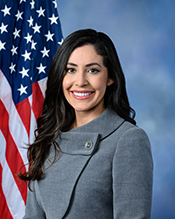
Rep. Anna Paulina Luna
Sponsored bills
Maddy summaryHR 5075, the GRACE Act, requires schools receiving federal education funds to allow religious exemptions from vaccination requirements without requiring documentation. It directly affects K-12 public schools and school agencies that receive federal funding, as they must permit students (or their parents/guardians for minors under 18) to skip vaccinations based on religious belief. The key provision mandates that schools cannot demand proof of a religious belief to grant such exemptions. This changes how schools handle vaccination policies for enrollment, attendance, and school activities when receiving federal education dollars.
Maddy summaryThis bill repeals the Gun-Free School Zones Act of 1990 and makes technical amendments to Title 18 of the U.S. Code, specifically removing references to school zones in firearm offense provisions. It revises sections governing firearm restrictions (Section 922), definitions (Section 921), and penalties (Section 924) by renumbering and deleting specific paragraphs related to the repealed law. The bill directly affects federal firearm law enforcement and legal interpretations concerning school zones, but does not create new restrictions or protections. As a procedural repeal, it removes outdated language without altering current firearm regulations.
Maddy summaryThis bill expands whistleblower protections to cover disclosures about federal taxpayer funds used for unidentified aerial phenomena (UAP) research. It modifies existing laws to add "the use of Federal taxpayer funds to evaluate or research unidentified anomalous phenomenon material" as a protected disclosure category for federal employees, contractors, and intelligence community personnel. This means whistleblowers reporting potential misuse of funds for UAP research can now seek protection under current whistleblower statutes without fear of retaliation. The bill does not create new research programs but ensures existing protections apply to this specific funding context.
Maddy summaryHJRES 116 is a ceremonial resolution honoring 13 U.S. service members who died in the August 26, 2021, Abbey Gate bombing at Kabul's airport. It designates a National Day of Remembrance for those who perished during the Afghanistan withdrawal, expresses condolences to their families, and commemorates their service. The resolution does not create new policies or funding but formally recognizes their sacrifice and the role they played in saving lives during the evacuation. It directly affects the Gold Star families of the named service members and the broader public through this national acknowledgment.
Maddy summaryHR 5042 repeals a 2021 Department of Energy (DOE) rule defining showerheads and reinstates a 2020 DOE definition for determining acceptable water pressure standards. This bill directly affects showerhead manufacturers and consumers by clarifying which regulatory definition applies to water pressure requirements under energy conservation rules. The key mechanism is the formal replacement of the 2021 rule (86 Fed. Reg. 71797) with the 2020 rule (85 Fed. Reg. 81341), ensuring the older definition governs future compliance. It does not change the actual water pressure limits but resolves regulatory ambiguity in existing standards.
Maddy summaryThis bill amends Title IX to clarify that "female," "male," and "sex" refer to biological characteristics (egg-producing or sperm-producing reproductive systems). It explicitly states that schools receiving federal funding cannot be forced to eliminate sex-segregated spaces (like bathrooms or locker rooms) or sex-segregated athletic/academic programs. The bill directly affects all schools and colleges that accept federal education funding, ensuring they may maintain such programs without losing that funding. Key mechanisms include adding specific definitions to Title IX and prohibiting the Secretary of Education from making funding contingent on ending sex-segregated facilities or programs.
Maddy summaryHR 5023, the Fentanyl Kills Act, redefines "trafficked fentanyl" to broadly cover activities like producing, distributing, financing, or transporting illicit fentanyl, its precursors, or related substances - both domestically and internationally with intent to distribute in the U.S. It directly affects individuals involved in fentanyl trafficking by automatically classifying such offenses as "attempted murder" under existing federal law. The bill adds specific definitions for trafficking activities (including manufacturing, distributing, or possessing intent) and mandates that convicted traffickers face penalties under murder statutes. This changes sentencing by treating fentanyl trafficking as an attempted homicide, increasing penalties for those involved in the supply chain.
Maddy summaryHJRES 114 is a procedural joint resolution extending the President's August 11, 2025, emergency declaration for the District of Columbia related to a crime emergency. It directly affects the District of Columbia by maintaining the existing emergency status under the District of Columbia Home Rule Act. The bill automatically extends the emergency period until the President formally ends it, with no new policy changes or funding provisions. This resolution solely continues the current emergency designation without altering DC's crime response measures.
Maddy summaryThis bill restricts travel for certain foreign officials attending UN meetings in New York. It requires the Secretary of State to limit movement for: (1) Iranian officials, (2) officials linked to designated Foreign Terrorist Organizations, and (3) officials from UN bodies the U.S. does not join. Specific restrictions include confining travel to direct airport-to-UN routes, limiting stays to one day before/after meetings, and restricting non-member UN officials to a 25-mile radius around the UN headquarters (excluding universities). The bill explicitly excludes U.S. citizens and legal residents from these rules.