Robocall Trace Back Enhancement Act This bill provides liability protection for specified information-sharing activities undertaken to trace the origins of unlawful robocalls. Specifically, the bill protects a designated consortium that conducts private-led efforts to trace unlawful robocalls from liability for receiving, sharing, or publishing information about illegal calls, including their origin or source. The bill also applies liability protection to a voice service provider (i.e., a provider of any service that enables real-time, two-way voice communications) or other entity or person that shares information with the consortium.
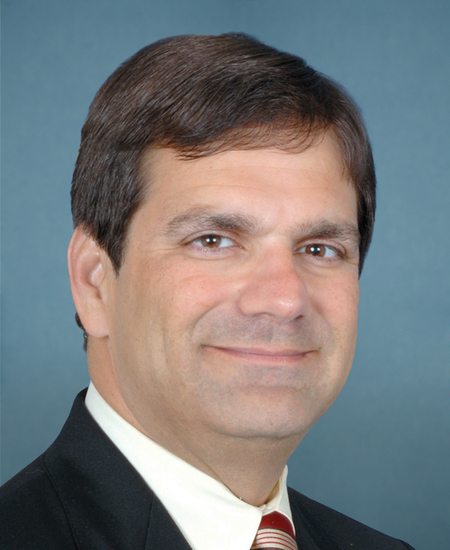
Rep. Gus M. Bilirakis
Sponsored bills
This joint resolution nullifies the rule issued by the Centers for Disease Control and Prevention on February 3, 2021, that requires the use of face masks on planes, trains, buses, and other public conveyances and at transportation hubs to prevent the transmission of COVID-19.
Protection of Women and Girls in Sports Act of 2021 This bill makes it a violation of federal law for a recipient of federal funds who operates, sponsors, or facilitates athletic programs or activities to permit a person whose sex is male to participate in an athletic program or activity that is designated for women or girls. The bill specifies that sex shall be recognized based solely on a person's reproductive biology and genetics at birth.
Armenian Genocide Education Act This bill requires the Library of Congress to maintain a public website and otherwise support educational initiatives to promote understanding about the Armenian Genocide.
New Era of Preventing End-Stage Kidney Disease Act This bill addresses rare kidney diseases through research, training for health professionals, and other means. It also modifies requirements for Medicare drug plan formularies that include drugs for rare diseases or conditions. The Department of Health and Human Services (HHS) must convene a conference focused on diagnosis and treatment of rare kidney diseases; study risk factors, access to care (including to genetic and genomic testing), and other matters related to rare kidney diseases; and establish grants for supporting kidney disease education and referrals in communities of color. HHS may award grants to educate and train health professionals about kidney disease and nephrology. Additionally, health professional schools that receive certain HHS funding for educating underrepresented minority individuals must support postgraduate nephrology training. The National Institutes of Health (NIH) must report on diversity in its kidney disease research. The NIH may also (1) support research on rare kidney diseases that, among other requirements, includes persons of color in study populations; and (2) establish regional centers of excellence for rare kidney diseases. The Centers for Medicare & Medicaid Services must evaluate methods for (1) treating rare kidney diseases, with a focus on delaying dialysis and transplant; and (2) raising awareness about rare kidney diseases, including in communities of color. Furthermore, if a Medicare drug plan formulary includes a drug to treat a rare disease or condition, at least two members of the committee that develops or reviews the formulary must have expertise in the field of medicine related to that drug.
Security of the Economy, Climate, and other U.S. interests with Recent and Existing Food alternatives Act or the SECURE Food Act This bill requires the Office of the Director of National Intelligence to report to Congress on the effects of increased production and consumption of alternative proteins (e.g., proteins produced from plants or fungi) on the long-term national security interests of the United States.
Burma Unified through Rigorous Military Accountability Act of 2022 or the BURMA Act of 2022 This bill imposes sanctions pertaining to Burma (Myanmar) and addresses related issues. The President must impose property- and visa-blocking sanctions on certain foreign persons (i.e., an individual or entity), including those that (1) knowingly operate in Burma's defense sector, (2) are responsible for or complicit in undermining Burma's democratic processes, or (3) are senior leaders in Burma's military or government. The Department of the Treasury must prohibit or impose strict conditions on certain accounts used to facilitate transactions for such sanctioned persons. The President may impose sanctions on Myanma Oil and Gas Enterprise if such sanctions would support certain objectives, including reducing the Burmese military's ability to undermine democracy in Burma. Before removing certain foreign persons from a list of specially designated nationals and blocked persons (commonly known as the SDN list), the President must certify to Congress that the person in question has not knowingly engaged in certain activities, such as supporting terrorism. The bill authorizes Department of State and U.S. Agency for International Development activities in Burma and the surrounding region to support democracy activists, humanitarian assistance, and reconciliation efforts. The State Department may (1) continue to assist organizations supporting political prisoners in Burma, and (2) provide assistance to entities investigating crimes against humanity. The President must direct U.S. representatives to the United Nations to vote and advocate for certain actions related to Burma, such as cutting off assistance to Burma's government.

Comprehensive Southern Border Strategy Act This bill requires the Department of Homeland Security to report to Congress a comprehensive southern border strategy. The strategy must include (1) an overview of current security risks along the southern border; and (2) an assessment of the barriers, technologies, and tools that are necessary to achieve and maintain situational awareness and operational control of the border.
Spectrum Coordination Act This bill requires the National Telecommunications and Information Administration and the Federal Communications Commission to update the Memorandum of Understanding (MOU) on Spectrum Coordination to (1) improve the process for resolving frequency allocation disputes in shared or adjacent spectrum bands, (2) ensure the efficient use of spectrum, and (3) establish reasonable timelines for information exchanges between the administration and the commission. The MOU formalizes the cooperative relationship between the two parties to ensure that spectrum policy decisions promote efficient use of spectrum consistent with both the economic interests and national security of the nation.
Veterans' Cyber Risk Awareness Act This bill requires the Office of Public and Intergovernmental Affairs of the Department of Veterans Affairs (VA) to conduct a communications and outreach campaign to educate veterans about cyber risks . These risks can include disinformation, identity theft, scams, and fraud spread via the internet or social media. Additionally, the VA must seek to enter an agreement with a federally funded research and development corporation to perform a study that assesses (1) the vulnerability of veterans to cyber risks, (2) the availability and efficacy of resources to assist veterans in combatting such risks, and (3) the efficacy of the VA's outreach campaign. The study must also recommend ways the VA can reduce cyber risks to veterans.