

Maddy summaryHRES 514 is a non-binding House resolution designating June 19, 2023, as "World Sickle Cell Awareness Day" to raise public awareness about sickle cell disease (SCD). It directly affects individuals living with SCD, their families, and global health systems by urging increased focus on research, early screening for sickle cell trait, and equitable access to treatments. The resolution includes six key recommendations: supporting newborn screening, eliminating barriers to innovative therapies in Medicare/Medicaid, encouraging public events, and calling for a White House-led interagency cabinet to address SCD care gaps. It does not create new laws or allocate funds but aims to mobilize existing efforts and highlight SCD as a global health priority.
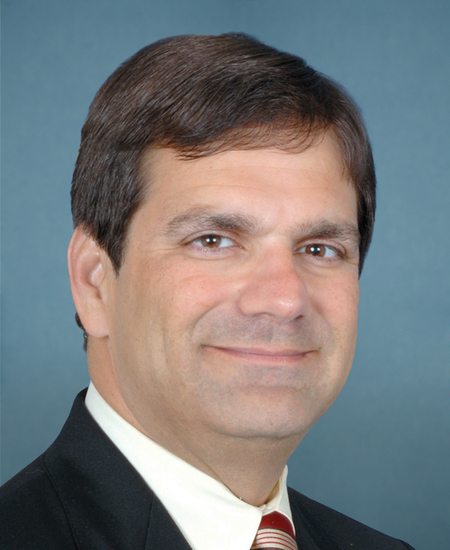
Rep. Gus M. Bilirakis
Sponsored bills
Maddy summaryThe FIND Fentanyl Act of 2023 extends a federal pilot program that funds public health laboratories to detect fentanyl and other synthetic opioids. It amends the SUPPORT for Patients and Communities Act to change the program's funding period from fiscal years 2019-2023 to 2024-2028. This extension ensures laboratories can continue identifying dangerous drugs in communities without funding interruptions. The bill directly affects public health labs and the communities they serve by supporting ongoing monitoring of synthetic opioid threats.
Maddy summaryHR 4076 establishes a joint U.S.-Israel program to fund health technology development, authorizing $4 million annually (2024-2026) through the U.S. Health and Human Services Department. It requires Israel to match U.S. funding and focuses on collaborative projects in artificial intelligence, vaccines, telemedicine, diagnostic tests, and data-driven personalized medicine for emerging infectious diseases. The program can either build on an existing U.S.-Israel agreement or create a new one under a 2008 science cooperation framework. This bill directly affects U.S. federal health agencies and the Israeli government, with funds restricted to joint projects meeting specific technological and health priorities.
Maddy summaryThe TACT Act of 2023 requires health insurance plans and pharmacy benefit managers to ensure timely access to oral medications by setting clear timeframes for pharmacies. Pharmacies must confirm prescription receipt within 24 hours and state by 72 hours whether they can dispense the medication, providing alternatives if they cannot meet the deadline. Health plans must cover medications filled at approved alternative pharmacies - licensed, within reasonable distance, and able to dispense within 48 hours - under the same cost-sharing terms as contracted pharmacies, without extra prior authorization. The law applies to plan years starting January 1, 2024, affecting patients, pharmacies, and health insurers.
Maddy summaryThis bill prohibits providing, facilitating, or possessing wireless devices (like cell phones) in U.S. detention facilities (e.g., prisons, jails) if such actions violate existing federal or state laws. It imposes civil fines up to $50,000 per violation (capped at $1 million total) or criminal fines up to $50,000 for intentional violations. The law explicitly excludes lawful law enforcement activities and state enforcement powers, and defines "detention facility" broadly to include all correctional and penal institutions. It applies to conduct occurring after enactment.
Maddy summaryThis bill redesignates a specific street area in Washington, D.C. (between International Drive, Van Ness Street, and International Place, NW) and the address 3505 International Place, NW as "Tiananmen Square Memorial Boulevard." It requires the General Services Administrator to install new street signs matching DC's Metro station style at designated locations. The bill has no policy impact beyond administrative naming changes and does not affect any legislation, regulations, or residents.
Maddy summaryHR 1640, the Save Our Gas Stoves Act, prevents the Department of Energy from implementing energy efficiency standards for gas stoves that would make them unavailable in the U.S. market. It amends federal law to require that any new standard for gas stoves must not result in the unavailability of gas stove types, directly affecting gas stove manufacturers and consumers who rely on these appliances. The bill specifically blocks the implementation of the 2023 proposed rule (Energy Conservation Program: Energy Conservation Standards for Consumer Conventional Cooking Products) and any similar rule. This is a policy change focused on maintaining the availability of gas stoves by altering the criteria for energy standard approval.
This resolution states that the government of the United Kingdom should enter into negotiations with the government of Greece to facilitate the return of the Parthenon Marbles to Greece. (The Parthenon Marbles are marble sculptures that were removed from the Parthenon in the early 19th century when it was under Ottoman rule and later transferred to the British Museum.)
Maddy summaryHR 3489, the Restore Veterans’ Compensation Act of 2023, prevents the military from reducing or taking back veterans’ disability compensation when they receive separation pay or voluntary separation benefits upon leaving service. The bill amends federal law to ensure veterans’ disability compensation (paid by the Department of Veterans Affairs) cannot be reduced because they received separation pay, and limits deductions from retirement pay to 25% per month, with hardship considerations. It requires the military to provide clear 90-day notice before deductions and allows waivers if repayment would cause financial hardship. This directly affects veterans who received separation pay and later qualify for disability compensation or retirement pay under VA or military programs.
Maddy summaryHR 3892, the Improving Mental Health and Drug Treatment Act of 2023, permanently allows Medicaid coverage for individuals with serious mental illness or substance use disorders in certain residential facilities (previously limited to a temporary 2019-2023 period). It extends the maximum stay in these facilities from 30 to 45 days and requires states to establish standards for appropriate care placement and a review process for facility compliance. States must also conduct a one-time assessment within 12 months of approval to evaluate treatment availability across care levels and medication-assisted treatment services. This bill directly affects Medicaid programs, states administering them, and individuals receiving care in qualifying residential facilities for mental health and substance use disorders.