Saracini Enhanced Aviation Safety Act of 20 21 This bill requires the Federal Aviation Administration to issue an order requiring installation of a secondary cockpit barrier on commercial passenger aircraft.
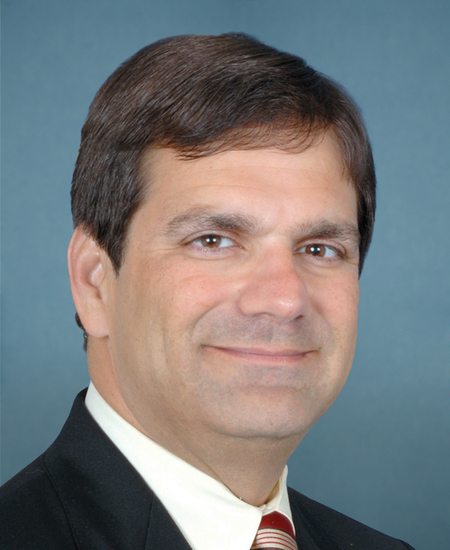
Rep. Gus M. Bilirakis
Sponsored bills
Pre-existing Conditions Protection Act of 2021 This bill reestablishes requirements for private health insurance plans with respect to preexisting conditions, guaranteed enrollment, and discrimination based on health-related factors if they are repealed by another law. In such event, the bill prohibits private health insurance plans from (1) limiting or excluding benefits covering preexisting conditions; (2) denying enrollment to employers or individual applicants, subject to specified limits; (3) establishing rules for eligibility based on an individual's health status; or (4) requiring an individual to a pay higher premium than similarly situated individuals enrolled in the plan based the individual's health status. The bill also prohibits plans from collecting genetic information in connection with issuing health insurance and provides requirements for workplace wellness programs connected to health insurance.
This resolution expresses the sense of the House of Representatives that the U.S. Postal Service should continue door delivery for all customers.
No Social Security for Illegal Aliens Act of 2021 This bill prohibits an individual from collecting Social Security benefits based on wages and income earned for services illegally performed in the United States while the individual was an alien.
United States-Israel PTSD Collaborative Research Act This bill establishes a grant program for collaborative efforts between the United States and Israel to advance research on post-traumatic stress disorders. The Department of Defense, in coordination with the Department of Veterans Affairs and the Department of State, shall award grants to eligible academic institutions or nonprofit entities in the United States. Work shall be conducted by the eligible entity and an entity in Israel under a joint research agreement.
Vaccinate Americans, Not Terrorists Act This bill prohibits federal entities from administering COVID-19 (i.e., coronavirus disease 2019) vaccines to prisoners at the United States Naval Station in Guantanamo Bay, Cuba, until certain conditions are met. Specifically, federal entities may not vaccinate any prisoners if there are outstanding requests from states, tribal nations, and territories for vaccines or other COVID-19 relief; or members of the Armed Forces or reserve components who intend to get the COVID-19 vaccine and have yet to receive it.
Temporary Reciprocity to Ensure Access to Treatment Act or the TREAT Act This bill temporarily authorizes the interstate provision of in-person and telehealth services. This authorization applies during, and for at least 180 days after, the COVID-19 (i.e., coronavirus disease 2019) emergency. Specifically, subject to scope of practice and other requirements, a health care professional may provide health services in any U.S. jurisdiction based on that individual's authorization to practice in any one state or territory. The bill also provides certain related powers to health care professional regulatory bodies, such as medical boards. Specifically, a regulatory body may investigate and take disciplinary actions against a professional who provides services pursuant to this bill to a patient in that body's jurisdiction.
This resolution affirms the House of Representatives' obligation to fulfill the promises made to senior citizens of the United States regarding access to Medicare and Social Security. It also rejects any changes to Medicare or Social Security that diminish benefits for Americans currently enrolled, or soon to be enrolled, in the Medicare program or the Old Age, Survivors, and Disability Insurance program. The resolution also expresses the House's commitment that these programs should be strengthened and preserved, and expresses support for efforts to reduce waste, fraud, and abuse in these programs.
Second Chance at Life Act of 2021 This bill requires abortion providers to disclose information about the possibility of reversing a medication abortion. This is a procedure that uses a medication regimen to terminate a pregnancy, typically with a two-drug protocol. Providers must inform patients that it may be possible to reverse the effects of a medication abortion after taking the first drug. They must also let patients know that more information and assistance is available on the Department of Health and Human Services (HHS) website. At least 24 hours before the procedure, the provider must share this information with the patient in person or by telephone. The provider must also include the information in written discharge instructions after the first drug is dispensed. The bill sets out an exception to these notification requirements when an abortion is necessary to resolve a physical injury or condition that threatens the life of the woman. The provider must document the circumstances giving rise to the exception in the patient's medical file. Furthermore, providers must post signs with this information in their offices or facilities, and HHS must maintain information about reversing medication abortions on its website.
Advancing Connectivity during the Coronavirus to Ensure Support for Seniors Act or the ACCESS Act This bill provides funding to increase access to telehealth services and virtual visits in skilled and other nursing facilities during the COVID-19 (i.e., coronavirus disease 2019) emergency. The bill designates the funding as emergency spending, which is exempt from discretionary spending limits. Specifically, the bill provides additional funding for FY2021, to remain available through FY2022, to the Telehealth Resource Center Program to address barriers to telehealth faced by skilled and other nursing facilities. The Office for the Advancement of Telehealth within the Federal Office of Rural Health Policy in the Health Resources and Services Administration manages this program. In addition, the bill provides funding for FY2021, to remain available through one month after the emergency period ends, to the Department of Health and Human Services (HHS) for grants to nursing facilities to support virtual visits for residents during the COVID-19 emergency. HHS must develop relevant guidance for these grants within 15 days. HHS must also coordinate with the Federal Communications Commission to ensure grantees have access to telecommunications and broadband services.