

Federal Disaster Housing Stability Act of 2021 This bill imposes limits on foreclosures and evictions in areas affected by a declared disaster or emergency. A servicer of certain federally backed residential mortgages for a property in such an area may not initiate the foreclosure process or take other foreclosure-related actions relating to that property unless the property is vacant or abandoned. These restrictions shall be in place for six months after the disaster or emergency is declared. Similarly, the landlord of a dwelling in such an area may not (1) initiate eviction proceedings against a tenant in that dwelling for nonpayment of rent or fees; (2) charge that tenant a penalty for nonpayment of rent; (3) increase the rent; (4) prevent a tenant who has temporarily relocated from returning; or (5) otherwise require the tenant to vacate the dwelling. Landlords must also provide notice to tenants regarding available federal assistance. These restrictions shall be in place for 90 days beginning (1) when the disaster or emergency is declared; or (2) in the case of a dwelling eligible for assistance, when such assistance is received or when eligibility for such assistance has expired.
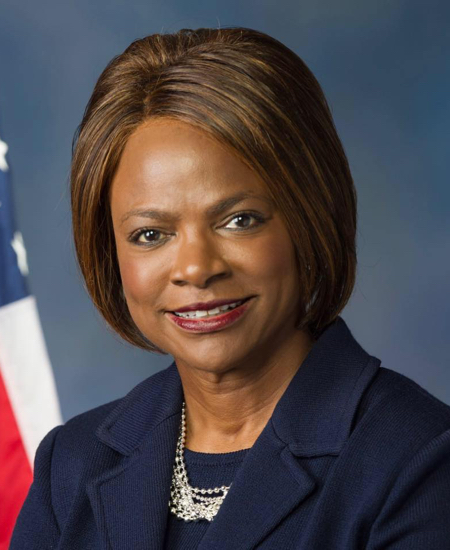
Rep. Val Butler Demings
Sponsored bills
9/11 Responder and Survivor Health Funding Correction Act This bill increases funding for and otherwise modifies a federal program that provides medical monitoring and treatment to responders and survivors who suffer from health conditions related to the September 11, 2001, attacks on the World Trade Center. Among the changes, the bill allows certain health care providers other than physicians to determine whether an individual's health condition is related to the attacks, and it establishes a research program to study the impacts of the attacks on health and educational outcomes of individuals who were 21 years of age or younger when the attacks occurred.
Real Emergency Access for Aging and Disability Inclusion for Disasters Act or the REAADI for Disasters Act This bill establishes programs and requirements to assist individuals with disabilities and older adults (age 50 or older) with disaster preparedness. Among other provisions, the bill requires the establishment of an advisory committee that includes disabled individuals and older adults to oversee the use of funds made available by this bill; allows states to contract with Centers for Independent Living to provide services and support to disabled individuals in preparing for hazards; requires the Department of Health and Human Services to award grants to carry out projects of national significance that, among other things, create opportunities for disabled individuals and older adults to directly contribute to disaster preparedness, recovery, and mitigation; modifies and expands the membership of the National Advisory Committee on Individuals with Disabilities and Disasters to ensure that it represents the diversity of the disabled and older adult communities; and establishes the Disability and Disaster Preparedness Advisory Commission to review settlement agreements involving potential violations of the Rehabilitation Act of 1973 and the Americans with Disabilities Act of 1990. The Government Accountability Office must study the compliance of federal agencies with such enactments in expending funds to support disabled individuals and older adults in responding to, recovering from, and mitigating disasters.
Disaster Relief Medicaid Act This bill establishes a series of programs and requirements relating to Medicaid coverage of individuals affected by a federally declared major disaster. In particular, the bill provides for specific disaster relief coverage under Medicaid for individuals who meet specified income eligibility standards and, during the seven-day period preceding the disaster, were either residents of the impacted area or were employed in the impacted area (and subsequently lost employment). Coverage is effective for two years after the date of the disaster declaration. State Medicaid programs must provide disaster relief coverage that is at least as comprehensive as the state's Medicaid coverage and the Medicaid coverage of the individual's home state, as applicable. The bill applies a 100% Federal Medical Assistance Percentage (i.e., federal matching rate) to such coverage and related administrative expenses.
Helping Kids Cope Act of 2021 This bill provides funding through FY2026 to the Health Resources and Services Administration (HRSA) for grants to enhance access to and provider training in pediatric behavioral health care. Specifically, HRSA must award grants to pediatricians, children's hospitals, and other providers to support pediatric behavioral health integration and coordination within communities. Grant-funded activities may include hiring community navigators to assist families in accessing appropriate services, incorporating behavioral health services in pediatric practices, and delivering services via telehealth. In addition, HRSA must award grants to children's hospitals to expand training for providers in the pediatric behavioral health workforce.
Main Street Efficiency Act of 2021 This bill requires the Department of Energy to establish a grant program that provides incentives for small businesses to make energy efficiency upgrades.
Expanding Broadcast Ownership Opportunities Act of 2021 This bill requires the Federal Communications Commission (FCC) to take certain actions to increase diversity of ownership in the broadcasting industry and establishes a related tax incentive. Specifically, the bill requires the FCC to report to Congress regarding (1) recommendations for increasing the total number of broadcast stations that are owned or controlled by members of minority groups or women, (2) the total number of broadcast stations that are owned or controlled by members of minority groups or women, and (3) whether there is a nexus between diversity of ownership or control of broadcast stations and the diversity of the viewpoints expressed on the stations. In addition, the bill allows companies engaged in the qualifying sale of a broadcast station to receive favorable tax treatment by electing nonrecognition of the gain or loss resulting from the sale. To qualify for this treatment, the sale must result in or preserve ownership and control of a broadcast station by socially disadvantaged individuals.
Lonnie Kilpatrick Central Pacific Relief Act This bill provides a presumption of service-connection for diseases associated with exposure to certain herbicide agents to veterans who served on (1) Guam or American Samoa, or in the territorial waters thereof, between January 9, 1962, and July 31, 1980; or (2) Johnston Atoll or a ship that went to Johnston Atoll between January 1, 1972, and September 30, 1977. Under a presumption of service-connection, specific diseases diagnosed in certain veterans are presumed to have been caused by the circumstances of their military service. Health care benefits and disability compensation may then be awarded. Additionally, the bill expands eligibility for hospital care, medical services, and nursing home care to veterans with a disability associated with exposure to certain herbicides during specified times of military service on Guam, American Samoa, or Johnston Atoll.
Protecting the Information of our Vulnerable Children and Youth Act or the Kids PRIVCY Act This bill expands the requirements for digital services when handling the personal information of children. Specifically, the bill (1) requires digital services to obtain express, affirmative consent that is specific, informed, and unambiguous before processing the personal information of a child or teenager under the age of 18; (2) prohibits certain targeted advertising; and (3) allows individuals to access, correct, or delete their personal information. The bill increases the civil penalty for violations of the children's online privacy protections and provides for enforcement by the Federal Trade Commission and a private right of action.
Domestic Workers Bill of Rights Act This bill provides rights and protections for domestic workers (e.g., housekeepers, nannies, caretakers, personal assistants, and chauffeurs), including pay and leave rights, and health and safety protections. Specifically, the bill repeals the exemption of domestic live-in employees from certain minimum wage and maximum hour requirements. Employers must provide written notice of termination and provide at least 30 days of lodging and two weeks of severance pay to terminated live-in employees. Live-in employees also must be provided with reasonable access to telephone and internet service during their employment. The bill requires employers to provide domestic workers with a written agreement covering wages, sick leave, benefits, and other matters. Further, domestic workers may request and be granted changes to work schedules due to personal events. The bill also provides domestic workers with certain privacy rights, extends to domestic workers protections against discrimination in employment, and increases the federal medical assistance percentage (FMAP) for certain Medicaid-funded medical services provided by domestic workers. The Department of Labor must (1) award grants for a domestic worker national hotline for reporting emergencies, training on hazards facing domestic workers, and workforce investment activities for domestic workers; and (2) establish a Domestic Worker Wage and Standards Board to investigate standards in the domestic workers industry. Labor must publish online a document that describes the rights and protections for domestic workers under this bill.