

Maddy summaryThe End Child Poverty Act (HR 6235) establishes a universal child assistance program providing monthly payments to children under 19 who are U.S. citizens, nationals, or qualified aliens residing in the U.S. Payments equal 1/12 of the annual poverty guideline difference between a two-person household and a single individual, adjusted annually using federal poverty guidelines. The Social Security Administration’s new Office of Universal Child Assistance will automatically identify eligible children via IRS data sharing (with an opt-out option) and issue payments starting in 2026, including reconciliation payments when updated poverty guidelines are published. The bill also terminates the Child Tax Credit and Earned Income Tax Credit after 2025, replacing them with new refundable tax credits for adult dependents and families.
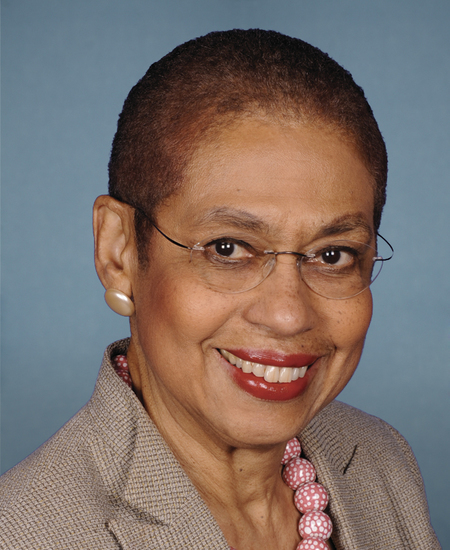
Rep. Eleanor Holmes Norton
Sponsored bills
Maddy summaryThe Revitalize Our Neighborhoods Act of 2025 creates a competitive grant program administered by the Department of Housing and Urban Development (HUD) to eliminate blight and revitalize neighborhoods. It provides funding specifically for states, local governments, or multi-jurisdictional entities to carry out activities like demolishing deteriorated structures, boarding vacant properties, renovating abandoned buildings, and constructing affordable housing - all limited to low-income communities. Recipients must contribute at least 15% in matching funds (from federal programs, local sources, or property sales) and submit detailed 5-year plans for how the funds will be used. The bill prohibits using funds to acquire occupied homes and requires annual reports on project outcomes, geographic distribution, and populations assisted.
Maddy summaryThe BOOST Act of 2025 establishes a new monthly $250 payment program for qualifying adults aged 19 to 67 who are U.S. citizens, nationals, or certain qualified immigrants residing in the U.S. These payments, adjusted annually for inflation, are funded by a new 2.5% supplemental tax on adjusted gross income exceeding $60,000 for joint filers (or $30,000 for individuals). The tax applies to all taxable income above these thresholds with no deductions or credits allowed, and the payments are excluded from income calculations for other federal benefits. The Social Security Administration’s new Office of Universal Adult Assistance will administer the program, including eligibility verification and annual reporting to Congress.
Maddy summaryThis bill prevents the Secretary of Commerce from ending cloud storage contracts for NOAA data without meeting specific requirements. It directly affects the Secretary of Commerce and NOAA's data storage contracts with cloud providers. The law requires the Secretary to create a plan for transitioning data to another cloud provider and to work with NOAA's Administrator to maintain continuous data protection. This ensures NOAA's critical environmental and oceanographic data remains accessible and secure during any contract changes.
Clean Cloud Act of 2025 This bill establishes an emissions standard and fee system regarding the electricity used by data centers or cryptomining facilities that exceed a specified size. Additionally, the bill appropriates collected fees for various purposes, including to fund zero-carbon electricity generation, long-duration energy storage, and grants to lower residential electricity consumer costs. The bill requires the Environmental Protection Agency (EPA) and the Energy Information Administration to annually determine the greenhouse gas emission intensity of the total annual electricity consumed by (1) covered facilities from the electric grid, and (2) covered facilities from electricity generation assets located behind the power meter of the facilities. The EPA must determine and publish the greenhouse gas emissions intensities of the electric grid of each region to establish a baseline for the assessment of fees. Each calendar year from 2027 through 2034, the baseline for each region is reduced by 11% of the original baseline. For 2035 and after, the baseline is set to zero emissions. The EPA must assess a fee on (1) owners of any electric utility providing power to a covered facility that exceeds the baseline emissions in that region for that year, and (2) covered facilities with respect to the greenhouse gas emissions from electricity generation assets located behind the power meter of the facility above the baseline of the region for that year. The electric utilities may not recoup the cost of the fee by raising rates or assessing fees on customers that are not covered facilities.
Maddy summaryThis bill establishes a federal grant program to improve diabetes care in underserved urban and rural communities. It authorizes the Health Secretary to fund eligible providers - including community health centers, rural clinics, and tribal health departments - to deliver comprehensive services like routine diabetes treatment, prevention education, eye/foot care, and kidney disease management. Grants require providers to offer culturally appropriate care in local languages and conduct community outreach. Funding must be distributed equitably between urban and rural areas, with authorization for fiscal years 2026-2031. The program directly supports patients in medically underserved communities facing barriers to diabetes care.
Maddy summaryThe Healthy MOM Act (HR 6242) would require health insurance plans to provide a special enrollment period for pregnant individuals beginning when pregnancy is reported to the insurer. It mandates that group health plans and health insurance issuers cover maternity care, including childbirth and postpartum care, for all dependents regardless of age. The bill would extend Medicaid coverage for pregnant individuals and infants to 12 months postpartum (instead of ending at 60 days postpartum) and make this 12-month coverage permanent. These provisions would directly affect pregnant individuals, women with dependent children who are pregnant, and health insurance plans and Medicaid programs.
Maddy summaryThis bill expands Medicare's drug price negotiation program to cover 50 drugs (up from 20) and requires health insurers to apply negotiated prices to cost-sharing for beneficiaries. It establishes annual out-of-pocket cost-sharing limits for prescription drugs under group health plans and insurance coverage, with specific limits of $2,000 for self-only coverage in 2027 that will increase annually. The bill also sets specific cost-sharing limits for insulin products, requiring coverage with no deductible and cost-sharing of no more than $35 per 30-day supply or 25% of the negotiated price. These provisions affect Medicare beneficiaries, people with group health plans, and health insurers across the country. The bill applies to plan years beginning on or after January 1, 2027.
Maddy summaryHR 6212, the Good Samaritan Menstrual Products Act, protects donors and nonprofits from liability when providing menstrual products in good faith. It shields people, manufacturers, distributors, and nonprofits from civil or criminal liability for the condition of "apparently usable" donated products (those meeting all safety standards but not necessarily marketable). The law applies to products like tampons, cups, and liners distributed to individuals in need through nonprofits. Liability protection does not apply if gross negligence or intentional misconduct causes injury or death.
Maddy summaryThe Baby Bonus Act (HR 6234) creates a new $2,000 payment for eligible parents of children born on or after January 1, 2026, with annual inflation adjustments. It establishes the Office of Baby Assistance within the Social Security Administration to manage applications, verify eligibility (requiring U.S. residency and citizenship/qualified alien status), and prevent fraud. Payments are tax-exempt and not counted toward eligibility for other federal or state benefits, with applications due within one year of birth or fetal death after 20 weeks gestation. The bill includes specific provisions for surrogacy, adoption, and custody arrangements to determine payment recipients.