

Maddy summaryHRES 955 is a symbolic House resolution recognizing the importance of maintaining U.S. leadership in ending pediatric HIV/AIDS globally. It affirms support for existing programs like PEPFAR and the Global Fund, which provide critical prevention services (e.g., antiretroviral prophylaxis for pregnant women) and treatment for children. The resolution specifically calls for continued commitment to closing the treatment gap for children, expanding access to long-acting prevention methods, and advancing the Global Alliance to End AIDS in Children by 2030. As a recognition measure, it does not create new laws or allocate funding but underscores ongoing U.S. efforts to prevent mother-to-child transmission and improve pediatric HIV outcomes.
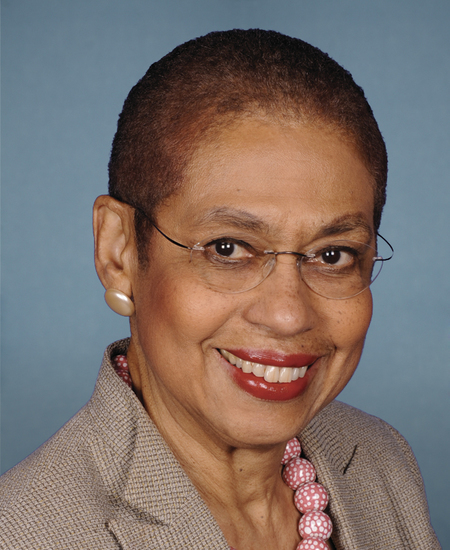
Rep. Eleanor Holmes Norton
Sponsored bills
Maddy summaryHR 6815 creates a publicly available EPA tool to identify communities facing environmental burdens, such as poor air quality, climate risks, health issues, poverty, and racial disparities. The tool uses geospatial mapping to flag neighborhoods meeting specific thresholds across six categories of factors (e.g., asthma rates, proximity to pollution sources, unemployment). Federal agencies must adopt this tool within a year to prioritize funding and resources for affected communities. The EPA will update the tool annually based on public feedback and new data, with annual reports to Congress on changes in identified communities.
Maddy summaryThis bill amends federal housing laws to ensure that tenants using marijuana legally under state law are not discriminated against in federally assisted housing. It removes federal prohibitions on state-compliant marijuana use, distribution, possession, sale, or manufacture from definitions of "drug-related criminal activity" and "illegal use of a controlled substance" in housing regulations. Public housing agencies and federally assisted housing providers must now follow state marijuana laws and cannot deny admission or evict tenants based solely on legal state-legal marijuana activity. The bill also requires HUD to establish smoke-free zones for marijuana similar to existing tobacco rules within 90 days of enactment.
Maddy summaryHR 6818, the Part-Time Worker Bill of Rights Act, would expand rights for part-time workers by reducing eligibility requirements for family and medical leave from 12 months to 90 days of employment under the FMLA. The bill prohibits employers from discriminating against part-time workers based on hours worked, requiring equal treatment for benefits, promotions, and scheduling. It mandates that employers obtain written statements from employees about their desired work hours and prioritize offering available work hours to existing employees before hiring new external workers. The bill establishes enforcement mechanisms including civil penalties for violations and allows employees to file private lawsuits for damages, with the Secretary of Labor having investigative authority to ensure compliance. This legislation directly affects part-time workers and employers with more than 15 employees across both private and public sectors.
Maddy summaryThe Schedules That Work Act would require employers in retail, food service, hospitality, cleaning, and warehouse sectors to provide workers with 14 days' advance notice of their schedules and pay predictability wages for last-minute changes. It allows employees to request schedule changes related to caregiving responsibilities, health conditions, education, or other jobs, with employers required to engage in good-faith discussions about such requests. The bill prohibits retaliation against employees who request schedule changes and mandates written notice of schedule changes and predictability pay. It applies to employers with 15 or more employees in covered sectors, aiming to address widespread issues with unpredictable schedules that negatively impact workers' ability to care for family members, maintain housing stability, and access health care.
Maddy summaryThe Fair Competition for Small Business Act of 2025 amends the Clayton Act to allow legal claims for violations of the Sherman Antitrust Act or for violations of the bill's own section (section 2). This technical change would directly affect small businesses and other entities involved in antitrust litigation by expanding the grounds for lawsuits under the Clayton Act. The key mechanism is a modification to the Clayton Act that references the bill's provisions, creating a new basis for claims. The bill does not specify additional substantive rules beyond this amendment.
Maddy summaryThe Public Health Air Quality Act of 2025 requires the Environmental Protection Agency to establish a national network for monitoring hazardous air pollutants near communities, focusing on facilities emitting specific chemicals linked to health risks like cancer and respiratory issues. The bill mandates fenceline monitoring at 100 high-priority facilities that emit chemicals such as benzene, formaldehyde, ethylene oxide, and other hazardous air pollutants, with public reporting of data within 7 days of collection. It also requires deployment of 1,000 low-cost air quality monitoring systems in communities disproportionately impacted by pollution, with data made accessible in multiple languages and formats. The Act authorizes $146 million for implementation during fiscal years 2026-2027 to support these monitoring requirements and public transparency efforts.
Maddy summaryHR 6730, the HERO Act, allows active-duty military members and reservists on active duty to sue the U.S. government directly for medical negligence at military hospitals (excluding combat zones). It replaces a previous law by creating a new federal claim process for injuries or deaths caused by faulty medical care, dental services, or related health functions provided by military staff. The bill prevents the government from reducing compensation by veterans' benefits or military life insurance payouts and sets a 10-year deadline from when the injury was discovered to file a claim. This change directly affects service members who suffer harm due to medical errors at covered military treatment facilities.
Maddy summaryThis bill amends a section of federal law to change the reference from "the White House" to "the People's White House" in a specific legal citation (Section 307104 of Title 54, U.S. Code). It is a purely procedural change to the text of the law, not a substantive policy shift. The bill does not alter historic preservation standards, protections, or funding for the White House grounds. It simply updates the formal name used within the legal code.
Maddy summaryHR 6767, the Health Equity and MENA Community Inclusion Act of 2025, amends federal health law to include Middle Eastern and North African (MENA) populations - such as Lebanese, Iranian, Egyptian, and Palestinian communities - within the definition of "racial and ethnic minority groups." This change directly affects approximately 3.5 million MENA individuals in the U.S., who have historically been excluded from federal health programs like the Office of Minority Health (OMH) due to data classification. The bill mandates the Department of Health and Human Services (HHS) to conduct a comprehensive health study, breaking down data by specific MENA subgroups to analyze disparities in areas like chronic disease, mental health, maternal outcomes, and access to care. HHS must also establish privacy safeguards for study participants and publish findings via a public online portal, enabling targeted health initiatives for MENA communities.