

Maddy summaryHRES 995 is a symbolic resolution supporting Korean American Day, commemorating January 13 as the anniversary of the 1903 arrival of the first large wave of Korean immigrants to the U.S. It urges all Americans to recognize Korean Americans' contributions to U.S. society, economy, and U.S.-South Korea relations, honoring their historical journey and ongoing impact. The resolution has no legal effect or policy changes - it serves solely as a formal acknowledgment of cultural heritage.
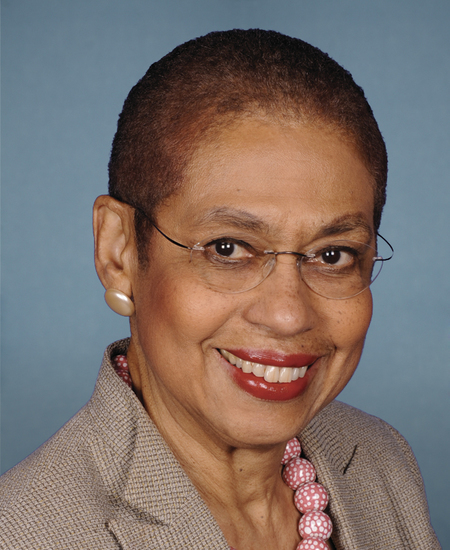
Rep. Eleanor Holmes Norton
Sponsored bills
Maddy summaryThis symbolic House resolution expresses U.S. congressional support for Iranian protesters demanding democracy and human rights. It condemns the Iranian regime's violent suppression of protests, including killings, mass arrests, and internet restrictions, while urging the regime to release political prisoners and restore communication access. The resolution reaffirms the Iranian people's right to self-determination through free elections and echoes a 2023 resolution (HCR 7) that similarly praised protesters. As a non-binding expression of support, it does not impose new policies or alter U.S. government actions.
Maddy summaryThis resolution (HRES 985) expresses the House of Representatives' opposition to declawing cats for cosmetic or convenience reasons, not for medical necessity. It defines "declawing" broadly to include any procedure that disables a cat’s claws (such as surgical removal or tendon cutting), emphasizing that these practices cause long-term pain and behavioral issues. The resolution specifically supports banning elective declawing while allowing medically necessary procedures to address existing health conditions. It urges states without such bans to consider legislation, citing widespread support from veterinary organizations and existing bans in 7 U.S. states and numerous municipalities.
Maddy summaryThis bill prohibits U.S. federal funds from being used to support Venezuela's oil and petroleum sector, including financing infrastructure projects, purchasing property, providing insurance, making payments to companies, or government advocacy. It directly affects all federal agencies and programs that manage taxpayer money, preventing them from funding any aspect of Venezuela's oil industry. The bill requires the Secretary of State to submit annual reports to specific congressional committees detailing any related activities and confirming compliance. These provisions aim to restrict U.S. financial involvement in Venezuela's oil sector using clear, non-ambiguous language.
Maddy summaryThis bill would increase the base pay for Federal Bureau of Prisons correctional officers by 35 percent, replacing their current base rate for all pay calculations (including retirement and locality adjustments). It applies to officers whose duties involve inmate custody, control, or direct custodial contact, including certain supervisory staff and lower-grade Bureau of Prisons employees with similar duties. The pay increase is capped at the Executive Schedule level V rate and would expire after five years unless a Department of Justice Inspector General review finds progress in reducing non-custodial staff use for custodial duties and excessive overtime. The review, required 180 days before expiration, would assess impacts on recruitment, retention, and institutional safety.
Maddy summaryThis bill establishes minimum salary and wage standards for paraprofessionals and education support staff in public schools. It requires states to set a minimum annual salary of $45,000 for full-time staff (increasing with inflation after 2030) and a minimum hourly wage of $30 for part-time staff (also inflation-adjusted). The federal government will provide $25 billion in FY2026, with annual funding increases, to help states implement these standards through grants. States must ensure all local schools meet these minimums within 4 years of receiving funds, with 98% of grant money allocated directly to schools for salary increases or professional development.
Maddy summaryThe SATOS Act of 2025 provides federal grants and loans to fund the construction, renovation, or equipment upgrades for animal shelters, clinics, and related facilities in rural areas (defined as communities with populations under 50,000). It prioritizes lower-income rural communities by offering up to 75% federal funding coverage (capped at $10 million annually) for eligible entities like local governments, tribes, and nonprofits. The bill also includes technical assistance grants (3-5% of program funds) to help organizations plan, apply for, and manage these facilities. Recipients must report program outcomes to Congress biennially. This directly affects rural animal welfare infrastructure and the communities relying on these services.
Maddy summaryThis bill requires companies to use non-animal testing methods for products regulated by the FDA, EPA, USDA, or Consumer Product Safety Commission when such methods are available and accepted by the agency. It bans submission of new animal test data for these products unless specific exceptions apply (like historical data or foreign regulatory needs). Companies must minimize animal use and suffering if non-animal methods aren't feasible, and agencies must publish annual reports tracking animal use and waivers. Violations could result in civil penalties up to $10,000 per instance.
Maddy summaryThis bill establishes a standardized annual program to measure food insecurity across U.S. households. It requires the Census Bureau to include specific, consistent questions about food access and hunger (like skipping meals or relying on limited food due to cost) in the Current Population Survey from 2026 onward. The Secretary of Agriculture must analyze this data, publish annual reports publicly, and submit them to Congress. The policy directly affects all households surveyed through the Census Bureau’s annual survey, with additional questions for households with children under 18. It aims to improve data consistency for tracking hunger and informing future policy, without creating new benefits or altering existing programs.
Maddy summaryHR 6271, the Food Bank Emergency Support Act of 2025, appropriates $462.5 million to prevent cuts to food assistance benefits during funding shortfalls or government shutdowns. The funds are specifically designated under the Food and Nutrition Act of 2008 to maintain existing benefit levels for programs like SNAP (Supplemental Nutrition Assistance Program) and food bank commodity distributions. It ensures these services continue without interruption, including barring furloughs for personnel involved in food distribution during emergencies. The bill directly supports food banks, grocery retailers distributing benefits, and millions of low-income households relying on these services. It takes effect as if enacted on September 30, 2025.